New Social Innovation Competence Center
Home Nuestro trabajo New Social Innovation Competence Center
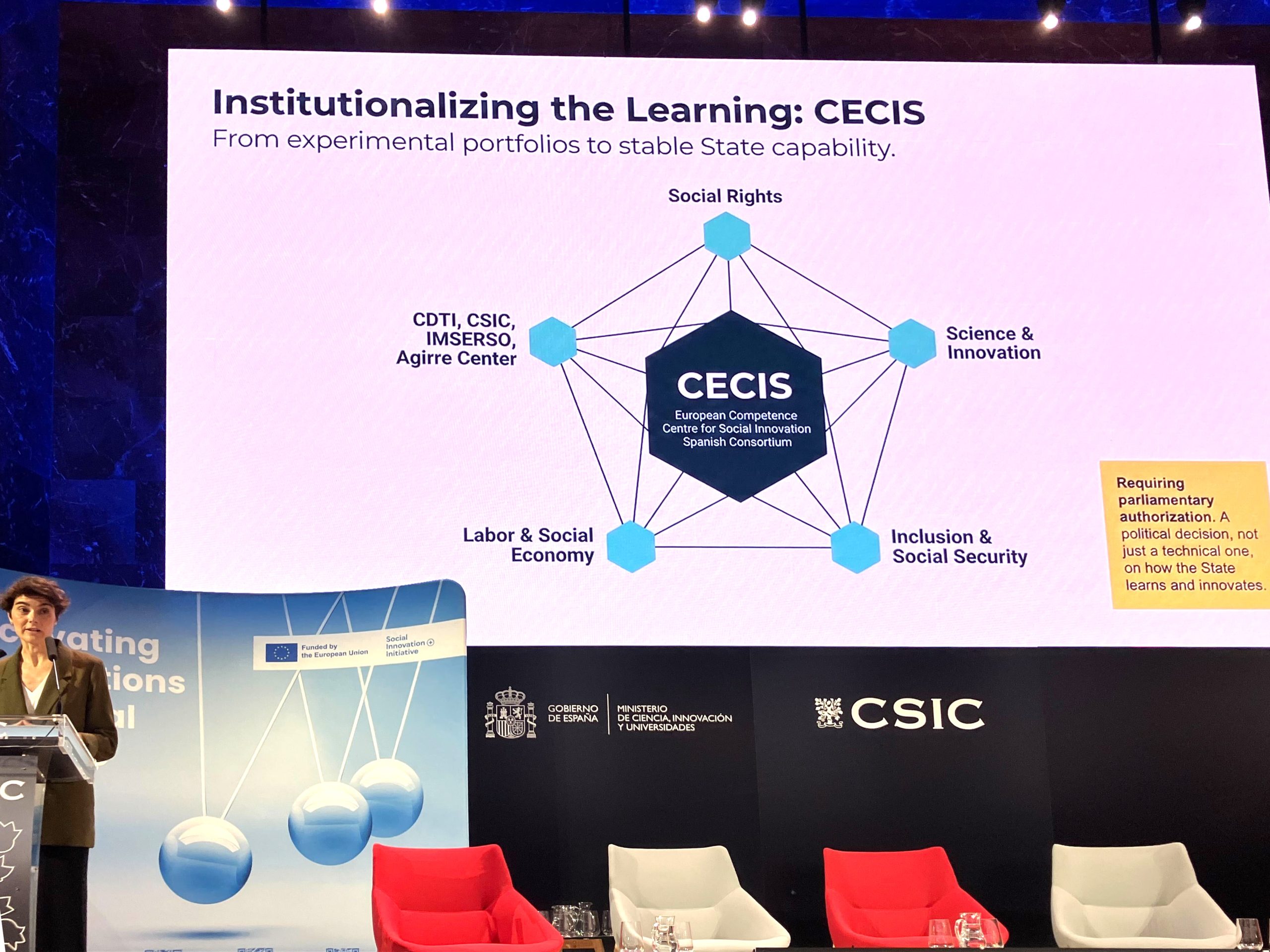
On Tuesday, May 5, 2026, a protocol was signed in Madrid to launch this new European infrastructure for the collaborative addressing of complex social challenges. ALC is part of the consortium that has spearheaded this initiative alongside six ministries of the Spanish government, the CDTI, and the CSIC.
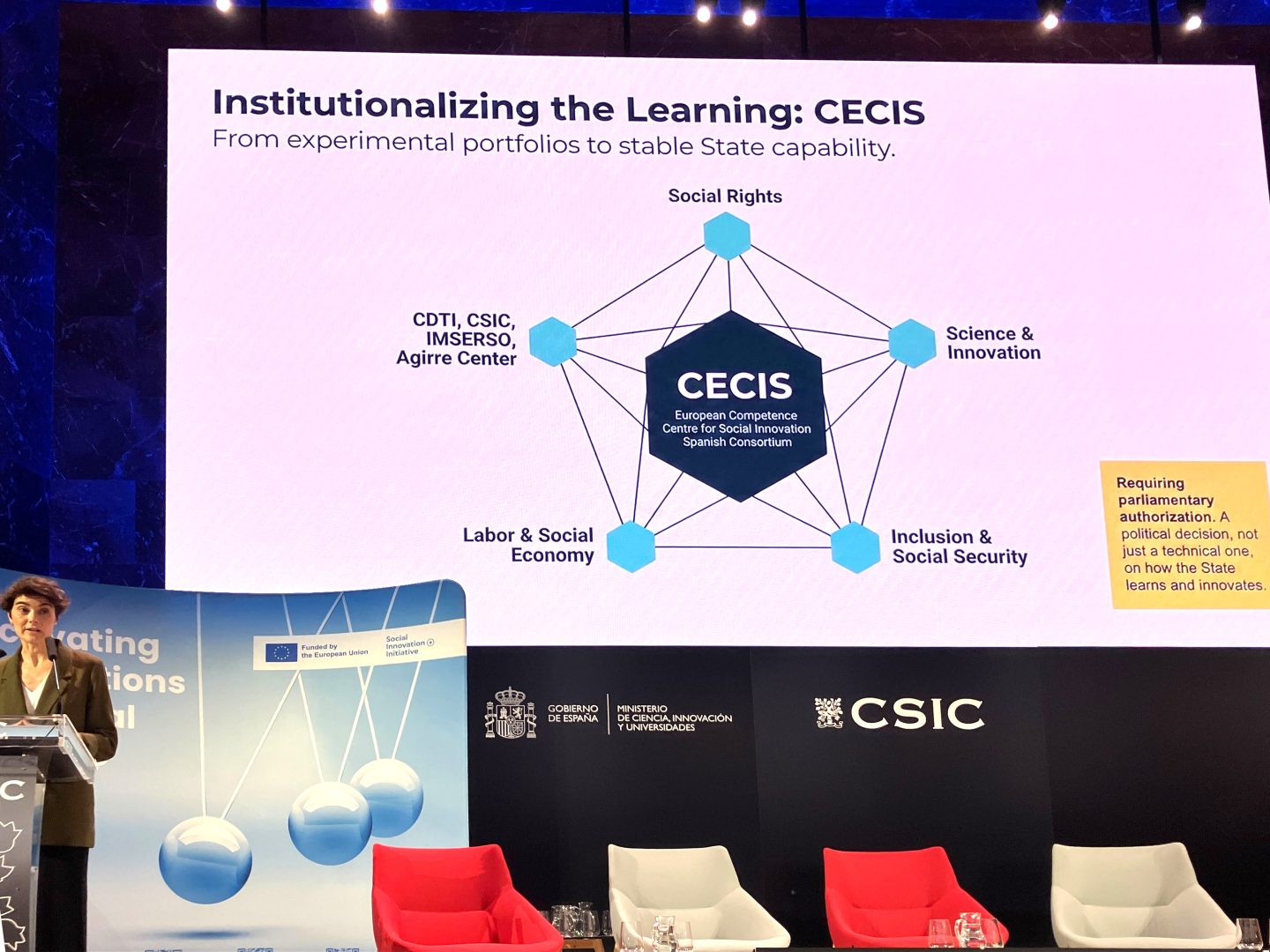
This presentation was delivered as part of the international meeting of European Union Centers of Excellence, where participants discussed key strategies for overcoming the fragmentation of traditional social innovation projects. The event served to reinforce the portfolio approach as an essential tool for addressing complex challenges and driving structural changes in public policy.
Moving beyond the logic of isolated projects
The experiences shared at this international forum highlight that today's most pressing social challenges—such as the inclusion of people with disabilities, homelessness, and long-term unemployment—cannot be solved through isolated, individual innovations. Rather, they require adaptive, system-level approaches that acknowledge power dynamics and amplify the voices of communities.
The portfolio approach enables:
-Connecting initiatives in real time: Moving from interventions based on individual projects to a systems-level approach that connects all relevant stakeholders.
-Risk management and learning: Facilitating a natural acceptance of “trial and error,” while strategically reinforcing those initiatives that demonstrate the strongest evidence of impact.
-Scale and sustainability: Support innovative solutions so they can adapt as they are integrated into broader systems, mobilizing the sectors involved toward movements for change.
The VIDAS Portfolio: A Model of Practical Application
During the sessions, the results of the VIDAS Social Innovation Portfolio were presented as a prime example of a model designed for experiential learning. This model—which ALC helped design, implement, and evaluate—focuses on creating a new community-based care system. It has demonstrated that the combination of coordinated innovations generates significantly greater value than the execution of isolated projects.
With an investment of 156 million euros and the participation of 143 organizations, the VIDAS portfolio has generated 95 innovations and 179 learning outcomes. This infrastructure makes it possible to identify which combinations of solutions actually work, while identifying regulatory and financial barriers that no single project could overcome on its own.