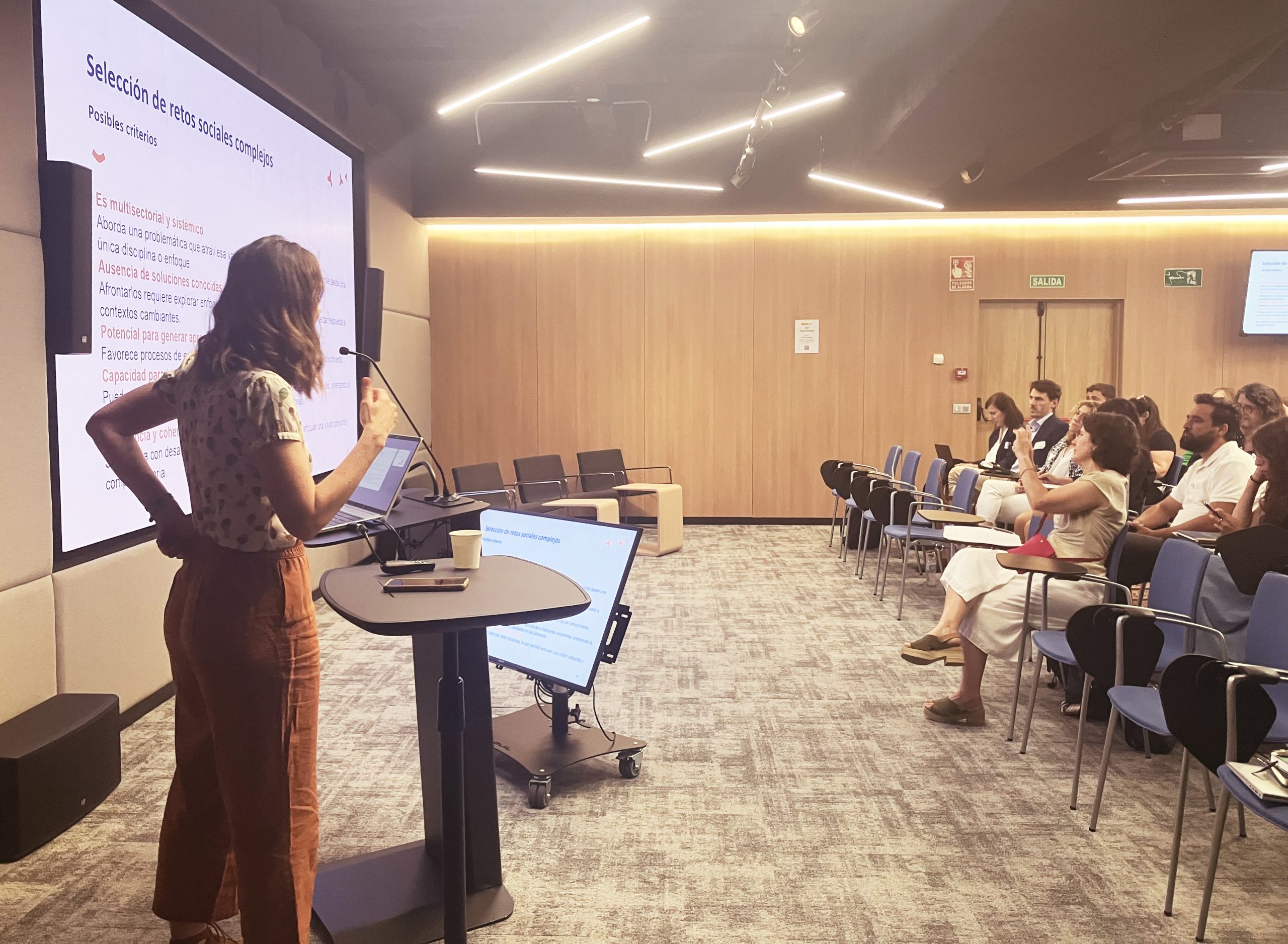
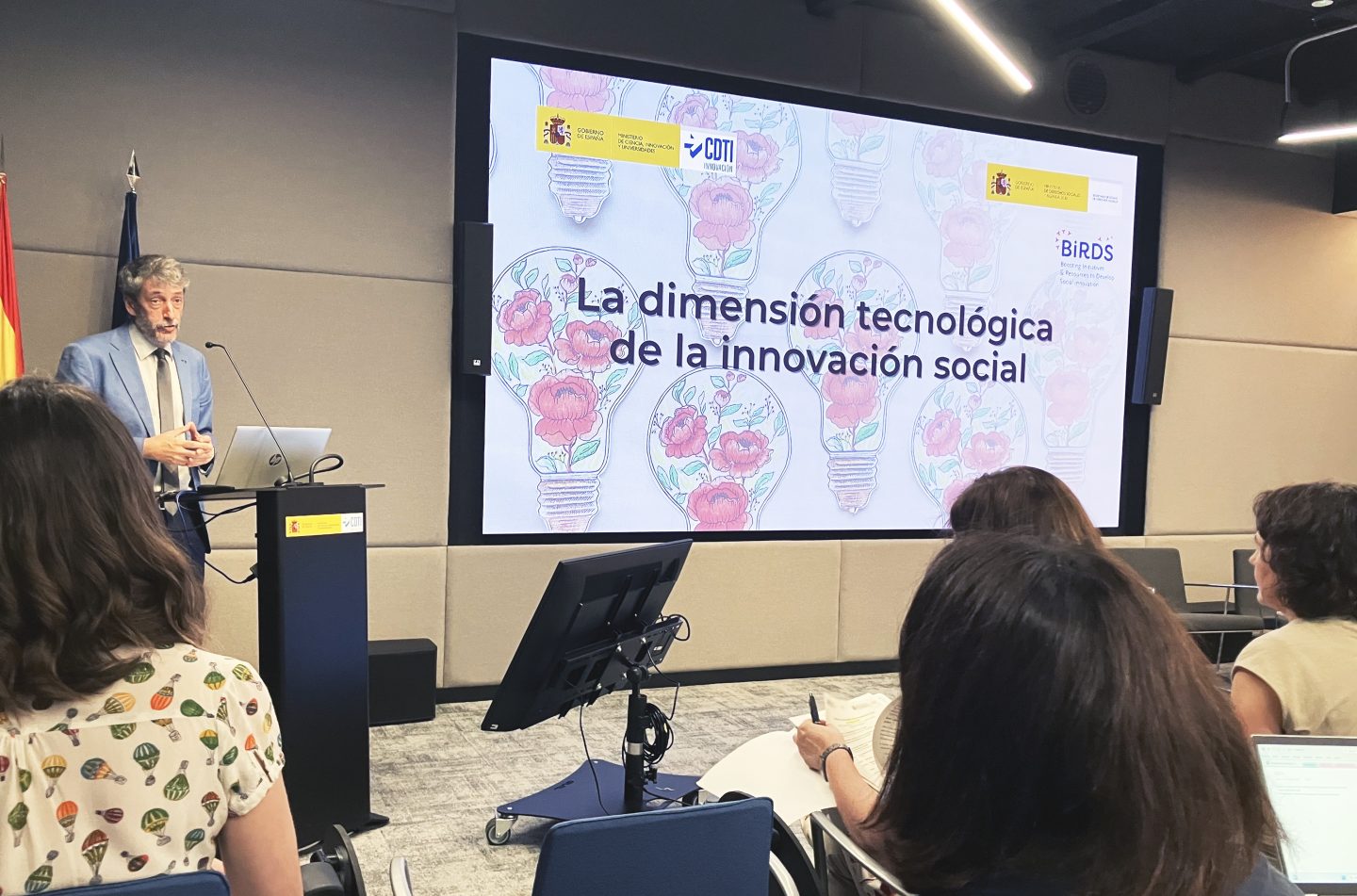
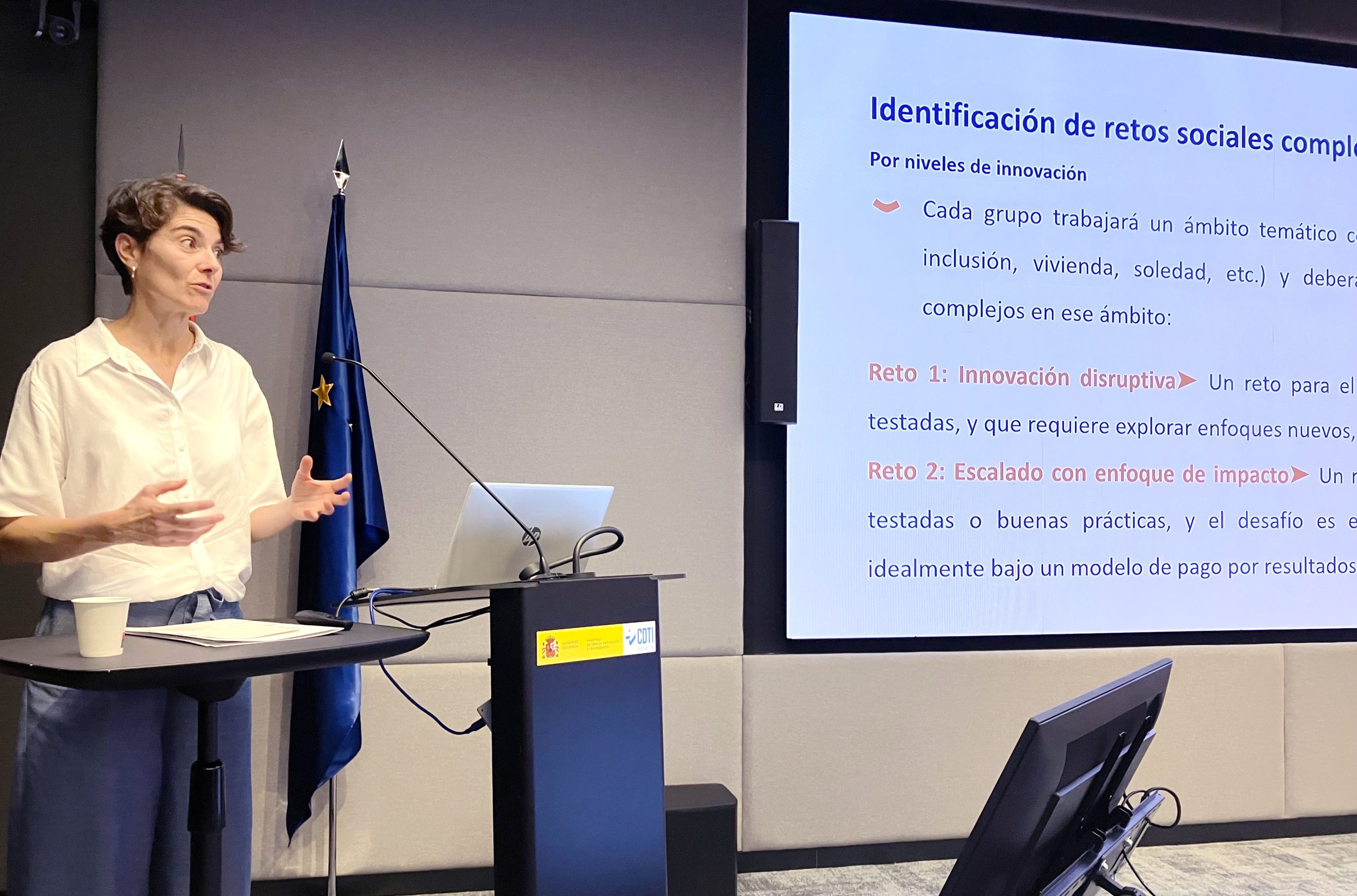
During the session, Itziar Moreno, co-director of ALC, together with Berta González (Advisor to the Cabinet of the Secretary of State for Social Rights), presented the BIRDS project, as well as the digital strategy of the Competence Centers for Social Innovation in Europe.
In their presentation, they emphasized that these centers are not just physical spaces, but public innovation infrastructures designed to connect distributed capacities, mobilize knowledge, and activate collaboration between different levels of government, social organizations, and citizens, in which listening skills and digital simulation for decision-making can radically change. As they pointed out, “the technology to prevent and model human behavior exists, but it is used to sell more shoes or model speeches, not for democratic improvement, listening to citizens, and improving decisions when managing public policies.”
One of the central themes of the conference was the need to rethink technological innovation policies from a systemic and socially situated perspective. Current challenges—from unwanted loneliness to youth unemployment, digital exclusion, and the climate emergency—cannot be addressed with predefined or sectoral solutions.
Instead, they require approaches such as:
• Cross-cutting collaboration, breaking down administrative silos and fostering public-social cooperation.
• Co-creation and social innovation processes, placing people at the center of the solution.
• Adaptive responses and profound structural transformations, recognizing the complexity of social systems and enabling learning by doing.