Galdakao Zeugaz
Home Work Experimentation Galdakao Zeugaz
ALC supports the Social and Health Forum initiative promoted by the Galdakao City Council, with a focus on social innovation and active listening. The aim of this collaboration is to contribute to the design of a new local strategy that will enable a rethinking of the municipality's health and welfare system.
The proposal is structured around four main lines of work:
- Mapping of agents and actions linked to the health and well-being ecosystem in Galdakao, with the aim of identifying interconnections and opportunities for collaboration.
- Identification of narratives on health and well-being in the municipality, highlighting diverse perceptions and detecting those that condition the possibilities for change.
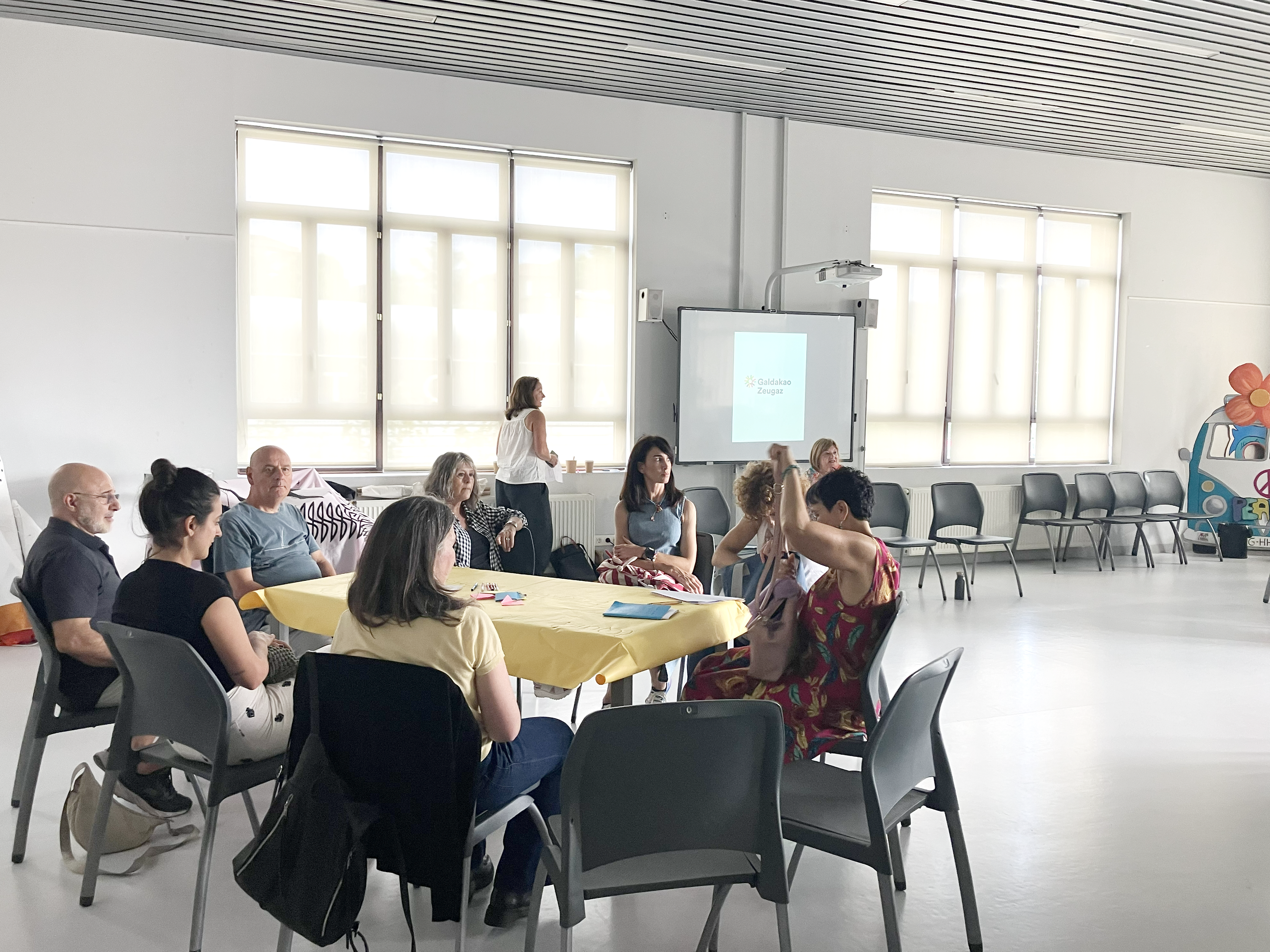
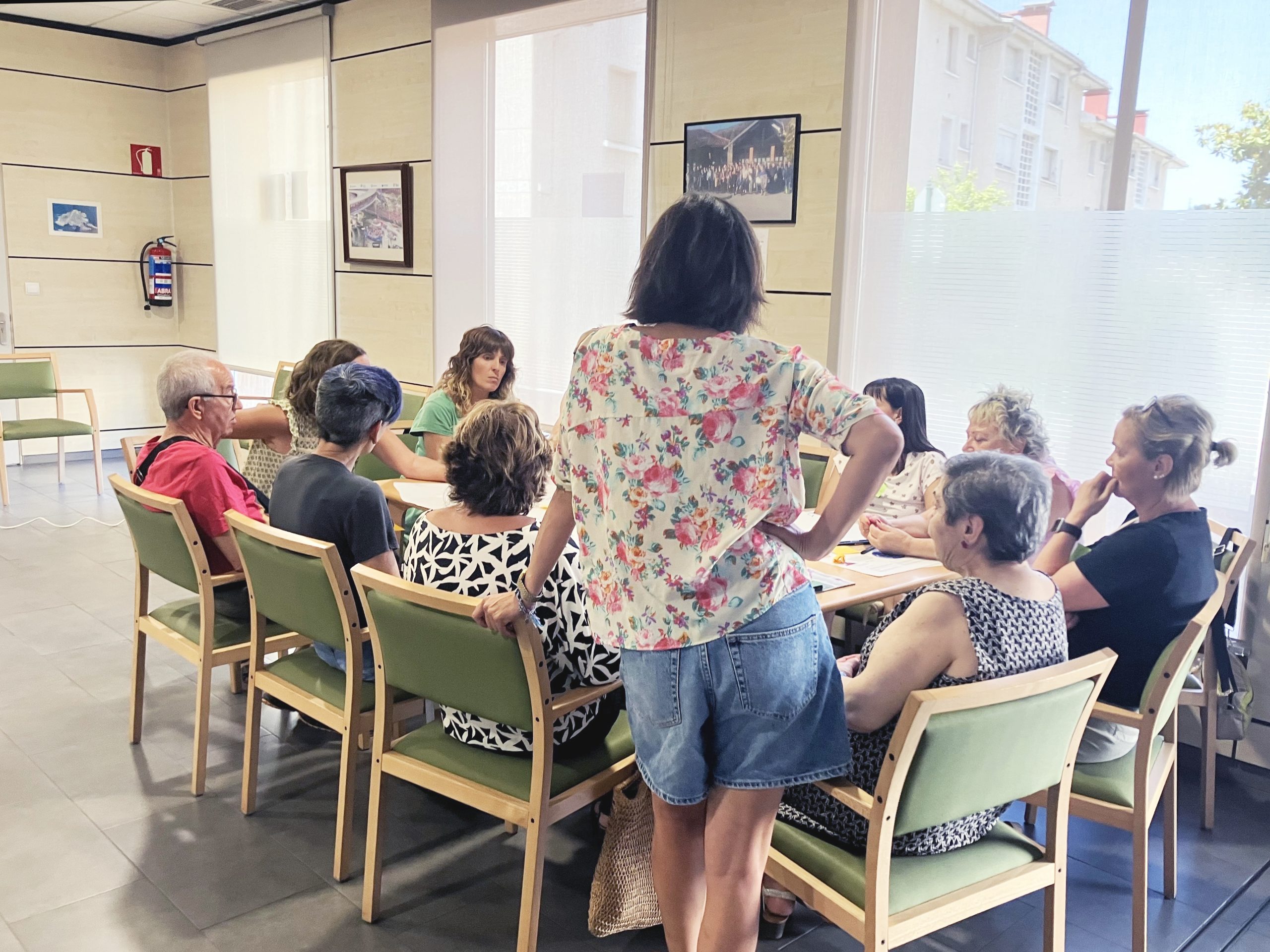
- Creation of deliberative spaces with the main agents in the territory (health centers, pharmacies, associations, social entities, feminist groups, sports clubs, merchants, among others) for the collective interpretation of information.
-Support in the co-creation of proposals for action, based on a joint analysis of existing narratives and actions, to guide the construction of a more inclusive and sustainable community model for health and well-being.
Methodological approach
The report “Compassionate Environments in the Basque Country” has revealed that there are many people in the Basque Country who are lonely, ill, or have a very small family and social network and are in situations of dependency, palliative care, end of life, death, and bereavement. These situations are amplified by the aging population and the emergency situation caused by the COVID-19 pandemic. This complexity prevents a solution that is exclusively health-related or linked to existing public services for unwanted loneliness.
Innovation processes in complex systems (such as those associated with care, health, and well-being) pose difficulties for more traditional management and evaluation systems. Instead of working with clearly defined objectives, social innovation seeks to generate new relationships between stakeholders, develop new networks of agents, encourage the development of new prototypes, and scale up validated models. Likewise, these types of processes require real-time changes and adjustments.