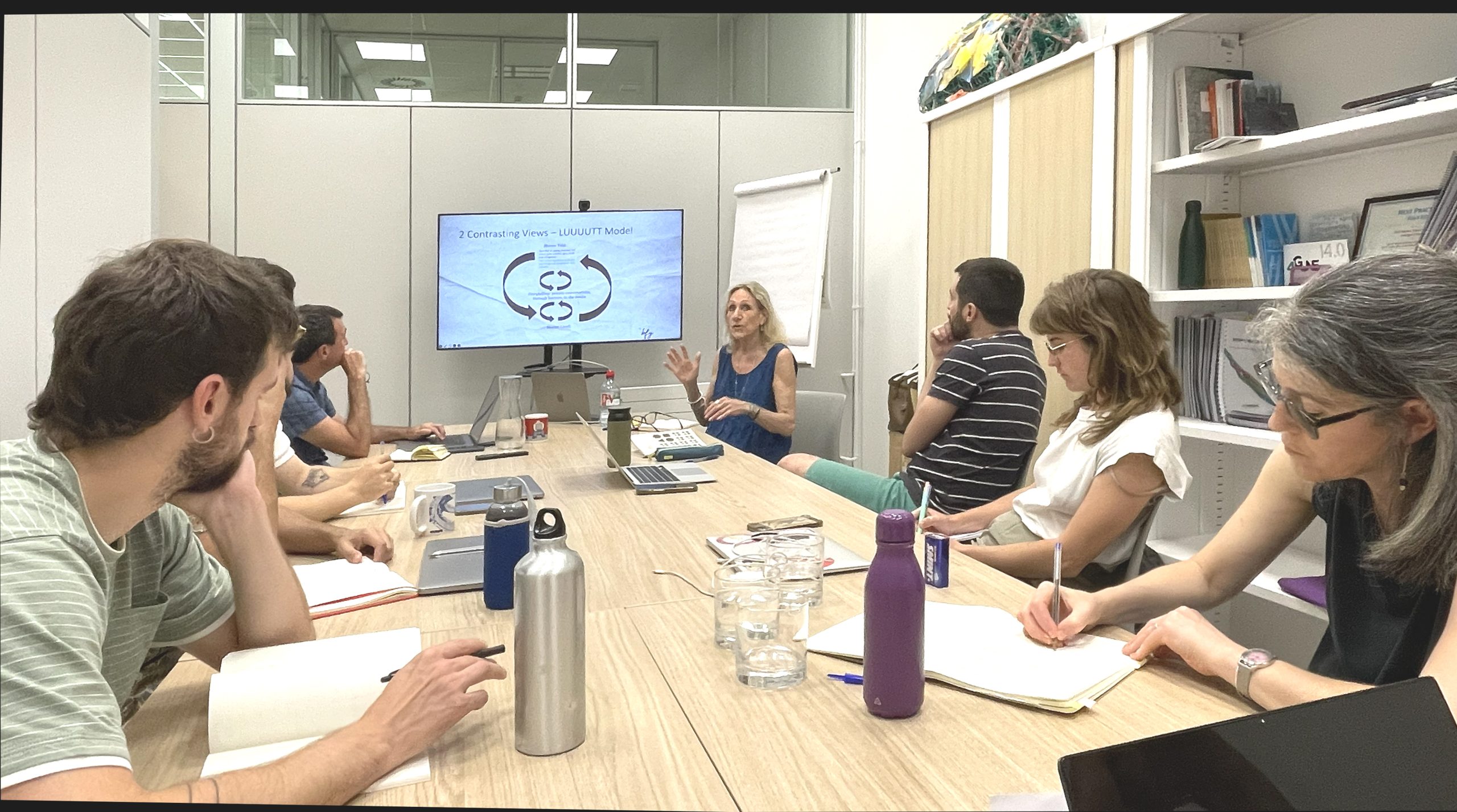
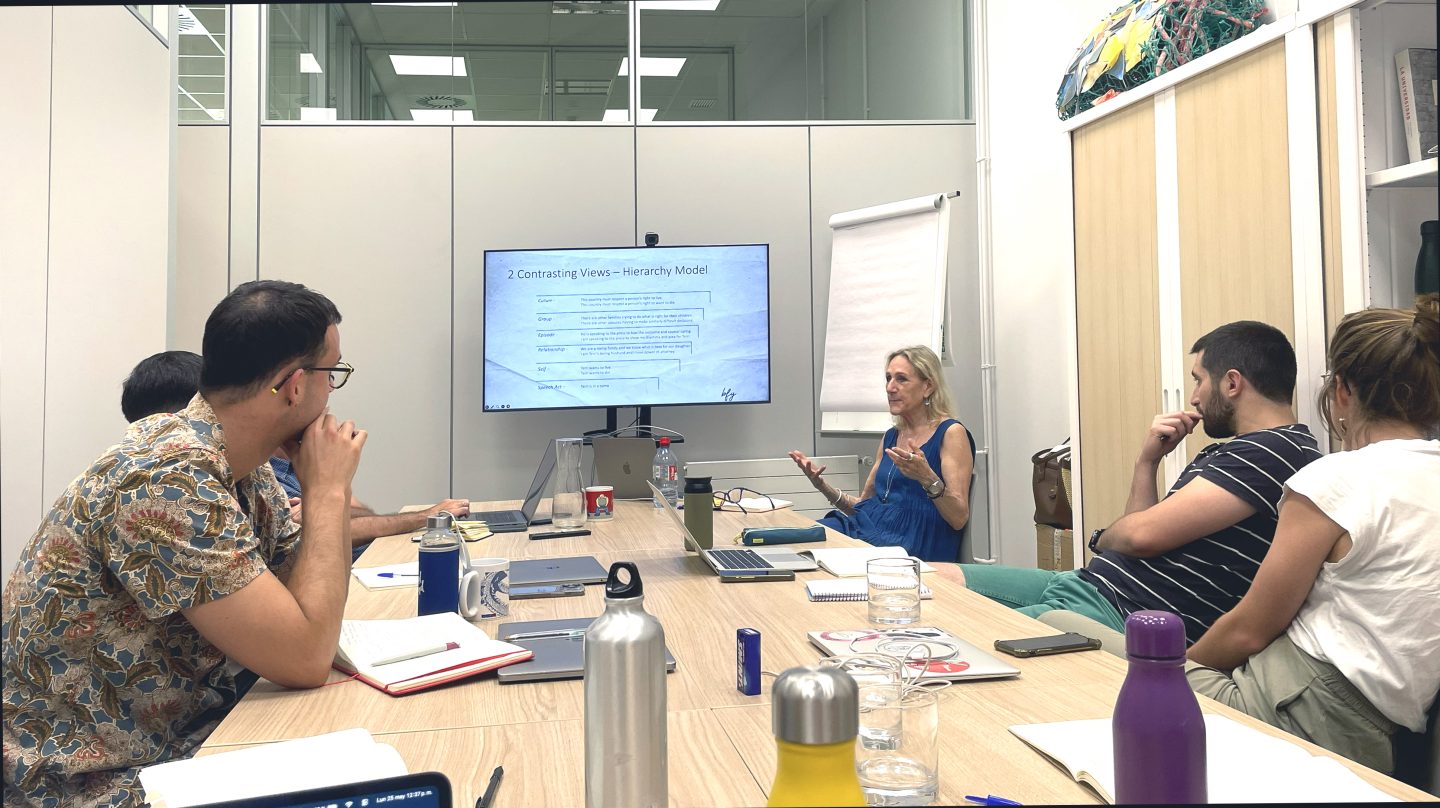
The CMM (Coordinated Management of Meaning) approach holds that communication is never neutral and that meaning is co-created through interaction and context: “the moment you walk into a room, you already change the situation.” From this perspective, the three dimensions of the model were analyzed: Coherence (how we organize meaning), Coordination (how we act together despite differences), and Mystery (the acceptance that complex systems cannot be fully controlled).
Fisher-Yoshida recalled a key maxim for social transformation: “Data doesn't change our minds.” It is narratives and relationships that drive profound change. The ALC team was able to delve deeper into narrative complexity using the LUUUUTT Model. This technique allows us to distinguish between public narratives that are shared (told and lived) and those that are not shared (unheard, untold), those that are unknown, and those that are not permitted (untellable).