Categoría Knowledge
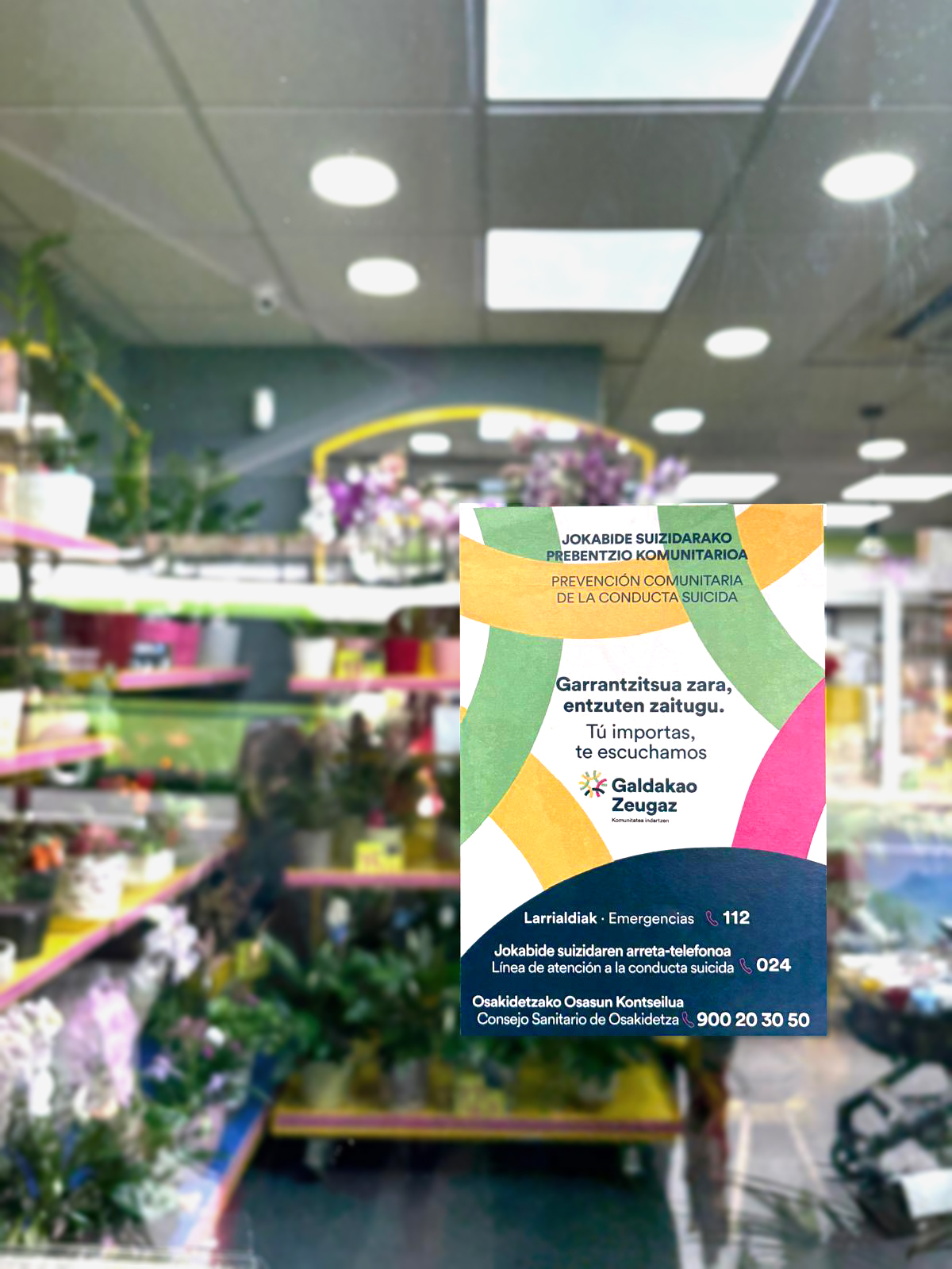
Galdakao y Getxo activan iniciativas comunitarias para la prevención del suicidio
Home Knowledge
Con motivo del Día Mundial para la Prevención del Suicidio, las iniciativas de innovación comunitaria Galdakao Zeugaz y Getxo Zurekin han puesto en marcha diversas acciones de sensibilización para acercar información y recursos de apoyo a la ciudadanía. Ambas experiencias, en las que participa Agirre Lehendakaria Center junto a agentes locales en ambos municipios y el Ayuntamiento de Galdakao, buscan reforzar los sistemas de cuidado y prevención a través de la participación activa de la comunidad.
En el marco del trabajo desarrollado en ambos municipios, la plataforma K Tool y la labor de las conectoras comunitarias —denominadas Ehulea en Galdakao y Lokarria en Getxo, un rol clave desde el que ahora está trabajando también Acción Contra el Hambre— permiten realizar la escucha en el territorio y conectar la percepción ciudadana con las decisiones institucionales. Así, se articula una red de responsabilidad compartida que facilita la co-creación de respuestas colectivas ante situaciones de vulnerabilidad.
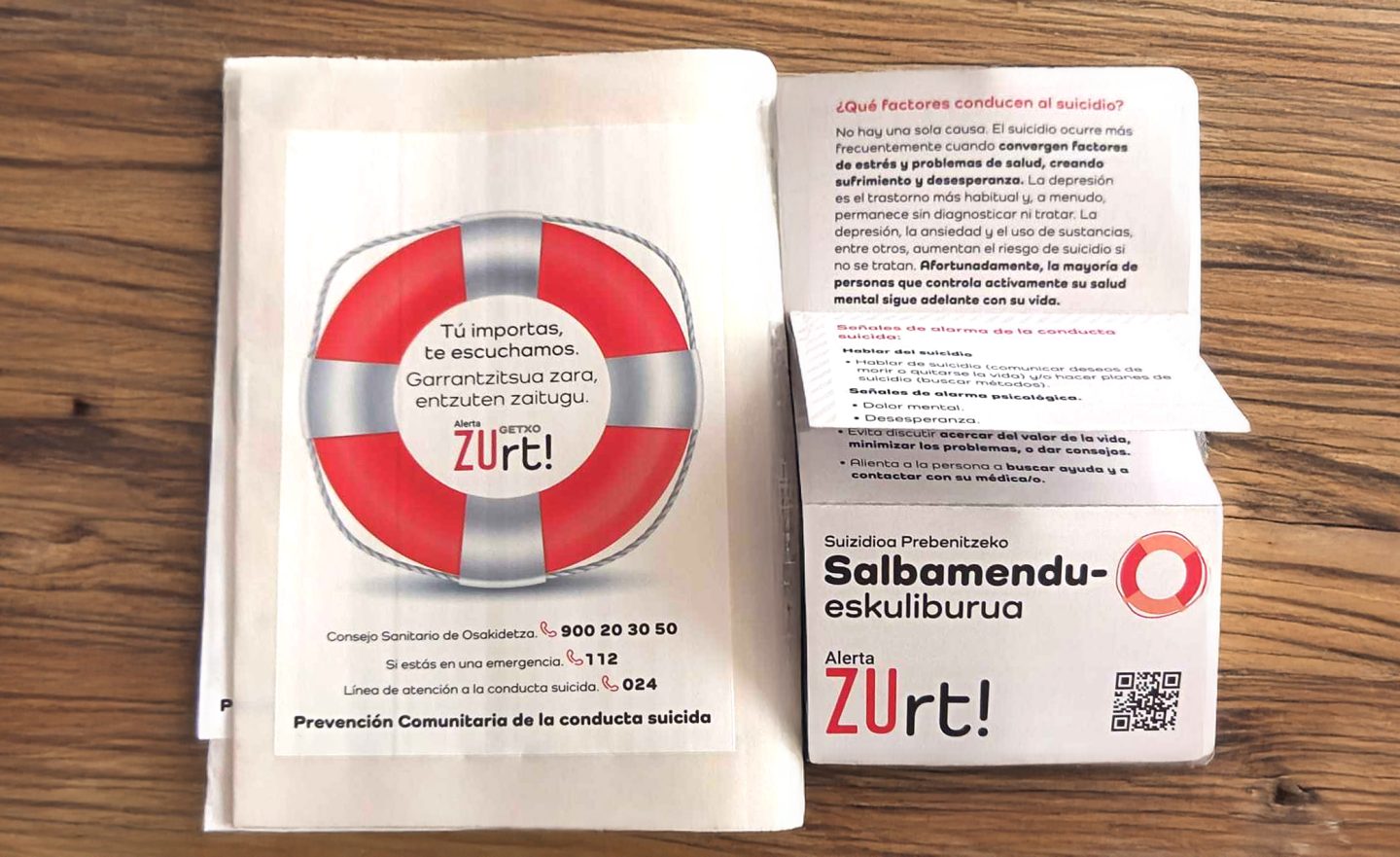
Alerta Zurt! El proyecto piloto
En 2022, a través de una sesión de co-creación comunitaria en Getxo, la propia ciudadanía diseñó la información que consideraba imprescindible visibilizar para persuadir e invitar a las personas a pedir ayuda. Este espacio colectivo dio lugar al proyecto piloto Alerta Zurt!. De ese proceso participativo surgieron materiales como las pegatinas informativas para colaborar con comercios y visibilizar recursos en los puntos de paso de los vecinos y vecinas, una iniciativa que se desplegó inicialmente en municipios como Sopelana y Plentzia. En 2026, con motivo del Día Mundial para la Prevención de la Conducta Suicida, el proyecto Galdakao Zeugaz se ha sumado al movimiento Alerta Zurt!.
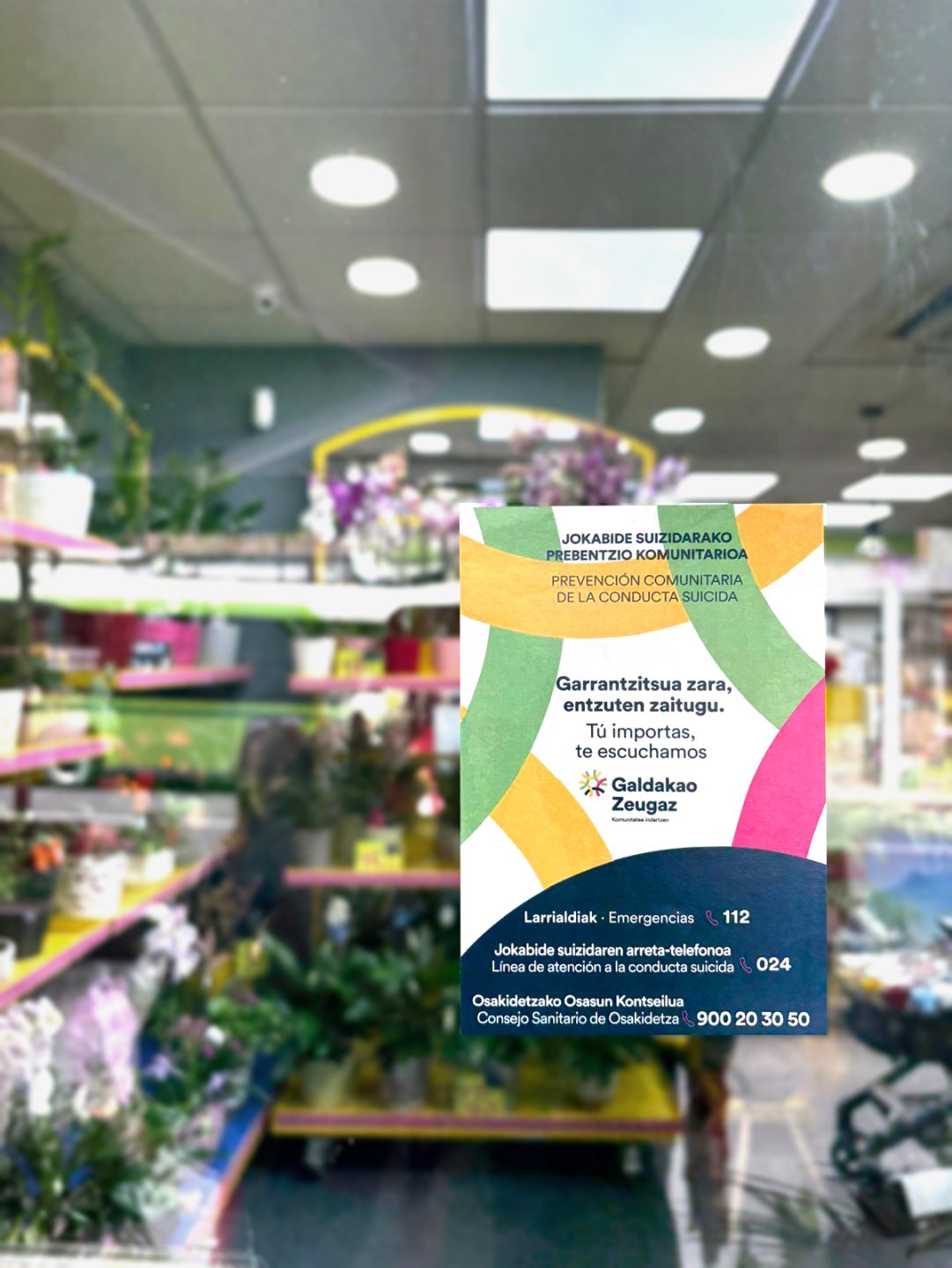
Sensibilización local y recursos informativos en Galdakao
En Galdakao, la campaña de sensibilización se ha articulado bajo el lema Garrantzitsua zara, entzuten zaitugu. Siguiendo la estela de Alerta Zurt!, la iniciativa ha dispuesto pegatinas y folletos informativos en comercios locales para facilitar herramientas que ayuden a identificar señales de alarma y ofrecer vías de asistencia.
Entre los materiales difundidos destaca la guía de prevención, que recopila teléfonos de atención como el Consejo Sanitario de Osakidetza (900 203 050), la línea de atención a la conducta suicida (024) y emergencias (112). El documento incluye orientaciones para acompañar y escuchar sin juzgar a personas en momentos de dificultad. Asimismo, el Ayuntamiento de Galdakao ha habilitado un apartado específico en su sitio web con recursos informativos y factores de riesgo.
Acción comunitaria en La Galea
Por su parte, en Getxo, la iniciativa Alerta Zurt! del programa Getxo Zurekin ha convocado una cadena humana en el entorno de La Galea. Esta movilización pacífica busca reclamar un incremento en las medidas de prevención, así como la instalación de paneles informativos y teléfonos de ayuda en la zona.
Tanto en Galdakao como en Getxo, estas acciones visibilizan la importancia de consolidar redes locales de apoyo y promover el bienestar integral a través del trabajo conjunto entre instituciones, profesionales, roles conectores y ciudadanía.
Información complementaria
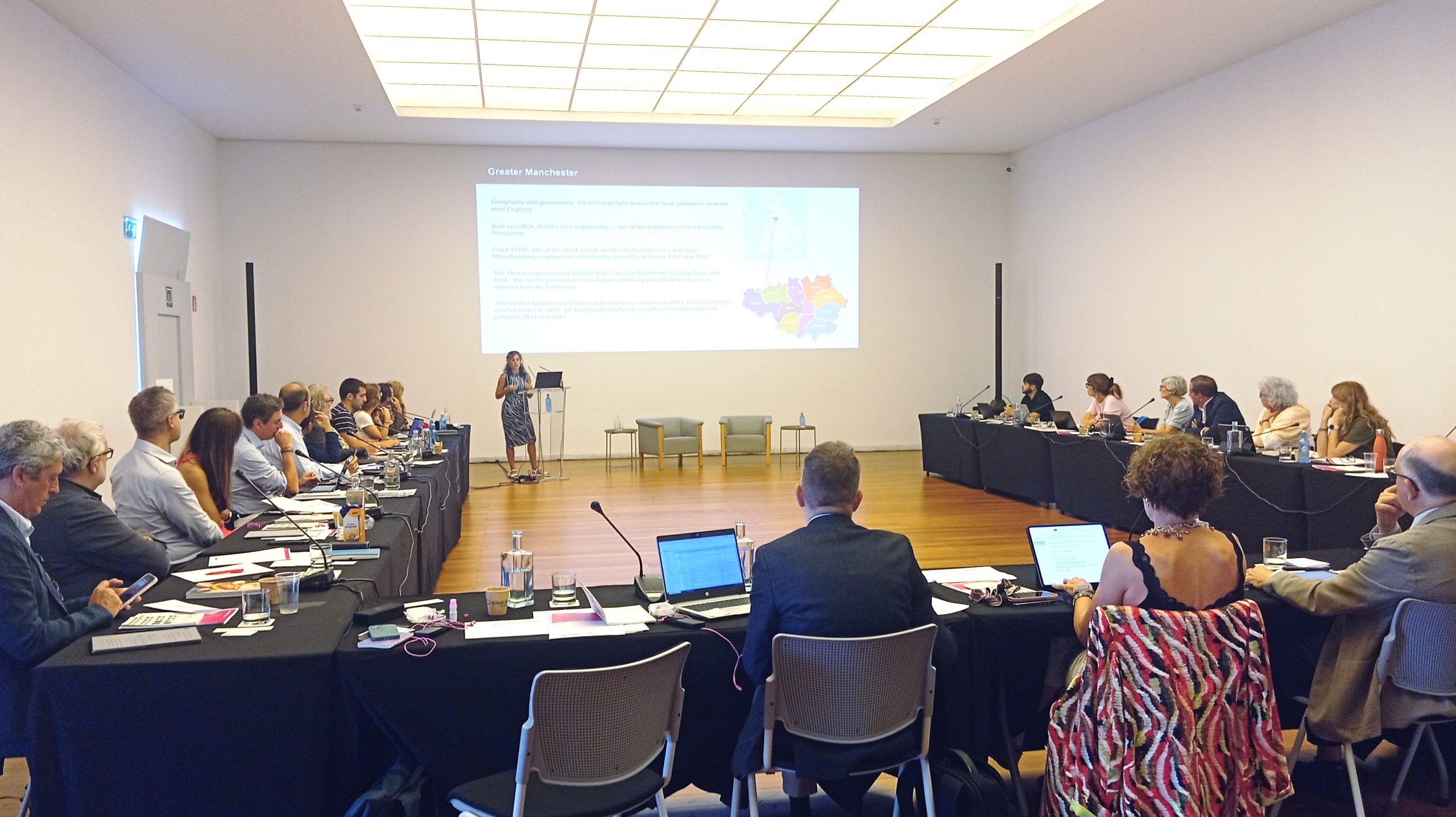
Las Políticas de Ciencia y Tecnología como palancas para una Innovación Inclusiva
Home Knowledge
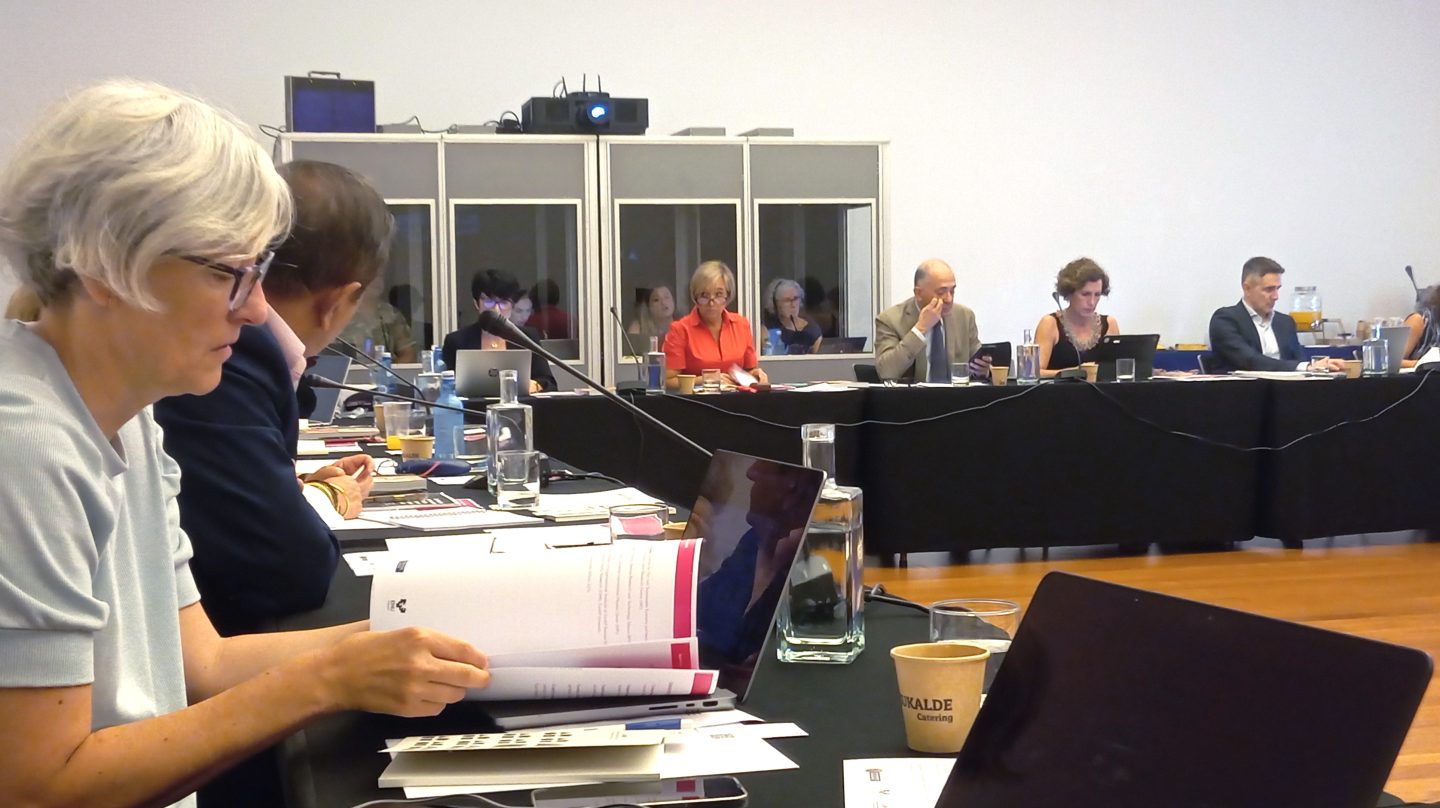
El Bizkaia Aretoa de la EHU ha acogido el seminario internacional "Las políticas de Ciencia, Tecnología e Innovación en Euskadi como palancas para la transición socioecológica", un encuentro en el que el viceconsejero de Ciencia e Innovación, Adolfo Morais, ha abogado por utilizar la experiencia de los últimos 50 años para trazar la estrategia vasca de CTI hacia el horizonte 2080.
La jornada se enmarca en la investigación impulsada por el Gobierno Vasco y coordinada por Agirre Lehendakaria Center junto a la EHU, que ya suma más de 150 entrevistas a agentes clave del ecosistema científico, público y empresarial. En la apertura se señalaron retos prioritarios como la atracción de talento en áreas STEM, la reducción de la burocracia, el impulso al emprendimiento científico y la apuesta por tecnologías clave como la inteligencia artificial, la biotecnología o la cuántica.
Para enriquecer el diagnóstico del caso vasco, el seminario analizó experiencias comparadas de la región de Manchester, Cataluña y Gales a través de las intervenciones de Elvira Uyarra, Joan Gómez Pallarès y Rick Delbridge. La cita concluyó con un debate entre referentes institucionales y científicos de Euskadi para proyectar las políticas de innovación como motor del bienestar y la transformación socioecológica.
Conclusiones clave de la sesión de la mañana
La jornada de la mañana permitió identificar varios retos y aprendizajes clave para el ecosistema vasco:
- Innovación inclusiva: La inclusión debe diseñarse de forma explícita dentro de los marcos normativos e institucionales, en lugar de asumirse como un beneficio automático derivado del desarrollo. La puesta en marcha de "micromisiones" adaptadas a las realidades locales podría contribuir a aprovechar directamente las fortalezas del ecosistema.
- Necesidad de concentración y masa crítica: Asumiendo el reto de ser un país pequeño con "grandes pequeñas empresas", se hace imprescindible superar la fragmentación del sistema impulsando la aglomeración, la concentración y la velocidad de actuación para mantener la relevancia a escala global.
- Cerrar la brecha entre ciencia e industria: Es necesario acortar las distancias entre universidades, centros tecnológicos y el tejido empresarial. Para ello, se debe potenciar la "capacidad de absorción" de las empresas frente a la nueva ciencia y crear fondos público-privados de apoyo a empresas emergentes de tecnología profunda (deep tech) y basadas en el conocimiento.
- Repensar la excelencia y los indicadores de impacto: Resulta urgente evolucionar de métricas meramente cuantitativas sobre el gasto (cuánto se invierte) hacia indicadores de impacto altamente cualitativos que midan la resolución efectiva de problemas reales y complejos.
- Apostar por la experimentación avanzada (Sandbox): Situar a Euskadi como un espacio dinámico para la experimentación en CTI implica aprender a gestionar el riesgo, aislar la experimentación del diseño de políticas tradicionales y anticipar retos futuros mediante simulaciones, en lugar de ceñirse únicamente a los planes de trabajo que están en marcha.
Nueva herramienta de escucha activa mediante IA
Durante la jornada se presentó también la prueba piloto de una nueva herramienta de escucha activa: un chatbot conversacional con Inteligencia Artificial que funciona a través de WhatsApp. El objetivo es complementar las entrevistas presenciales, permitiendo escalar el proceso del ecosistema de CTI.
A diferencia de una encuesta tradicional, el bot conversa de forma dinámica en tres idiomas (por texto o voz) y adapta sus preguntas según las respuestas recibidas. Toda la información se integrará en la plataforma K-tool para garantizar su trazabilidad.
Entre sus principales ventajas destacan:
- Mayor sinceridad: Las personas tienden a responder con mayor transparencia y menos condicionantes sociales al interactuar con un entorno automatizado.
- Contraste de políticas: Permitirá interactuar con perfiles simulados y validar opiniones o hipótesis antes de lanzar nuevas políticas públicas.
Esta primera fase servirá para detectar errores, ajustar el bot junto a los participantes y comprobar su verdadero alcance antes de desplegarlo a mayor escala.
Workshop de trabajo colaborativo por la tarde
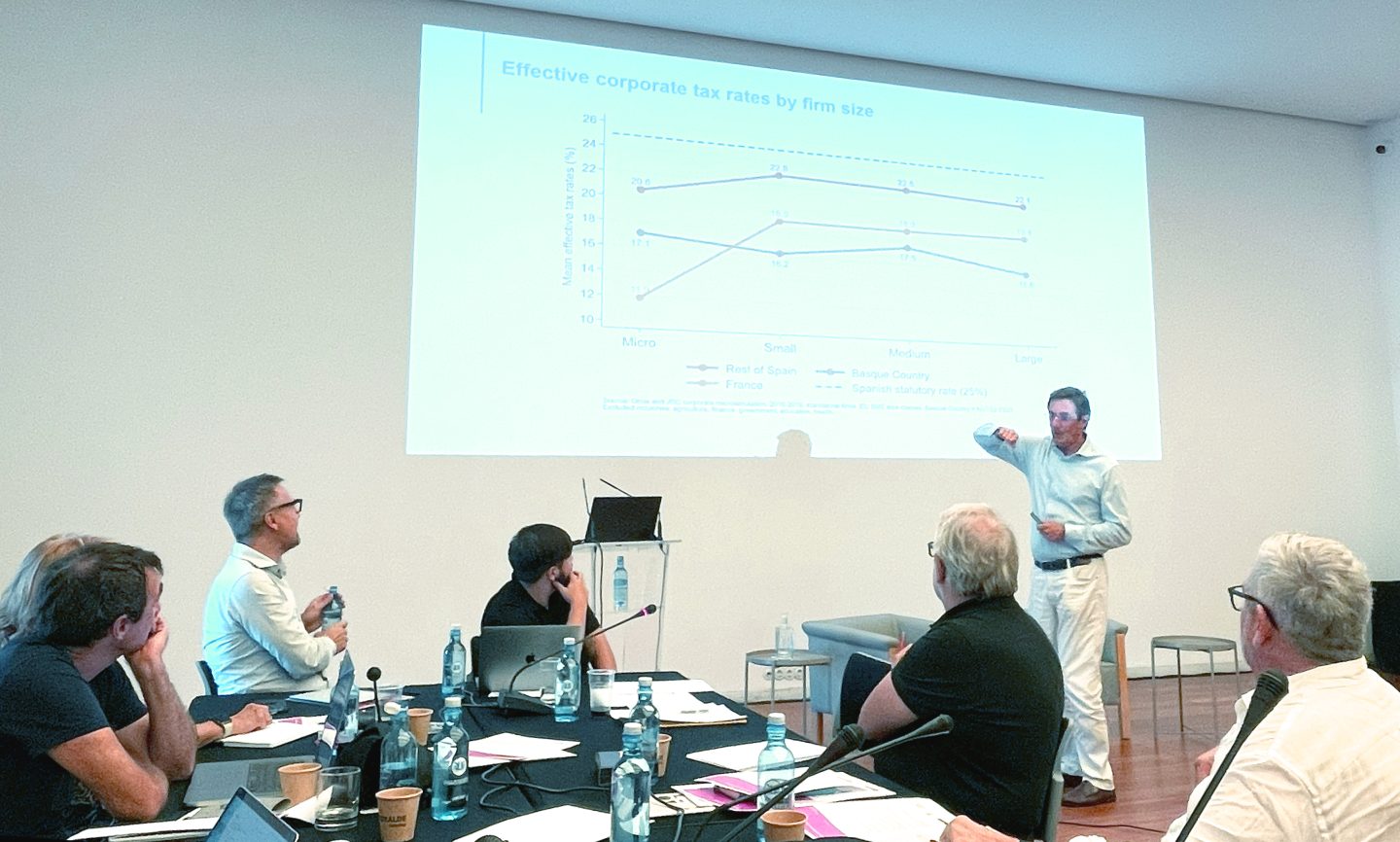
Conectado con la discusión de la mañana, la sesión continuó por la tarde en la Sala Chillida de Bizkaia Aretoa con un workshop participativo enfocado en profundizar en los elementos y preguntas clave identificados durante la primera fase de la investigación.
El taller se dividió en dos bloques principales de debate:
- Euskadi como sandbox de CTI: Introducido por las ponencias de Mikel Landabaso y Fermín Cerezo, se debatió la posibilidad de adaptar a Euskadi un modelo de banco de pruebas (sandbox) enfocado en la experimentación de políticas de CTI y transiciones socioecológicas. La discusión tomó como punto de partida la propuesta de Mikel Landabaso ("Euskadi como el invernadero de Europa") y la experiencia del Sandbox Urbano de Valencia presentada por Fermín Cerezo, abordando aspectos como el enfoque de portafolios transformadores, la gobernanza colaborativa y el papel de las narrativas.
- Diseño y evaluación de políticas inclusivas de CTI: Introducido por Michal Miedzinski, en este bloque se reflexionó sobre cómo garantizar una innovación inclusiva en el diseño y evaluación de políticas. La discusión combinó los aportes matutinos de Rick Delbridge y Elvira Uyarra (basados en el informe Inclusive Innovation) con el marco conceptual POLIFRAME desarrollado por Miedzinski, profundizando en aspectos como la evaluación orientada al desarrollo, la financiación sistémica y las nuevas infraestructuras digitales.
“Listening Better, Acting Faster”: innovación social y tecnología
Home Knowledge
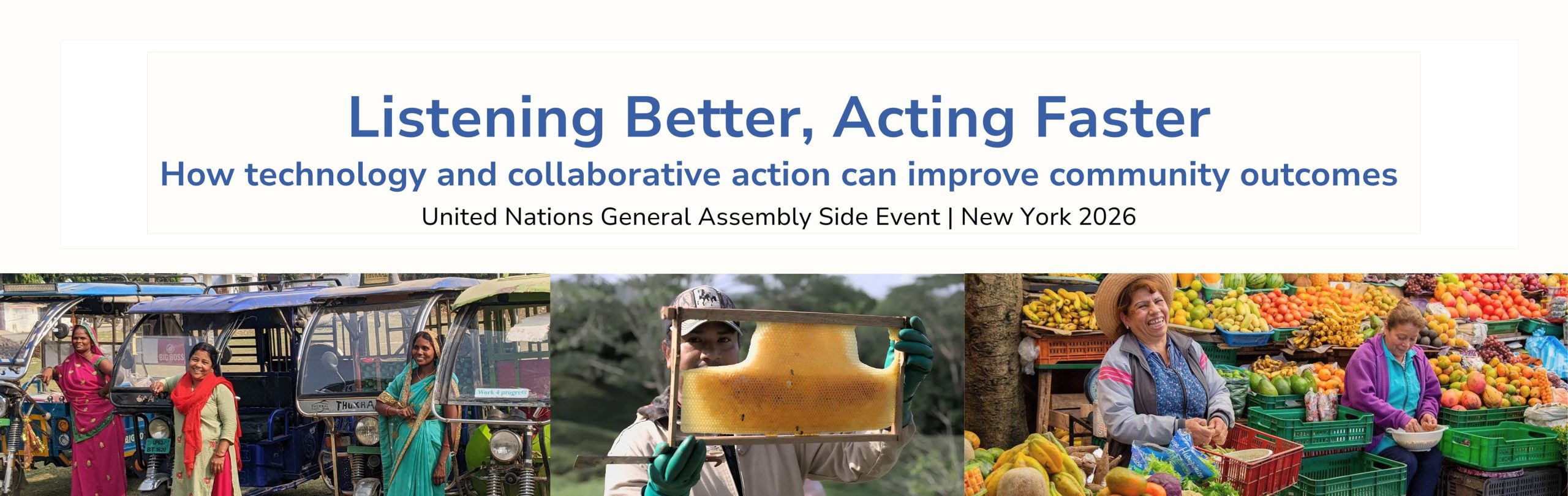
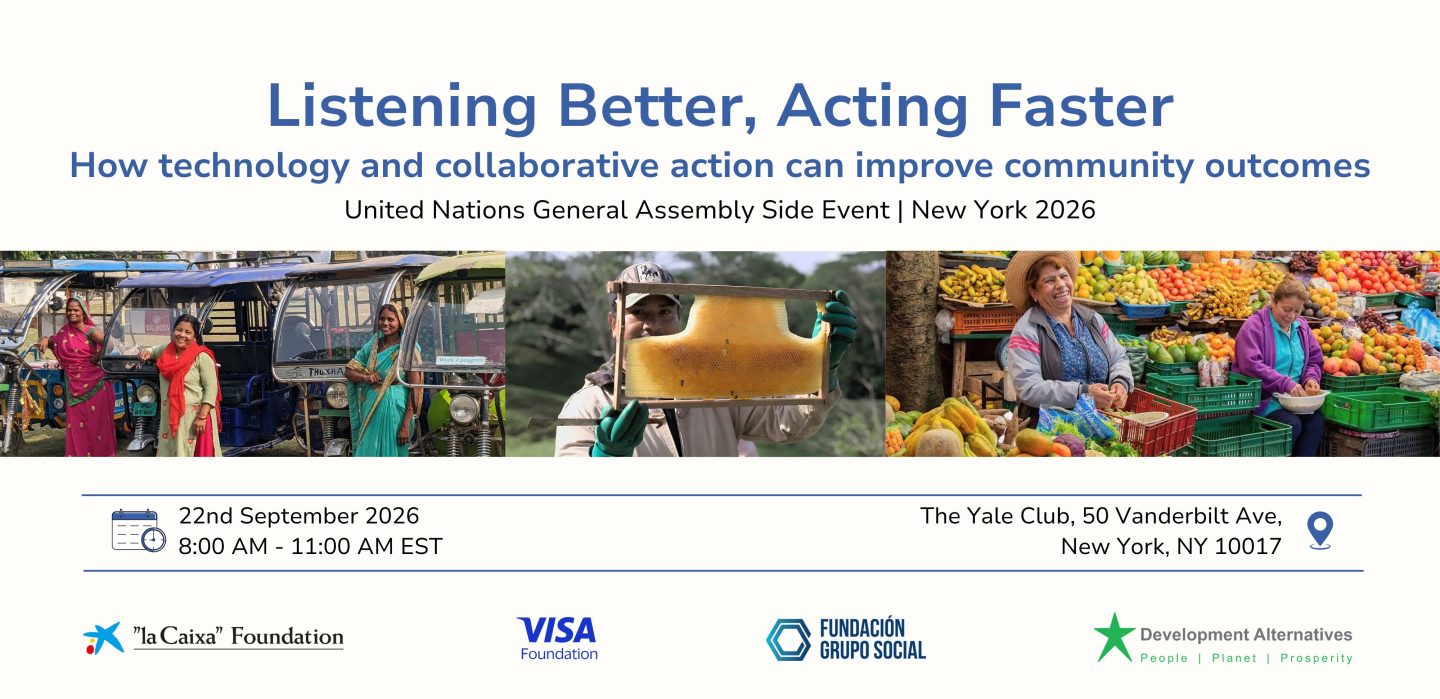
El programa Work4Progress organiza el próximo 22 de septiembre de 2026 en Nueva York el encuentro “Listening Better, Acting Faster”, una jornada convocada de forma conjunta por Fundación "la Caixa", Visa Foundation y Fundación Grupo Social durante la semana de la Asamblea General de las Naciones Unidas (UNGA Week).
En un contexto marcado por desafíos sociales cada vez más complejos y un entorno de financiación exigente, el evento abordará cómo el sector filantrópico puede fortalecer la colaboración entre distintos actores. A lo largo del encuentro se analizará el papel de la tecnología, el uso de los datos y la inteligencia artificial para escuchar activamente a las comunidades, acelerar los procesos de aprendizaje y transformar la información en iniciativas con impacto real.
La cita reunirá a líderes del ámbito de la filantropía, instituciones multilaterales, la academia y la sociedad civil para compartir experiencias prácticas. Las sesiones de trabajo permitirán explorar cómo los enfoques colaborativos contribuyen a identificar necesidades emergentes, adaptar las intervenciones sobre el terreno y escalar aquellas soluciones que ofrecen mejores resultados.
En el marco de estas dinámicas de escucha comunitaria y análisis del valor social, ALC aporta su experiencia metodológica y el desarrollo de herramientas digitales como K Tool, diseñadas para estructurar la interpretación de datos cualitativos y acompañar procesos de toma de decisiones participativas.
Información adicional

Modelos de regeneración y liderazgo comunitario: encuentro con Clive Somerville
Home Knowledge
El equipo de ALC mantuvo un encuentro con Clive Somerville, Chief Executive de South Waikato Investment Fund Trust (SWIFT). Somerville cuenta con trayectoria en los ámbitos bancario, tecnológico y de desarrollo comunitario, y actualmente lidera iniciativas orientadas a la regeneración económica, la resiliencia social y el bienestar intergeneracional en South Waikato (Nueva Zelanda).
Su visita a Euskadi forma parte de la estancia de investigación que está realizando tras ser galardonado con la New Zealand Churchill Fellowship 2026. Esta beca, otorgada por el Winston Churchill Memorial Trust, permite a profesionales de Nueva Zelanda viajar al extranjero para desarrollar proyectos que aporten valor a su país. En este contexto, la investigación de Somerville analiza cómo diferentes territorios —el Valle del Ruhr en Alemania, el País Vasco e Irlanda rural— han abordado procesos de regeneración y transformación territorial bajo condicionantes complejos, utilizando la inversión en infraestructuras, la reconversión de la fuerza laboral y los modelos de economía circular.
Enfoque de trabajo y escucha comunitaria
En la sesión, el equipo presentó la trayectoria de ALC, su portfolio de proyectos y su enfoque metodológico en procesos de innovación y transformación social.
A lo largo del intercambio se puso un énfasis especial en la escucha y en el valor de las narrativas y percepciones comunitarias para abordar retos sociales complejos. El enfoque metodológico de ALC busca incorporar de forma sistemática el conocimiento y las vivencias de las comunidades, situándolas no solo como fuente de información, sino como parte clave en la interpretación y orientación de los procesos.
El encuentro permitió profundizar en el contexto rural de South Waikato a través de la experiencia de Somerville, abordando las brechas territoriales existentes respecto al denominado "Golden Triangle", una zona clave en la atracción de inversiones y oportunidades. También se abordó el papel fundamental de las comunidades indígenas, los desafíos para dinamizar la economía local y la estrecha vinculación entre identidad, territorio, cultura y lengua.

K Tool y contraste sobre el liderazgo comunitario
Durante la reunión se presentó K Tool como una herramienta orientada a recoger y organizar información cualitativa de las comunidades, abriendo un debate centrado en cómo garantizar que la comunidad lidere realmente los procesos de cambio. Lo que llevó a profundizar en torno a:
- La diferencia entre consultar a la comunidad y permitirle influir de forma real en la toma de decisiones.
- La necesidad de superar el diseño de actuaciones «para» la comunidad para construirlas «con» la comunidad.
- El valor de trascender la recogida puntual de testimonios para generar espacios continuados de interpretación, contraste y decisión.
Vinculado a esto, se analizó la falta de neutralidad de la evidencia, entendiendo que la información cualitativa no se recoge ni se interpreta al margen del contexto. Dado que las narrativas reflejan diferentes posiciones, experiencias e intereses de poder, se concluyó que el objetivo no debe ser eliminar estas perspectivas, sino hacerlas visibles, contrastarlas e incorporar una diversidad de voces.
«Gobernar el Futuro» Innovación pública y gobernanza en red
Home Knowledge
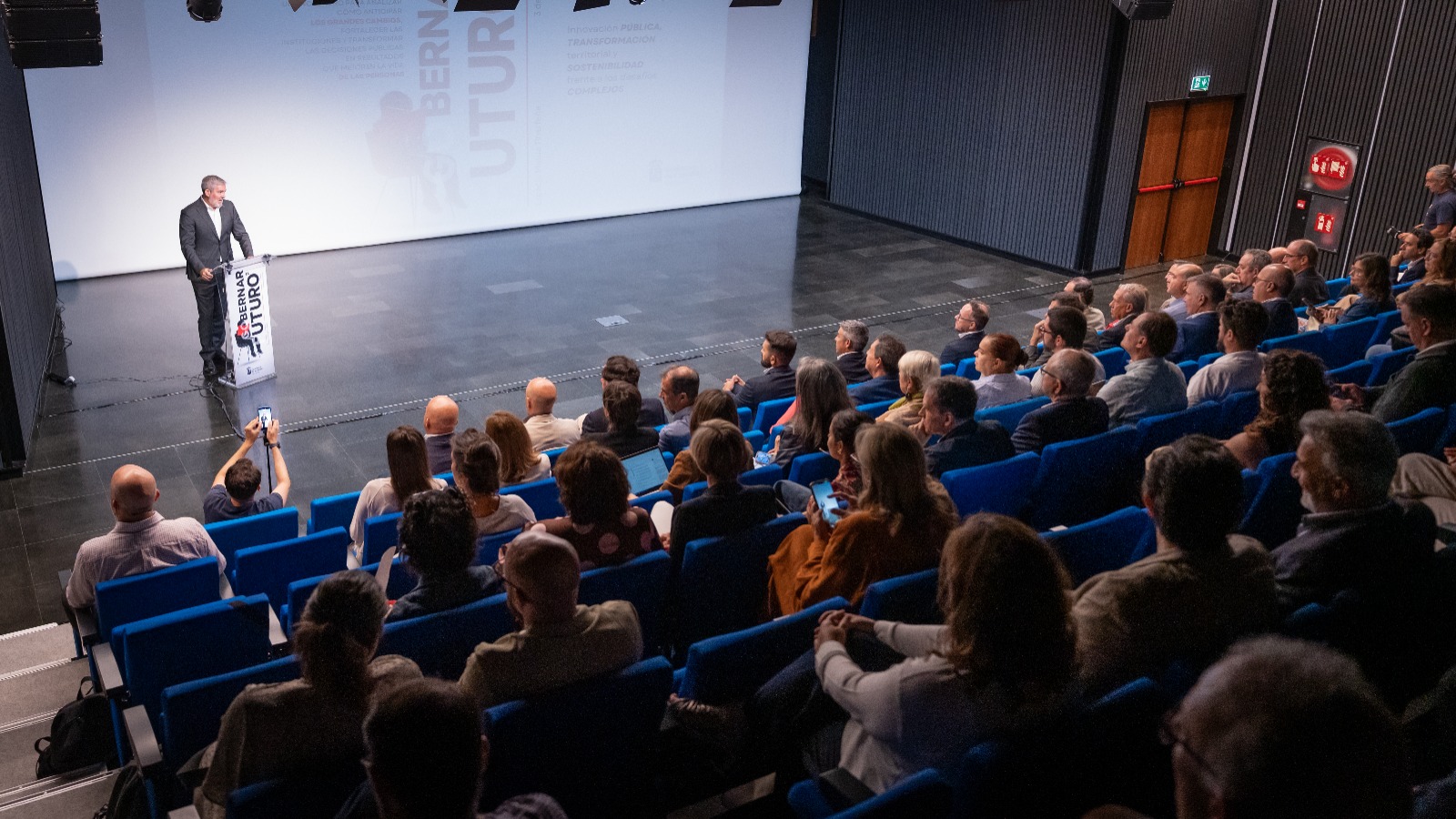
El laboratorio de innovación pública del Gobierno de Canarias, Islas Responsables Lab (IRLab), organizó el encuentro «Gobernar el Futuro: Innovación pública, transformación territorial y sostenibilidad frente a los desafíos complejos». Este foro reunió a representantes de administraciones públicas, entidades sociales, universidades, empresas y especialistas para abordar la adaptación de las instituciones a los cambios rápidos del contexto actual.
Durante la apertura institucional, el presidente de Canarias, Fernando Clavijo, destacó la necesidad de transformar las instituciones para anticiparse a los grandes retos del territorio y lograr que las decisiones públicas se traduzcan en resultados concretos para la ciudadanía.
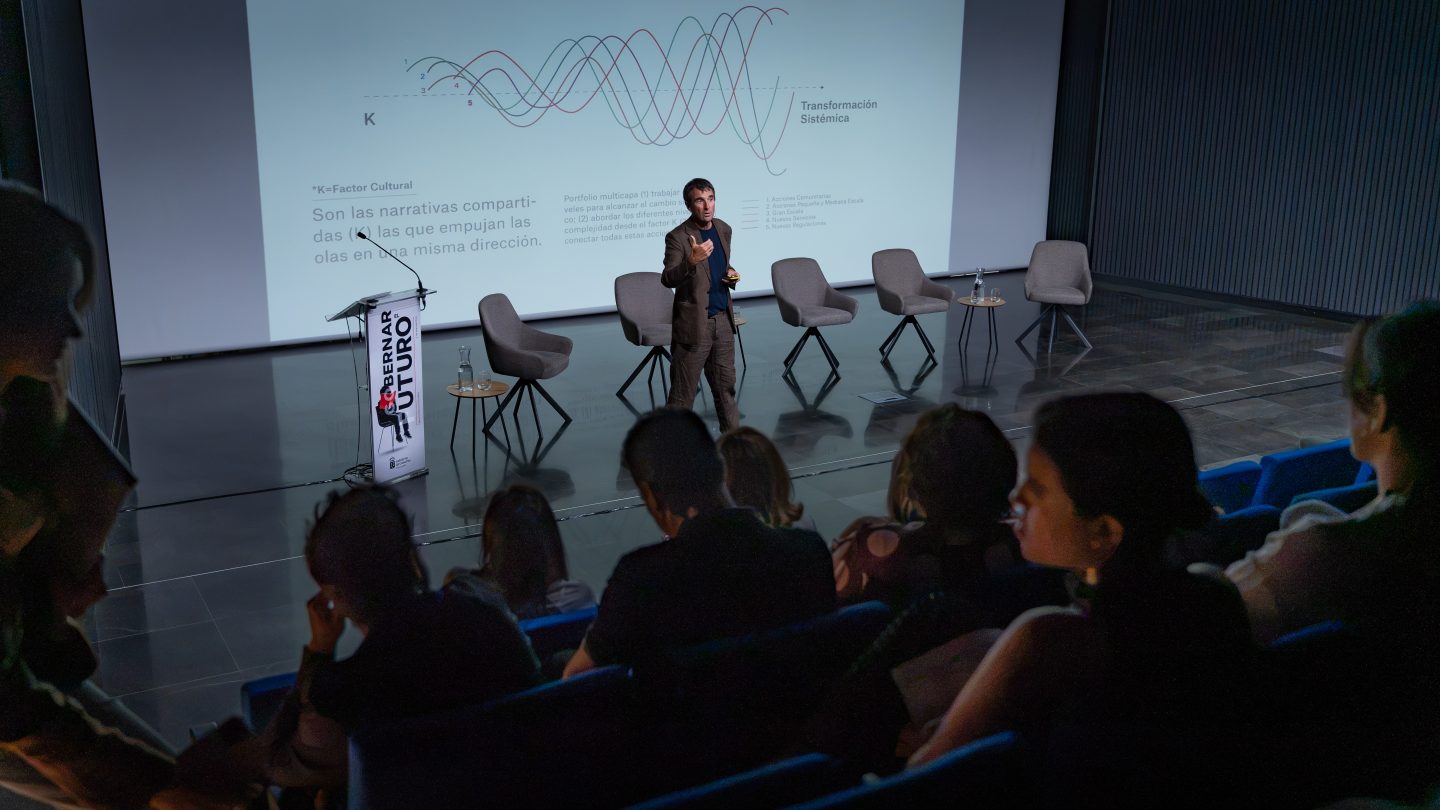
El director de ALC, Gorka Espiau, intervino dentro del eje sobre territorios que transforman con la ponencia «Gobernar en red», donde compartió los aprendizajes del modelo vasco de cooperación entre instituciones, empresas, universidades y sociedad civil. Además, formó parte de un espacio de debate junto a Antoni Vives (City Transformation Agency), Melany Sosa (Science & Innovation Link Office) y Raúl Oliván (Hexagonal LAB) para analizar las capacidades públicas que requiere un territorio para transformarse.
La jornada concluyó con un bloque dedicado a la gobernanza multinivel y las oportunidades de Canarias para consolidarse como laboratorio de innovación territorial, en el que participaron representantes de GAIN, ONU-Hábitat España y las universidades canarias.

ALC y Acción Contra el Hambre presentan los primeros avances del proyecto #StopMalnutrición
Home Knowledge
Agirre Lehendakaria Center y Acción Contra el Hambre (ACH) han completado los primeros meses de trabajo conjunto en el proyecto #StopMalnutrición, cofinanciado por el Fondo Social Europeo Plus (FSE+) dentro de la Prioridad de Innovación Social del Programa Estatal de Inclusión Social, Garantía Infantil y Lucha contra la Pobreza.
El primer informe semestral del proceso recoge los principales avances y aprendizajes alcanzados entre abril y julio de 2026 en cuatro territorios: Madrid, Galicia, Andalucía y Euskadi. La iniciativa busca comprender las dinámicas que generan la inseguridad alimentaria infantil en contextos diversos e incorporar una mirada sensible a la nutrición en los sistemas de protección social.
Un enfoque de evaluación evolutiva para transformar el sistema
Frente a los modelos convencionales de evaluación, ALC acompaña el proyecto mediante una metodología de evaluación evolutiva. Este enfoque concibe la evaluación como un sistema de aprendizaje continuo que acompaña la implementación en tiempo real, facilitando la toma de decisiones y la adaptación constante de la intervención a medida que emergen nuevas evidencias.
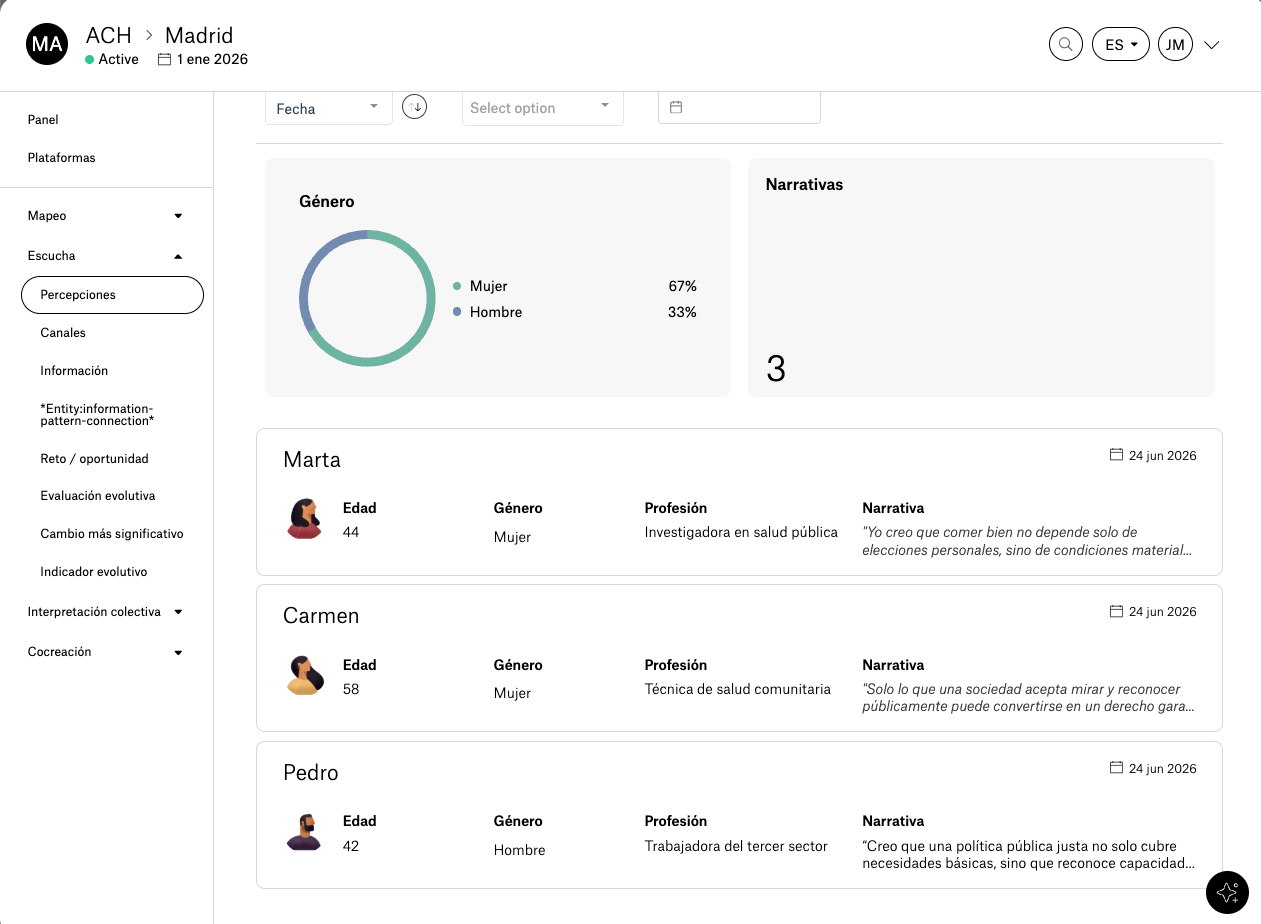
El proceso se basa en cuatro competencias metodológicas interrelacionadas: el mapeo sistémico del ecosistema, la escucha profunda de percepciones, la interpretación colectiva del conocimiento y la cocreación de carteras de innovación y prototipos. Toda la información se gestiona en la K tool, la plataforma digital de ALC que utiliza inteligencia artificial para agilizar la sistematización cualitativa e identificar patrones narrativos.
De forma paralela, el proyecto está sirviendo para desarrollar el perfil de las conectoras comunitarias, profesionales clave para generar confianza en el territorio, articular las redes locales y alimentar la K tool de manera continuada.
Principales conclusiones por territorio
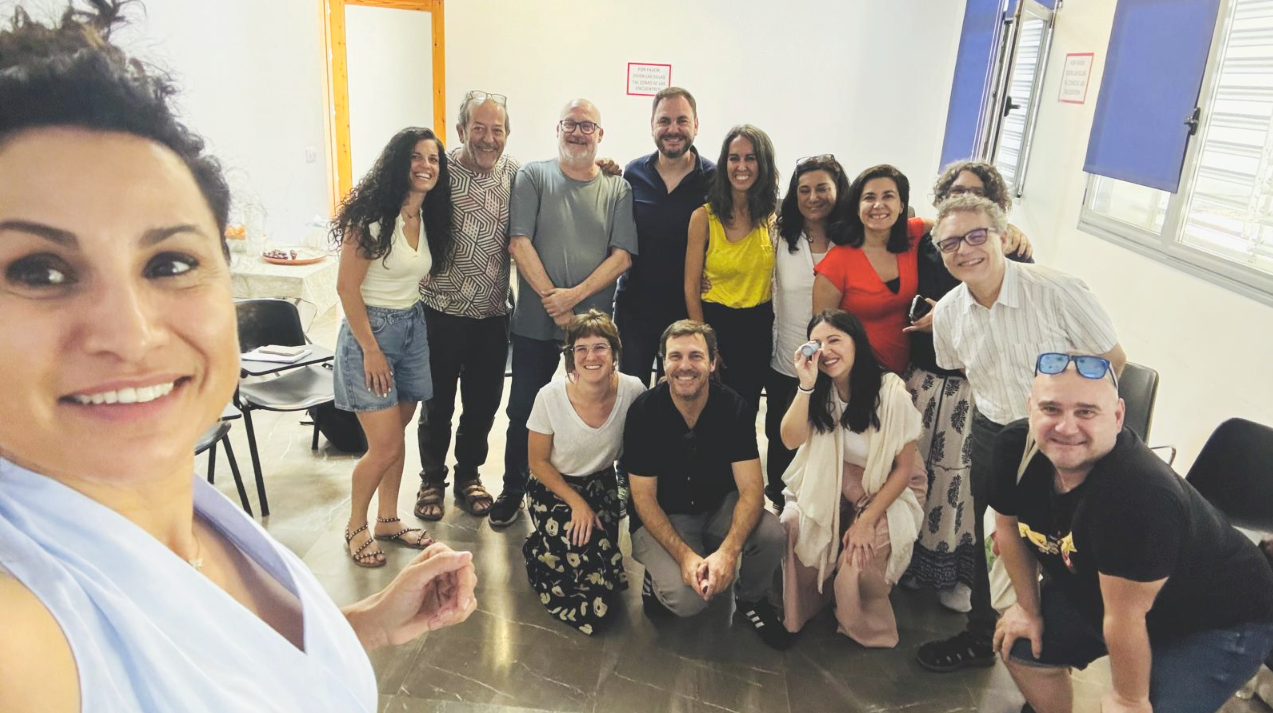
El trabajo de campo realizado en estos primeros meses ha permitido elaborar los mapas iniciales de actores, recoger las primeras percepciones y celebrar sesiones de interpretación colectiva, de las que comienzan a extraerse conclusiones clave en cada contexto:
- Madrid: La inseguridad alimentaria infantil continúa siendo un fenómeno poco visible que suele permanecer oculto en los hogares. Las narrativas recopiladas señalan la necesidad de trascender los enfoques centrados únicamente en los hábitos individuales para atender a los determinantes socioeconómicos. Asimismo, se subraya el potencial de los comedores escolares como espacios de equidad y la oportunidad de conectar las ciencias sociales con las de la salud.
- Andalucía (Sevilla): El análisis en varios barrios muestra el impacto de la vulnerabilidad socioeconómica y los entornos alimentarios urbanos. Las escuchas coinciden en que la ayuda material debe acompañarse de apoyo familiar y fortalecimiento comunitario, incorporando además la dimensión emocional de la alimentación. A partir de estos hallazgos, se avanza en la conceptualización de una plataforma de colaboración interinstitucional y comunitaria en la ciudad.
- Euskadi: Las escuchas ponen de manifiesto la necesidad de ampliar la comprensión de la malnutrición infantil bajo un marco de derechos, calidad alimentaria y soberanía alimentaria. Los comedores escolares se perfilan como espacios estratégicos para garantizar una nutrición adecuada y promover la educación alimentaria. La falta de coordinación entre administraciones y departamentos se identifica como uno de los principales retos a abordar.
- Galicia (entorno de Vigo y Nigrán): Con un enfoque marcadamente comunitario, las conversaciones muestran una estrecha vinculación entre el tiempo disponible, la precariedad laboral, la conciliación y la capacidad de sostener pautas alimentarias saludables. Emerge con fuerza la feminización de los cuidados como un factor estructural, así como la necesidad de reforzar la prevención temprana frente a respuestas puramente asistenciales.
Próximos pasos
Durante el segundo semestre de 2026, el proyecto prevé ampliar el proceso de escucha hacia la infancia y la adolescencia mediante metodologías participativas como el Photovoice. Asimismo, se celebrarán nuevas sesiones presenciales de interpretación colectiva en los cuatro territorios para definir la primera cartera de innovación e iniciar la cocreación de los primeros prototipos de intervención social.
A Conversation on Portfolio Visualization: A Novel K Tool for Analyzing Narrative-Informed Portfolios
Home Knowledge
This conversation took place on the 1st of April, 2026, when we, Kateryna and Julia, sat for one hour to try out the recently launched digital platform (K Tool) for analyzing and visualizing narrative-informed portfolios for the case of the Basque Science, Technology and Innovation (STI) Policy. In this conversation, we aimed to explore the current functionality of K Tool and identify possibilities to develop its visual and analytical features further. Kateryna is a researcher who investigates various approaches for transformative portfolios, but doesn’t have previous experience of using the K Tool and therefore was acting as a user who is trying to get through the new tool, and understand its logic better. Julia has been partially involved in the design and development of the K Tool and has used it within other projects, she therefore provided clarifications and shared reasoning behind the inclusion of different features.
Key takeaways:
Key questions for colleagues: In ALC, our ultimate goal is to move narrative-informed portfolios from a theoretical ideal to an operational reality. We are working toward a future where digital tools like K Tool don’t just store data but actively build the social innovation capabilities of institutions—collectively learning how to map, listen, and navigate the friction of change. We would like to have a further discussion with portfolio practitioners and researchers, no matter what approach to portfolio they use, as soon as they are interested to compare and contrast prototypes, failures, and insights. We are thinking about such questions as:
|
Kate: It will be very interesting to try out this tool now with you, Julia. I’m familiar with the ALC approach to narrative-informed portfolios to some extent, I remember first encountering it in 2020-2021, when following the work of the Strategic Innovation Unit of UNDP in different countries, when one of their approaches to portfolio design was based on the work of ALC. But the K Tool is new to me. I don’t have any specific order in which I want to ask you my questions, let’s just open the tool and look at the visuals.
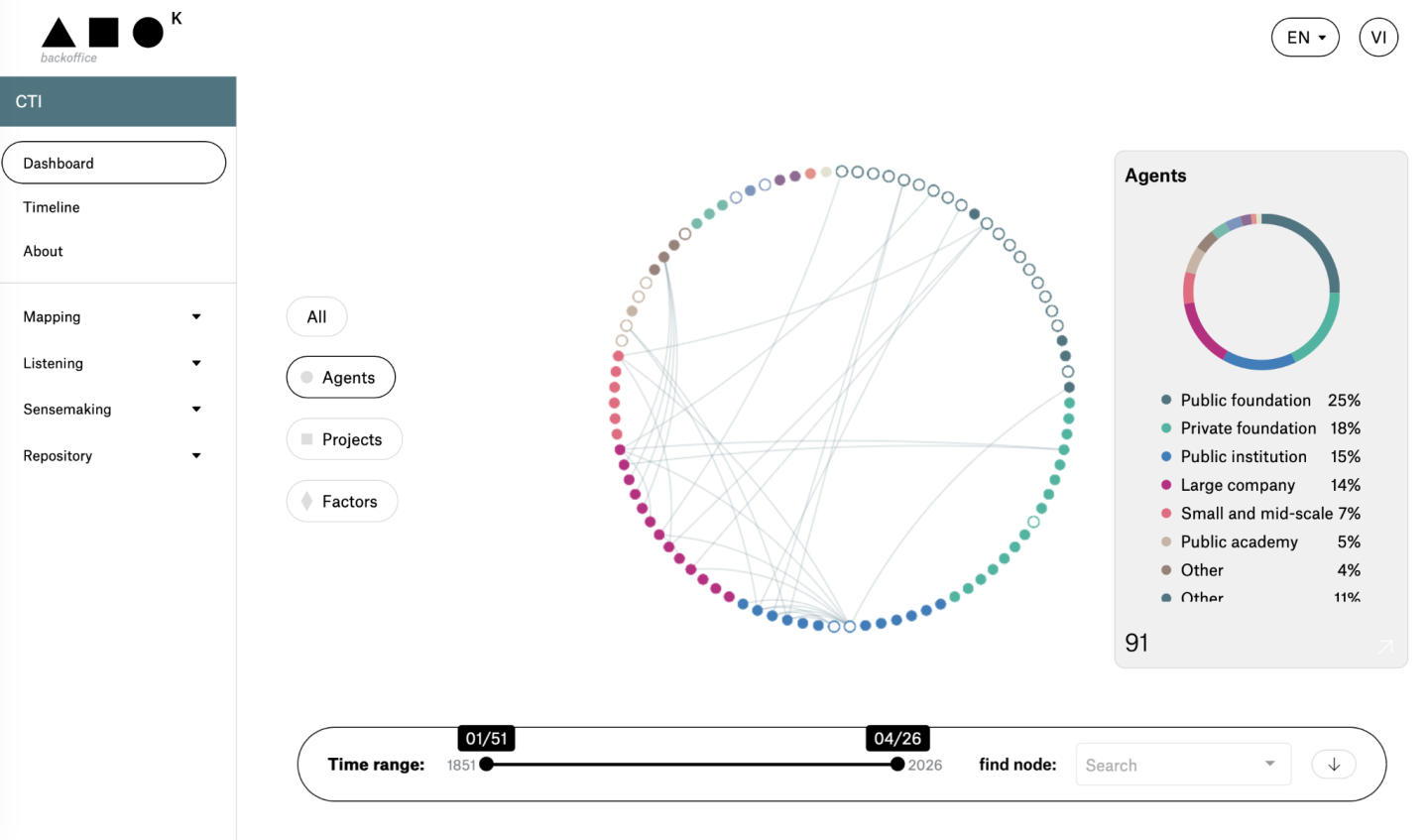
Figure 1. Main Dashboard of the K Tool. Interconnections across agents
Julia: Sure, let’s do this! The K Tool for the Basque STI project was launched just a few weeks ago, it now includes most of the information we collected so far — until now, we had conversations with more than 100 people. But we keep on updating it all the time, as information comes in.
Kate: Maybe, we can start by looking at the visual that one would see first when opening the Dashboard. Here we can see portfolio structure, which is colour-coded: different colours are attributed to projects, actors, and also factors.
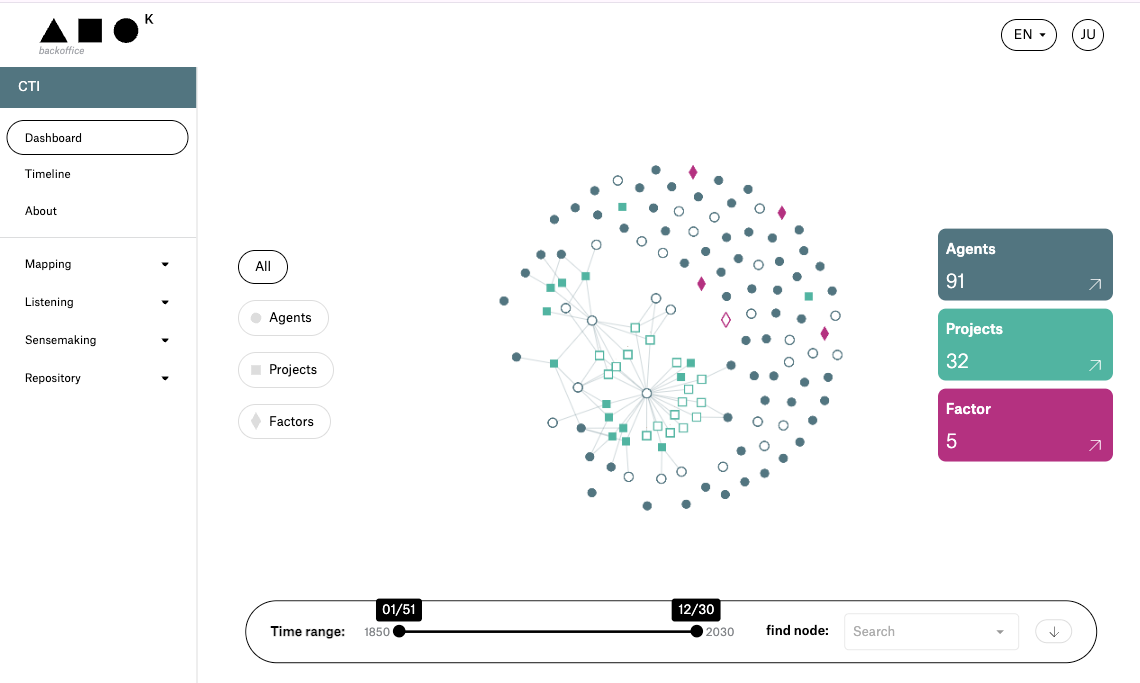
Figure 2. Main Dashboard of the K Tool. Portfolio visualization including agents and projects
While it is intuitively easier to understand the first two, maybe we can talk about the factors - what are they? I looked at “Timeline” and it seems that these factors are certain events that influenced the STI policy, right? Kind of change-makers? But I was not sure I understood how exactly they influenced the portfolio. Does K Tool allow us to connect them somehow to the portfolio composition? What can we learn about this interrelation from the K Tool?
Julia: That’s right, for the factors our thinking was that there were some structural or conjunctural events happening and we wanted to understand how the whole system organized itself to respond to those “shocks”. From the K Tool we can see what are these factors for the Basque STI case.
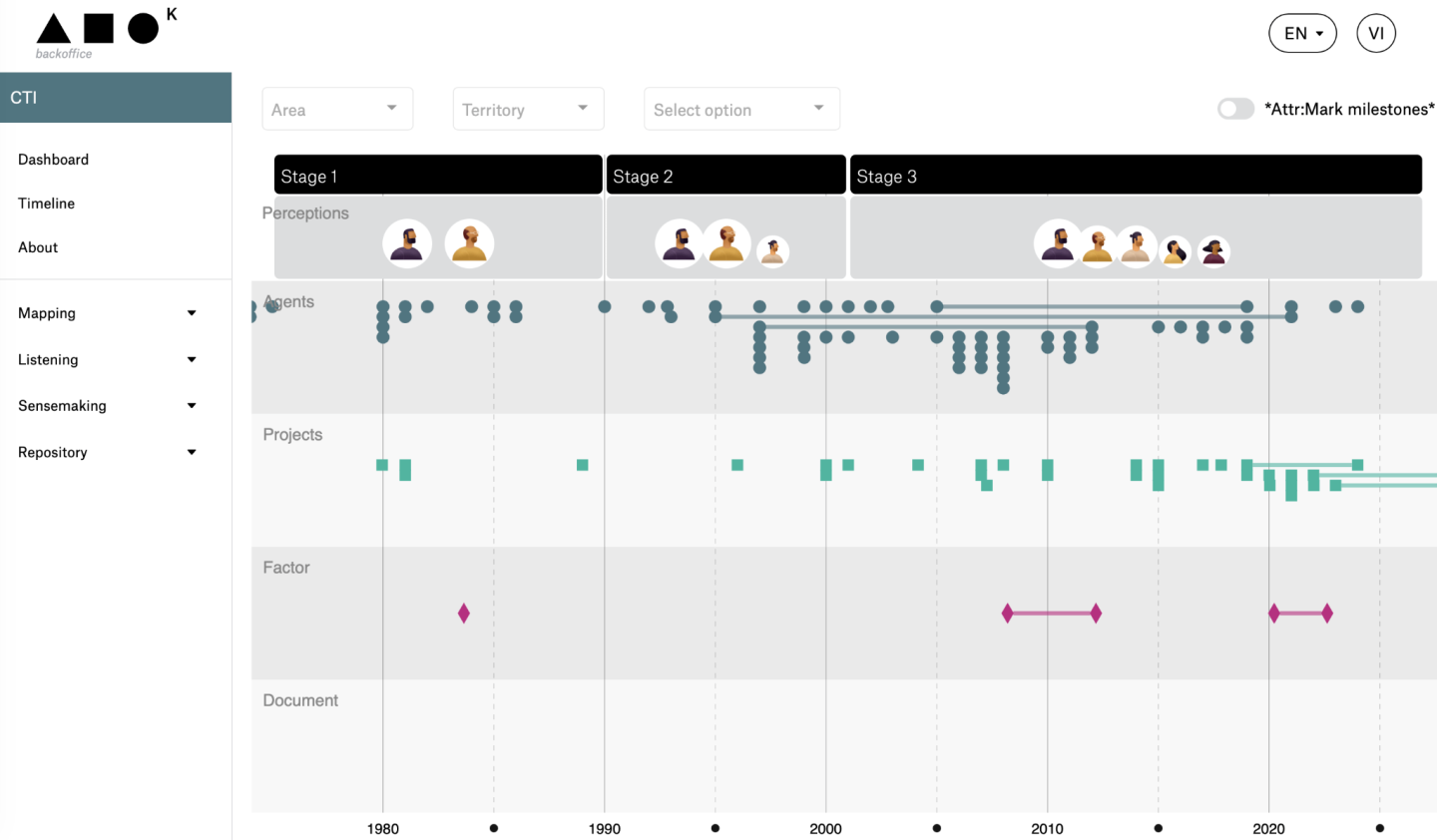
Figure 3. Timeline of the Basque STI portfolio evolution
For example, the financial crisis in 2008 - we can see that after that moment, the narratives diversified. So if you look at the timeline and check how many personas are visualised for different stages, you will see that while it was only 2 for the first stage and 3 for the 2nd, for the third - it was already 5. This means that initially there were only two main narratives about the policy system when there was a stronger shared understanding of what was going on and how the future looked like. For instance, the welfare state was largely understood as being directly linked to wealth creation—closely aligned with industrial growth and with the Basque Country’s tradition of pragmatism.
Kate: Aha, now I understand: the number of personas associated with each stage corresponds to the number of patterns of narratives you identified from the listening process. Visually, it was not very clear for me where the factors are located in relation to the boundaries of different stages, so I struggled to make sense of where to see what has changed. For example, for the economic crises - it looks like it occurred during Stage 3, not that Stage 3 emerged from it. How were those stages identified?
Julia: Yeah, this is an interesting finding of our process. Most of the people we talked to agreed that it was three stages in the development of the Basque STI system. Whenever you ask them what happened, how the STI system was put in place, everyone describes the same sequence. They say there was a first stage that lasted until the 1990s. And it’s actually quite striking: we had to build a new system from scratch, focusing on reinforcing the industrial fabric that already existed. The path we didn’t take was strengthening the scientific system—simply because there wasn’t one. In that sense, the case of Catalonia is the opposite. What they did was reinforce their scientific system. Then, in the 1990s, interviewees agreed that a new phase began. It wasn’t only about what we could offer anymore, but also about what was being asked for—so the relationship between supply and demand. And then comes the third stage, when there is a process of specialization within the STI system, because all regions in Europe were encouraged to do that. At the same time, there’s also an internationalization process. So these two dynamics were happening together, and there was both cooperation and competition at the same time within the Basque system. Those are really the defining characteristics of this third period. And everyone more or less agrees on this. But when it comes to what’s happening now, we started to see that there’s no longer that same agreement. Everything has become much more complex—because of the crisis, digitalization, gender perspective, and so on, questioning what the welfare state actually is and how STI policies contribute to that: is it about how we continue to generate wealth, or how the system has the capacity to address increasing inequalities? Now there are multiple narratives and before, things felt much simpler.
Kate: I see, the system is now perceived as more complex and we can see this in the K Tool in the number of narratives (personas) associated. I still wonder if the analysis based on the identification of those 5 factors can challenge this dominant perception that it was these three stages? Or it just adds granularity and allows us better understand what was also happening during different stages?
Julia: If you look, for example, at the upper right corner at the Dashboard—there are milestones. Many of the infrastructures that were created can actually be understood as milestones that help define when each stage begins and ends. For instance, Stage 1 begins with a major institutional shift. In the 1980s, with the Statute of Autonomy, the region gained the competencies to start building its own system—especially new infrastructures. That was a key moment. So what we tried to do is identify both the factors and the milestones that help explain what was happening. And the creation of infrastructures, at that time, became an important element to track that evolution.
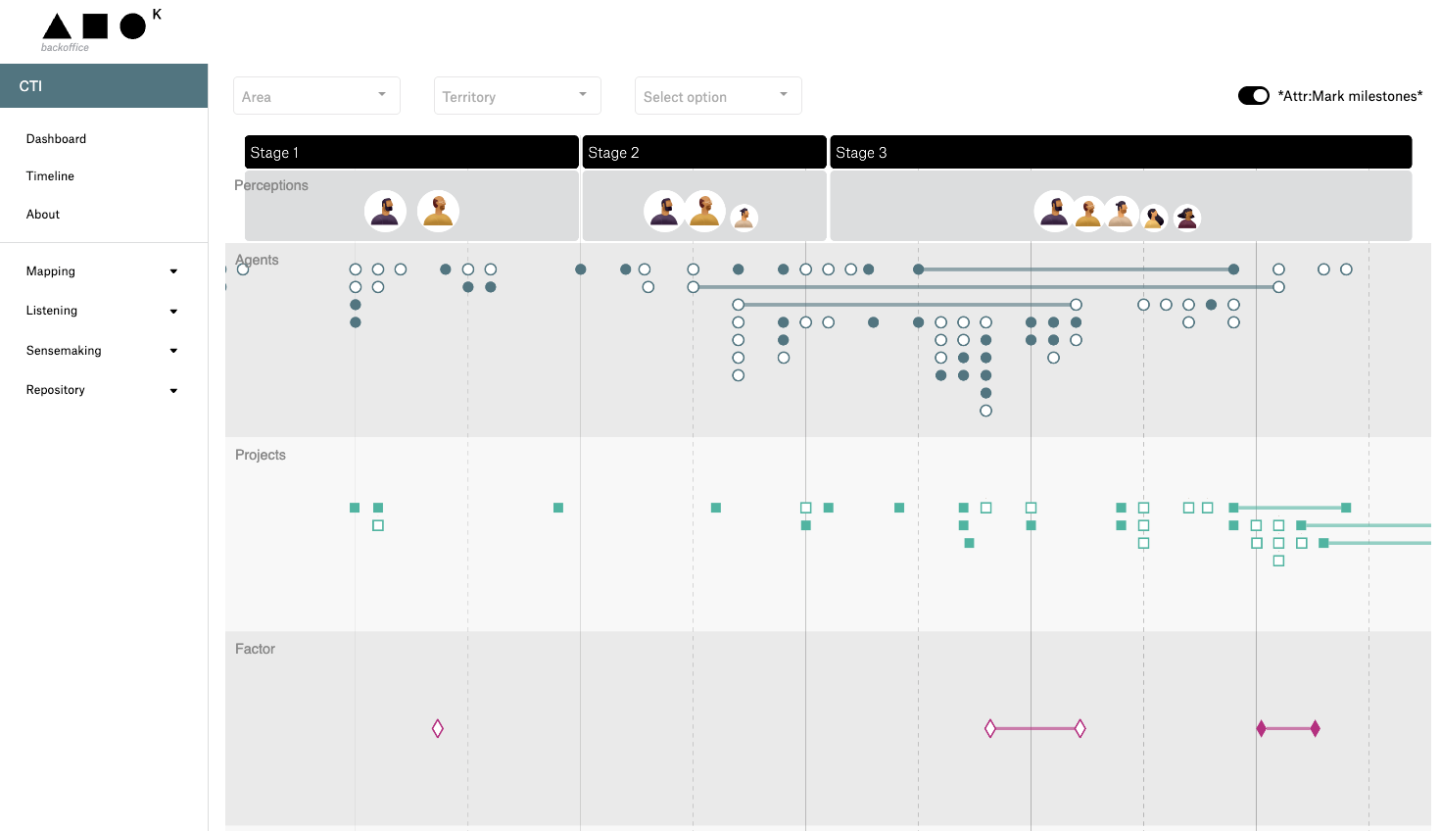
Figure 4. Visualisation of Basque STI portfolio over three stages identified, including milestones
Also, what we see is that each stage responds to a dominant narrative. In Stage 1, the narrative was very much: ‘we need to invest in industry’. So most of what was supported reflected that. Then in Stage 2, a new narrative emerged—one that brings science into the picture. And you can clearly see how projects and actors begin to align with that. And in Stage 3, the same logic applies again: as the number of narrative broadens, the supported initiatives diversify accordingly—shifting from a focus on technology to a wider range of initiatives that position science as a generator of value, as well as initiatives that incorporate a gender perspective or reflect the values of younger generations.. So the visualization in the K Tool is really trying to show how actions respond to narratives over time, and how narratives shape actions as well in the development of the whole system.
Kate: And these personas… is it possible to read a description in K Tool of what narratives they represent? Because right now it seems like we only see their names.
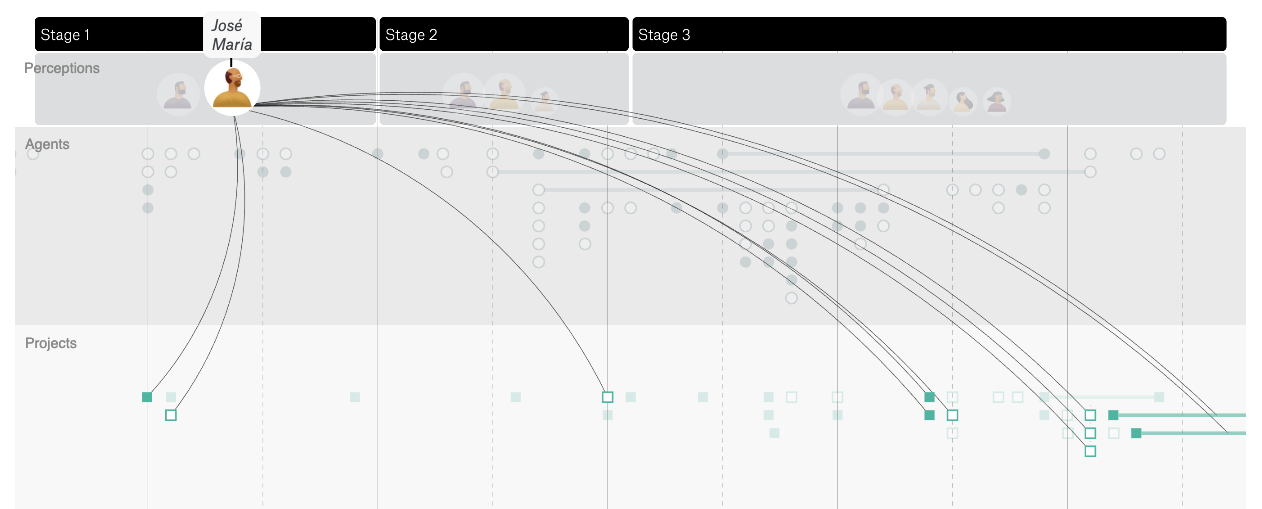
Figure 5. Visualisation of the interconnections between projects in a portfolio and meta-narratives identified
Julia: Yes—each persona represents a pattern of perception, it’s essentially the core conclusion, or meta-narrative. In the iceberg model we use in ALC, this corresponds to what lies beneath the visible public discourse. Then, if you go into the details of each profile, you’ll see all the different quotes, perceived opportunities and challenges associated with each persona. Each narrative is actually supported by thousands of quotes—literal quotes—which you can read in the K Tool.
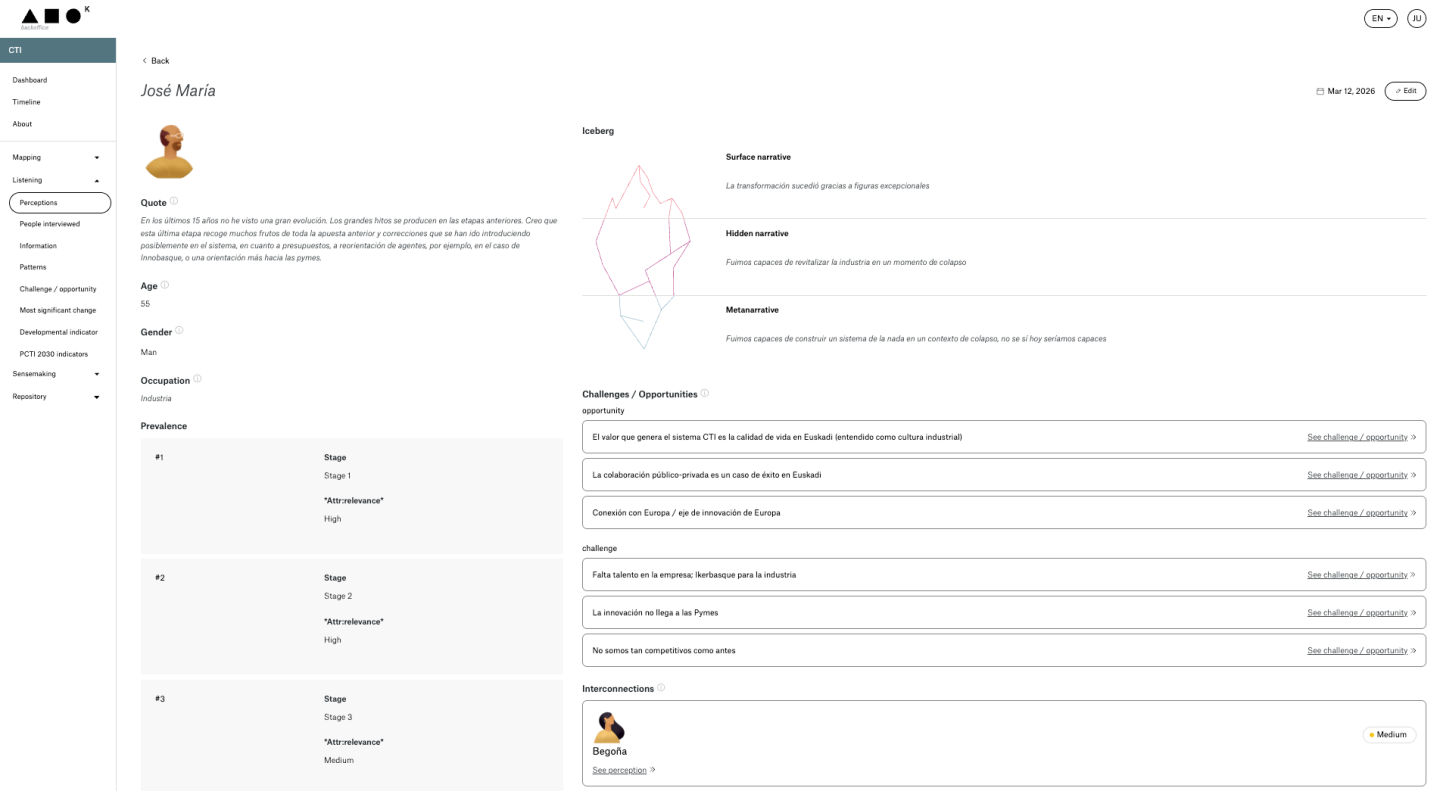
Figure 6. Meta-narrative visualized as an ethnographic profile, along with representative quotes
Kate: Yeah, I think this short description of the meta-narrative is really helpful. Because when you use names, people tend to interpret them in a certain way. Many are familiar with design thinking, where personas are usually linked to personal traits or individual characteristics. But here, the ethnographic profiles represent narratives rather than personal identities, so they’re less ‘personal’ in that sense. That can feel a bit counterintuitive.
Julia: Yes, and another important aspect relates to how prevalence is communicated in the K Tool. For example, in Stage 1, the figure of José María appears larger, whereas in Stage 3 it becomes smaller. This reflects the relative prevalence of that narrative within the portfolio over time.
Kate: Good to know this, since this is not very intuitive. If you don’t already know that size has this meaning, it’s not very easy to notice or interpret it this way. Maybe you pick it up subconsciously, but you don’t really realize what it stands for. At least for me, I didn’t immediately understand that the size of the avatar represents its relative importance in the portfolio.
There is one other thing I noticed is that the personas are a bit hard to interpret at first.
Julia: Yes, we’ve been thinking about that. At some point we even considered removing names and avatars altogether—just using labels like “industrial,” “scientific,” “institutional,” “gender,” or “new generations.” For example, the “new generations” pattern is trying to capture the idea that younger people often don’t feel part of the system anymore. This wasn’t really the case in the 80s, when there was more of a shared understanding of what was going on. But now, with all the demographic changes it's becoming much harder to include these different voices. And if we think about managing STI policies in a more dynamic way, then involving all these different parts of society becomes really important.
But the personas also serve a purpose—they remind us that these are real perspectives, with actual people behind them, not abstract categories.
Kate: Yes, I think that human element is important. But maybe the naming could be slightly adjusted—so it reflects the narrative more clearly. Because in the end, these are not demographic categories—they’re ways of seeing the world. Even if a name sounds “old-fashioned,” it doesn’t mean the people sharing that perspective are necessarily old-aged.
Julia: Exactly. It’s more about worldviews than individuals. That’s the key point.
Kate: Can we get back to the categorization you mentioned earlier, when you work with data collected through the listening process - multiple interviews you run. I wonder, who does this categorization? Is it like a coding system? Do you do it manually, or is it already supported by AI?
Julia: Until now, everything has been manual. We go quote by quote—this is similar, this is different, this corresponds to that. Then we define patterns. For example, we might identify five patterns, each represented by an ethnographic profile. After that, we validate them through collective sensemaking sessions, to reduce bias. Participants tell us: this makes sense, this doesn’t, you’re missing this voice. And then we continue the listening process and update the analysis. But now we’re at an inflection point. We’re starting to train AI to generate a first draft of these patterns. Then we’ll refine and correct them. So far it’s been manual—but that’s about to change.
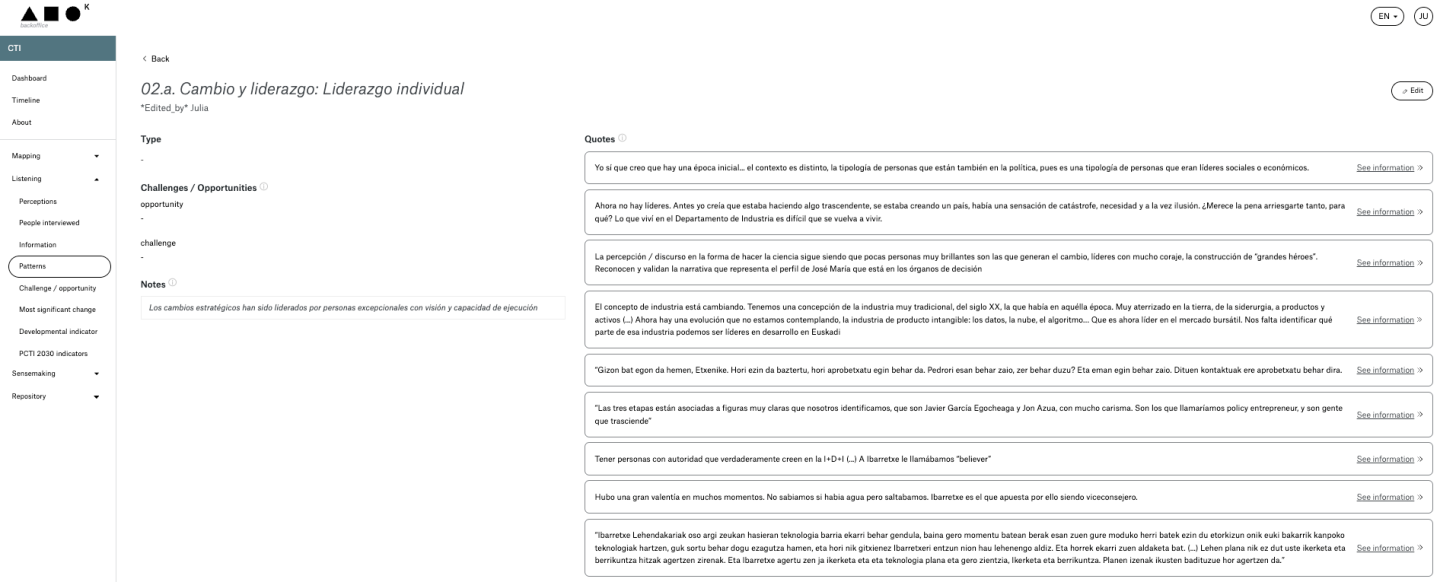
Figure7. Quotes associated with a meta-narrative
Kate: And these sensemaking sessions that you mentioned—are they internal or external? Who is involved in them?
Julia: Mostly external. Last year we organized two main sessions within the Basque STI project: one with key stakeholders—like Ikerbasque, the European Union, the Basque Government, universities—and another one only with female researchers and innovators. And that second session was very important. They told us: “This narrative reflects voices of power. You’re missing the voices that challenge these policies.” So we expanded our listening process. In a couple of weeks, we’ll run another session with research students.
Kate: How do you decide what to show during these sessions?
Julia: We show them the ethnographic profiles. We explain: we interviewed 100 people, extracted around 1,000 quotes, and identified five patterns of perception. Each pattern is an ethnographic profile. Then we ask: Do you recognize these? What’s missing? That’s essentially the structure of a sensemaking session.
Kate: So validation means recognition?
Julia: Exactly. They recognize that these perspectives exist within the system. For example, in the “Contrast session” module in the K Tool you can see this was the first sense making session that was conducted in-person. Here you can see which stakeholders participated, what was said during the session – the literal anonymized quotes. And we also reference the ethnographic profiles that were validated.
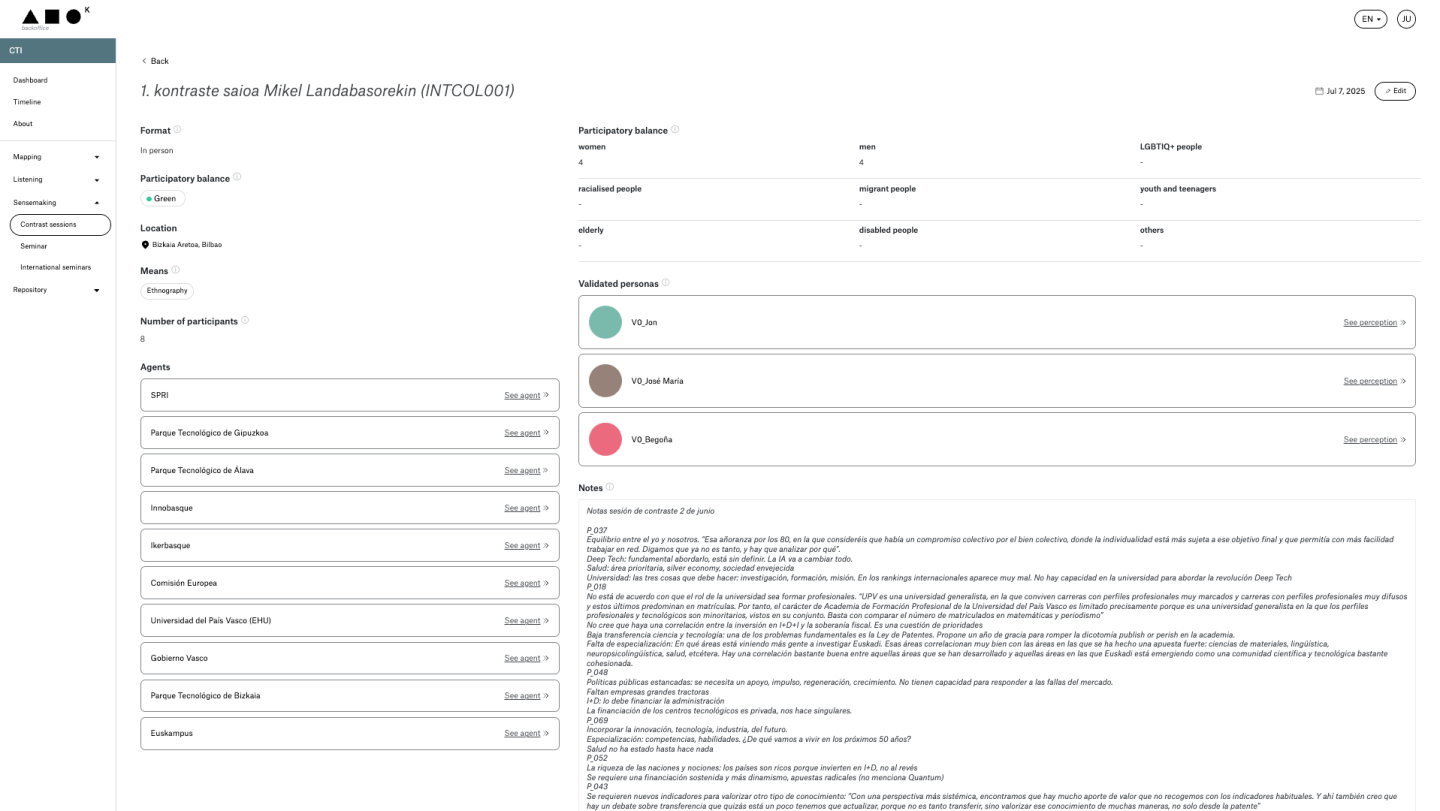
Figure 8. First sensemaking session held in June 2025, representative quotes
Kate: Let’s talk more about the use of AI in the K Tool that you mentioned. I think what you’re doing with AI—and with this more digital approach—really makes this methodology for portfolios much more applicable. You know, we’ve discussed this before, for example, such actors like you UNDP might see the narrative-informed approach to portfolios as very complex in practice, and something that’s hard to implement in scale, especially if people are not trained for it. So if you continue developing this tool—with automated analysis and more processes being supported by AI—it feels like a real step forward. It could make narrative-informed portfolios actually usable more widely. Because right now, it’s an immense amount of work. And I can imagine that if people fully realize what it takes, it might even scare them off a bit.
Julia: Yes, this is exactly the discussion we keep having with collaborators and partners. Many participatory processes don’t really involve listening. And for us, listening means this level of effort. This is what it takes to really listen. When we show them how we work, they say: this is too much work. So the key question becomes: when designing portfolios, is listening a cost—or is it an investment?
Kate: And I think this is also an important question for research. How do we better show what this approach actually does? Whether in terms of transformative potential, or its overall impact on policy processes. Because yes, you can have a very deep analysis and a very rich understanding—but then what? You mentioned that people sometimes feel overwhelmed by the complexity. I’ve seen the same with my students: when they realize how complex things are, they get stuck, don’t know what to do. Instead of feeling empowered, they feel almost paralyzed. And I think the same can happen with policymakers. If something feels too complex, they might just try to avoid it. So it’s really important to show how this kind of analysis leads to actionable insights—something that actually empowers people to act.
Julia: Yes, let me show you something. This is where we try to make complexity operational. On one side, we have the ethnographic profiles—the validated narratives. On the other, we have the initiatives mapped in the Basque STI system (stakeholders, projects, interventions, policies…). And then we cross/juxtapose them. We look at which initiatives address which needs. That’s how we identify gaps in a portfolio. For example, at the community level in the Basque STI portfolio, there is almost nothing—only one initiative responding to identified needs. But on the regulation level, there are many. We also see that the system mainly responds to dominant narratives—what we call the “voices of power.” These are the ones pushing for continued industrial development, just like in the 1980s. So the system keeps reinforcing the same narratives—unless you actively introduce a listening process that brings in underrepresented voices. Otherwise, you just keep doing what you’ve always done. So, this is like the closest exercise that we have done to address your last question, and we think there is still much more work to do here. But this is what we understand as a narrative-informed portfolio so far.
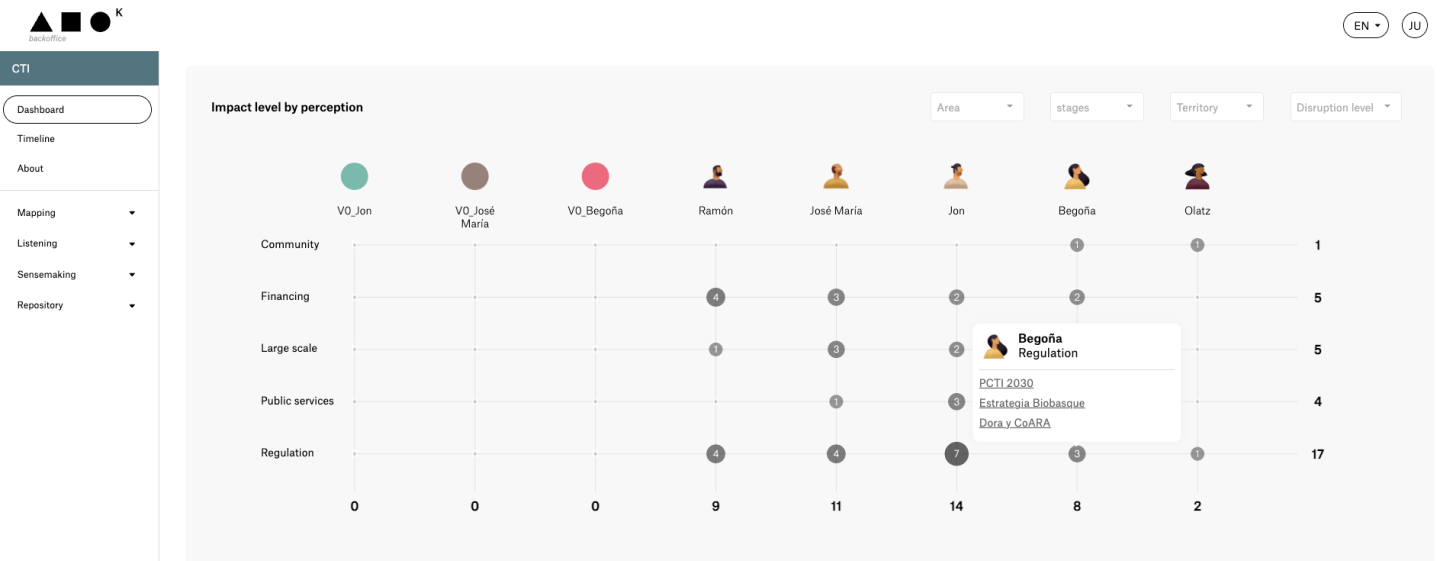
Figure 9. K Tool allows to juxtapose projects and initiatives included in a portfolio and meta-narratives identified, this is visualised as such a matrix
Kate: That really helps answer the question of actionability. Maybe this has to be placed on top of the Dashboard or somehow linked from the man page, as this seems to be one of the key analytical outcomes that K Tool helps to produce.
Talking about the overall usability of K Tool, I guess the challenge is that it is not meant to be immediately intuitive for everyone. Many research tools are like that. But maybe in the future, you could include tutorials, short videos, or some kind of guidance for new users.
Julia: We’re actually planning to include an AI assistant. You’ll be able to ask questions like: “What does “pattern” mean?” or “What’s happening in Stage 1?”—and it will guide you. So the tool becomes not just analytical, but also a learning space for stakeholders who are collectively addressing the very same complex challenge. A way to develop capabilities: how to listen, how to map, how to analyze and make sense of the information.
Kate: That’s very interesting. Because the tool is then not just an output—it’s part of a broader process. For example, after a sensemaking session, someone could go back and explore the data more deeply on their own.
Julia: Yes, and even before the session—you could ask the AI assistant to explore certain narratives in advance. Ask: “What do I need to know for this session?” or “What are the gaps in the system, according to narratives?”. It works like ChatGPT—but based on your own data sources, your own listening process.
Kate: That’s quite powerful. I think it would be great to document this—maybe write a short piece with screenshots and reflections. Something we can share, publish, and use to engage others—especially people working on portfolios. Because once you start talking about portfolios, everyone has their own interpretation. And visualization quickly becomes a way to compare approaches.
Julia: A key question for us concerns how the portfolio is currently visualized and evaluated: what is missing in the existing network representation, and how it could be further developed or improved. At present, there is significant room for refinement, particularly in making it function more clearly as a narrative-informed portfolio. But sure, let’s bring this conversation up to the wide community and see if we can initiate a further discussion about portfolio visualization!
1 Over the coming decades, the ageing of the population will intensify, and by 2045 almost one in every three residents will be 65 or over. The migratory balance as a result of both immigration and emigration,
would bring in 12,700 people per year throughout the period 2025-2044, as a result of exchanges with countries abroad [Eustat].
Diálogos en torno a K tool: Kateryna Pereverza & ALC
Home Knowledge
El pasado 1 de abril de 2026, las investigadoras Kateryna Pereverza (KTH Royal Institute of Technology) y Julia Martínez (ALC) compartieron un espacio de trabajo para analizar de cerca K tool. Esta nueva plataforma digital ha sido diseñada para visualizar portafolios informados por narrativas, tomando como caso práctico el sistema vasco de Ciencia, Tecnología e Innovación (CTI). El encuentro funcionó como una sesión de contraste para explorar las funciones actuales de la herramienta y, sobre todo, debatir cómo mejorar sus capacidades analíticas y visuales de cara al futuro.
La conversación partió de la base de datos actual de la plataforma, que ya integra los resultados de un proceso de escucha activa con más de 100 conversaciones y 1.000 citas de agentes del territorio. A través de este intercambio de ideas, ambas investigadoras reflexionaron sobre cómo conectar de forma más integrada dimensiones que a menudo funcionan fragmentadas —como la ciencia, la tecnología y la industria— y cómo hacer que toda esa complejidad resulte verdaderamente útil para la toma de decisiones.
Lee la entrevista completa (Eng)
Ideas clave para mejorar la herramienta y su impacto
Durante el diálogo, Pereverza y Martínez identificaron tres áreas fundamentales para la evolución de la plataforma y su aplicación en las políticas públicas:
- Monitorear el cambio real frente al statu quo: Los sistemas tienden a replicar de forma automática las narrativas de las estructuras de poder tradicionales. Las investigadoras destacaron que contrastar de forma continua las percepciones de la calle con los proyectos aprobados permite comprobar si el sistema se está transformando o si solo repite viejos patrones.
- El salto hacia el análisis con Inteligencia Artificial: La conversación abordó un punto de inflexión clave: pasar del costoso procesamiento manual de los datos etnográficos a un análisis asistido por IA. El objetivo es que la tecnología identifique los primeros patrones de opinión para que los equipos humanos puedan centrar sus esfuerzos en la interpretación profunda y el pensamiento estratégico.
- Evitar la parálisis por análisis: Ver la complejidad total de un sistema puede abrumar a las instituciones. El reto compartido en este diálogo fue buscar fórmulas de diseño que logren que la información sea digerible y accionable, asegurando que una visión global del territorio empodere la acción en lugar de frenarla.
Marcos teóricos y próximos pasos
La sesión también sirvió para conectar la práctica de ALC con el trabajo académico de Kateryna Pereverza junto a Harold Rohracher sobre Relational Infrastructures (Infraestructuras Relacionales), que estudia cómo se sostienen los vínculos entre agentes. Además, analizaron críticamente la tensión en las políticas de misiones cuando se definen de forma vertical (top-down) frente a la necesidad de abrir espacios participativos desde las bases (bottom-up). Como propuesta de mejora visual para el sistema, se subrayó la importancia de incluir las líneas de financiación como eje vertebrador en los mapas de red.
El objetivo final de estos encuentros en ALC es lograr que los portafolios narrativos pasen de ser un ideal teórico a una práctica operativa diaria en las instituciones. Para continuar enriqueciendo la herramienta con otras experiencias, las investigadoras invitan a la comunidad de profesionales a debatir:
- ¿Qué herramientas utilizan en su día a día para gestionar la complejidad de las políticas públicas?
- ¿Cómo podemos diseñar cuadros de mando interactivos que empoderen la acción en lugar de desmotivar a los equipos?
- ¿Qué tipo de indicadores necesitamos para garantizar que los portafolios tengan un impacto verdaderamente transformador?
Relevo de talento en ALC: Beñat e Iker cierran su etapa de prácticas y Arthur se suma al equipo
Home Knowledge
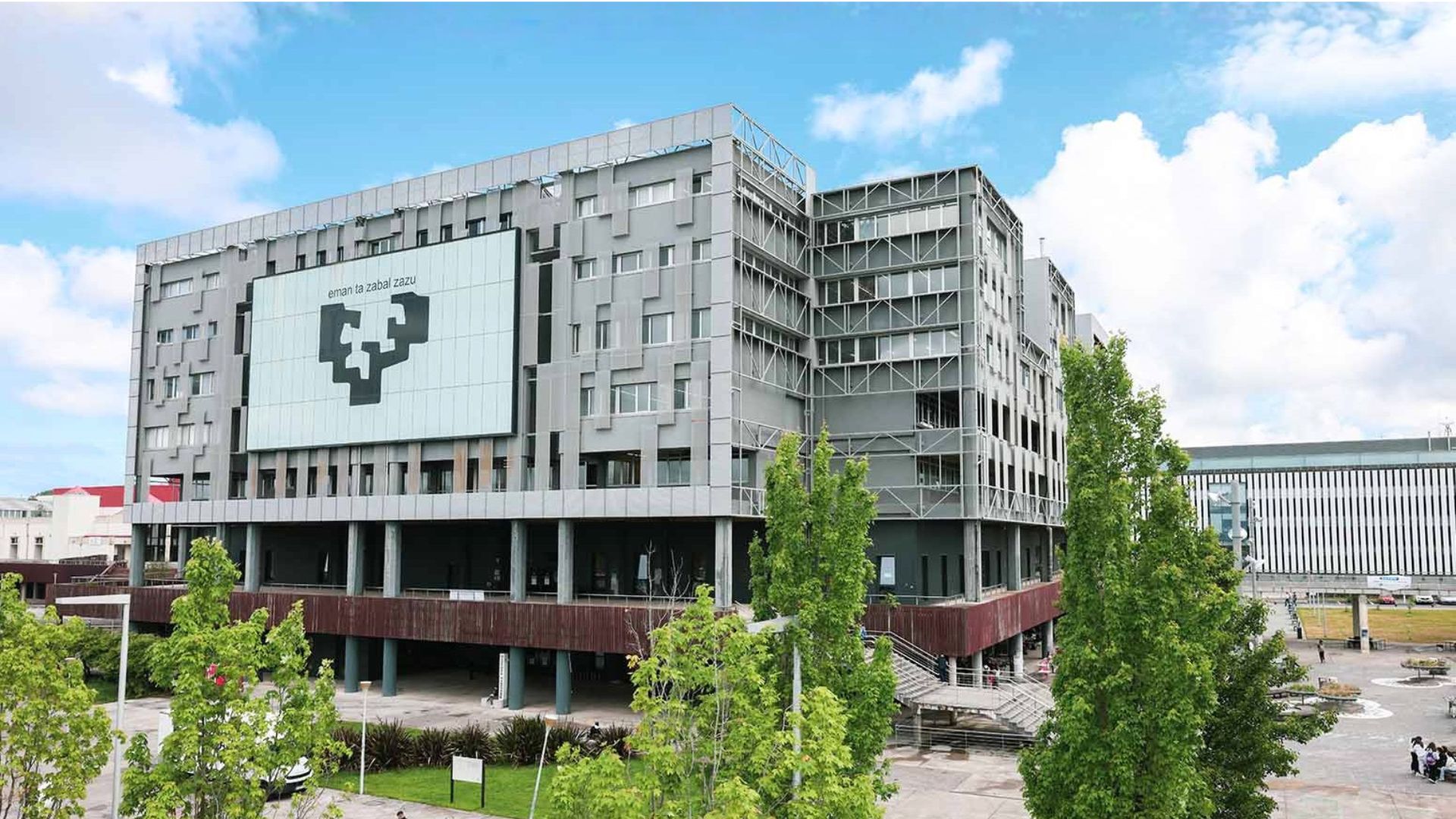
Nuestros becarios de Mondragon Unibertsitatea han concluido su periodo de prácticas en Agirre Lehendakaria Center, coincidiendo con la llegada de un nuevo miembro internacional a nuestro programa IAP.
Beñat Gorostizaga, estudiante de último año del grado en “Humanidades Digitales Globales”, finaliza su etapa de prácticas tras colaborar con nosotros desde tercero de carrera. Durante este tiempo, ha participado activamente en proyectos clave del centro y, de hecho, acaba de presentar su Trabajo de Fin de Grado (TFG), centrado en el proceso de escucha del proyecto Guggenheim Urdaibai.
Por su parte, Iker Etxebarria Bilbao, alumno de tercero del mismo grado, también ha terminado su estancia en el centro. Durante este tiempo, ha trabajado en el análisis de la evolución de las políticas de ciencia, tecnología e innovación de Euskadi, desde la restauración del autogobierno en 1979 hasta su proyección para 2030.
Incorporación al International Agirre Program (IAP)
Al mismo tiempo, damos la bienvenida a Arthur Amalir, que se integra en el equipo a través del IAP (International Agirre Program) para sumarse a los proyectos de innovación social del centro y reforzar nuestra red internacional.
Arthur Amalir está cursando un Máster en Ingeniería en la Universidad de Columbia y cuenta con una sólida formación en matemáticas, física y análisis de datos. Su especialidad es el diseño de modelos informáticos para entender sistemas complejos.
Celebrada la primera sesión interbarrios de Galdakao Zeugaz
Home Knowledge
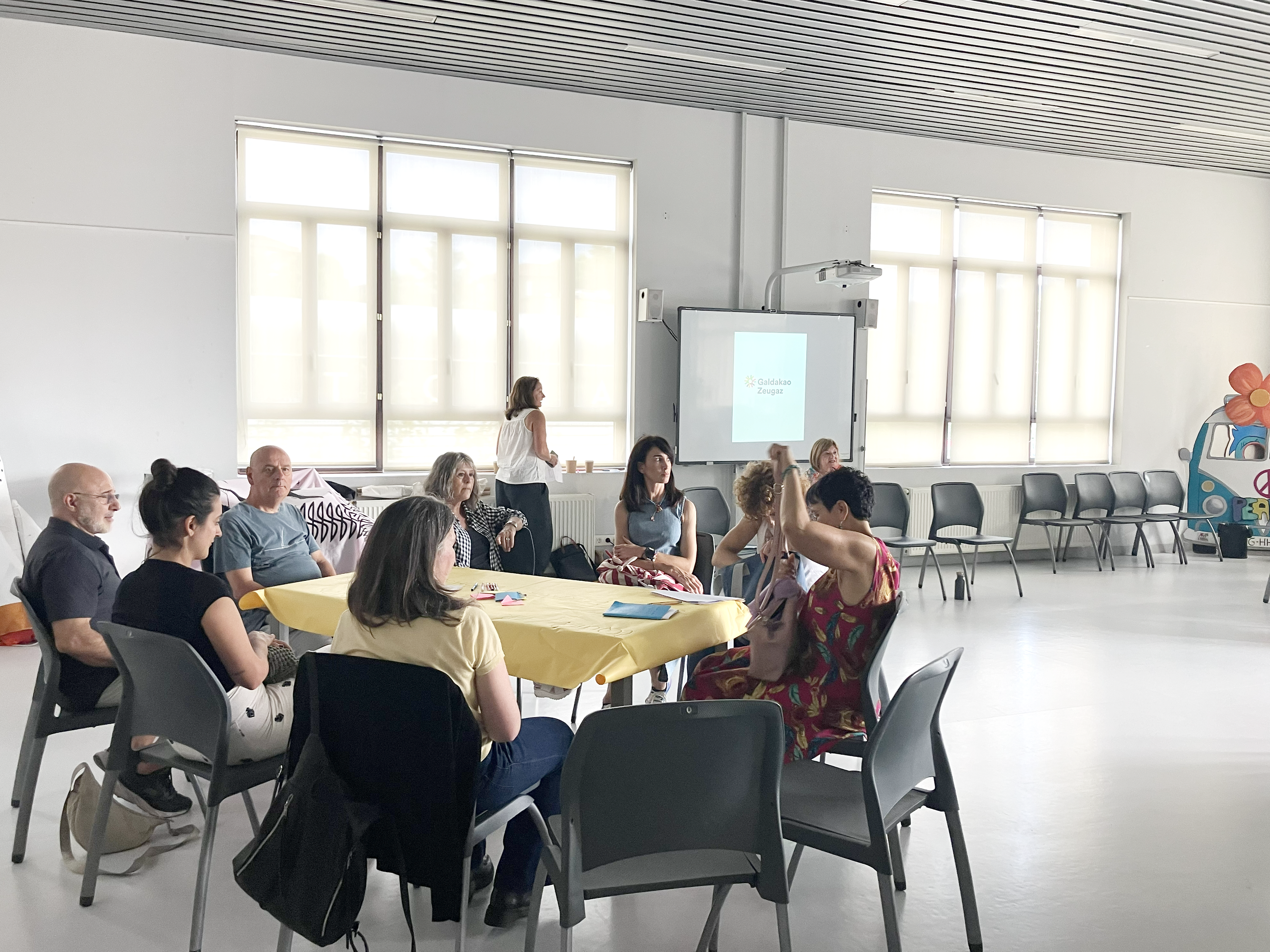
El 17 de junio de 2026 se celebró la primera sesión interbarrios de Galdakao Zeugaz. En este encuentro se compartieron los resultados de todo un año de trabajo y se mostró cómo se ha ido dando respuesta a las necesidades que los vecinos y vecinas plantearon en los distintos espacios de escucha. Estas necesidades y aspiraciones se estructuraron en tres grandes temas: la conectividad comunitaria, el trabajo por barrios y la mejora de la comunicación a través de herramientas digitales.
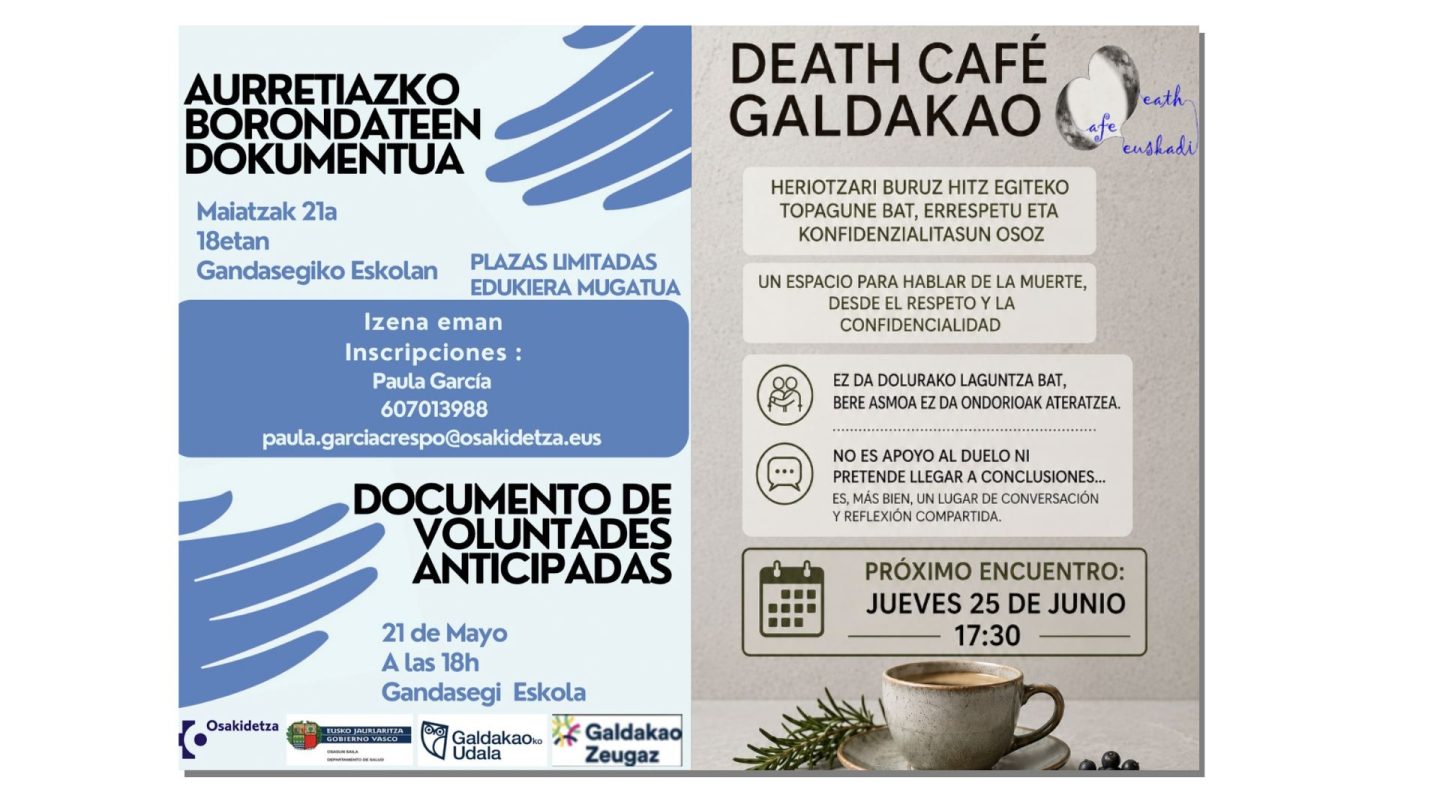
Durante la jornada, se mostraron los perfiles actualizados del municipio en K tool, la herramienta digital de ALC, para visualizar cómo ha evolucionado el mapa social del municipio. También se compartieron los avances de los proyectos que están en marcha, como las dinámicas en los barrios de Bengoetxe y Tximelarre, los death cafés, la conexión entre herramientas digitales de participación y la experiencia piloto de la conectora comunitaria, una figura que ya está demostrando sus beneficios y que seguirá desarrollándose en una nueva fase.
Interpretación colectiva
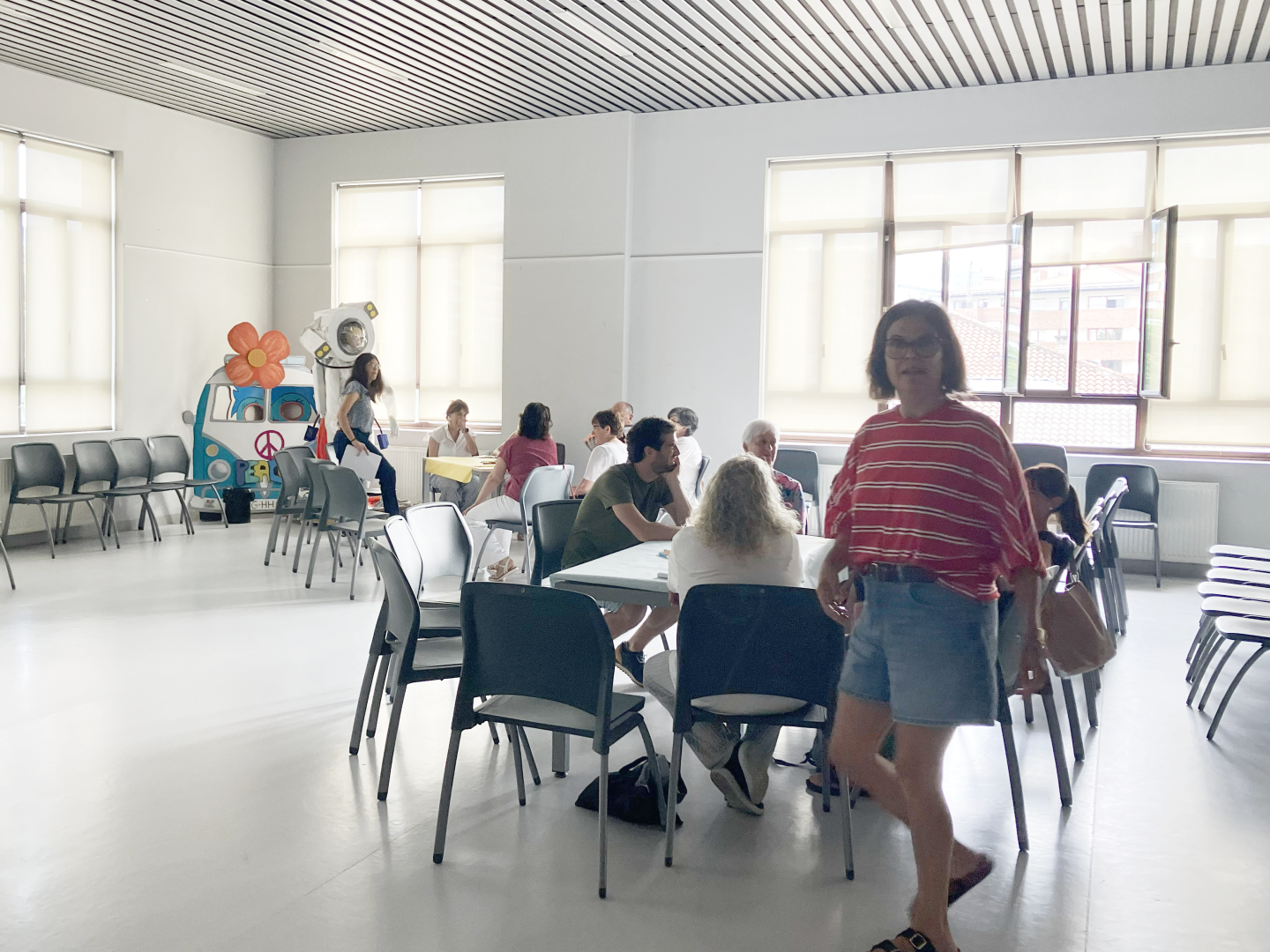
La sesión contó con un espacio de trabajo en grupos para contrastar percepciones y abordar conjuntamente la siguiente pregunta: ¿Cómo podemos crear un Galdakao más conectado, con lo que tenemos ya?. Las mesas de trabajo aportaron las siguientes claves:
- Mesa 1: Propuso fomentar el encuentro intergeneracional y recuperar el espacio público mediante actividades cotidianas al aire libre, además de incidir en el trabajo con la infancia frente al uso de pantallas.
- Mesa 2: Planteó ubicar físicamente a la conectora en los barrios como "radar" de la zona, coordinar visitas mensuales de la conectora al centro de salud y aprovechar el aniversario de Galdakao Zeugaz para dar difusión al proyecto.
- Mesa 3: Subrayó la necesidad de concretar las ideas existentes, mejorar la accesibilidad para los colectivos más vulnerables, implicar a redes locales como las de Aperribai y trabajar activamente en la inclusión de las personas migradas.
Una de las prioridades señaladas en esta sesión fue la necesidad de reforzar el seguimiento y devolución con todas personas que han participado en algún punto en el proceso, comunicando los avances y aprendizajes generados en el impulso del movimiento de Galdakao Zeugaz, manteniendo el proceso de escucha abierto y compartido con todo el pueblo.
Para poder dar seguimiento a las distintas iniciativas priorizadas en estos espacios, se acordó reforzar el grupo motor a través de la figura de las "tejedoras comunitarias”, que trabajarán mano a mano con la conectora comunitaria.
Ver más