Network Architecture and Artificial Intelligence: New Opportunities for K-Tool with Pedro Portela
Pedro Portela, an aerospace engineer and complexity expert, met at ALC headquarters and in Donostia to work on and analyze future opportunities for the K-Tool digital platform and new approaches to social media analysis.
On September 30 and October 1, Pedro Portela spent several days working with the teams at the Agirre Lehendakaria Center, Bestiario, and the HiTZ Center (EHU). Despite his extensive career in the satellite industry, Portela has focused his work over the past decade on the social sciences and complexity, particularly in relation to the peacebuilding processes in South Sudan, analyzing funding models, network dynamics, and capacities for collective action.
Network Structure and New K-Tool Layer
During the session held at the ALC headquarters, attendees analyzed how different types of networks shape a community’s capabilities. Portela asserts that there is no single, perfect network structure: its suitability depends on the function the network must fulfill at any given time (mobilization, knowledge exchange, coordination, or mutual protection, among others).
Afterward, along with Bestiario, the technical possibilities for making a qualitative leap forward in the K-Tool platform were analyzed. The possibility of involving Arthur Amalir of Columbia University in the simulation and evaluation work currently being developed for K-Tool was also explored:
- Add a graph layer: Test a graph layer to analyze the relationships between nodes and information flows within the current relational data structure, without having to rebuild the entire platform from scratch.
- Investment simulations: Develop a tool to help philanthropic organizations and funders analyze the potential impacts and scenarios of a given investment on the structure of the entire ecosystem.
- Initial Test: Work4Progress Colombia was proposed as a potential initial test case.
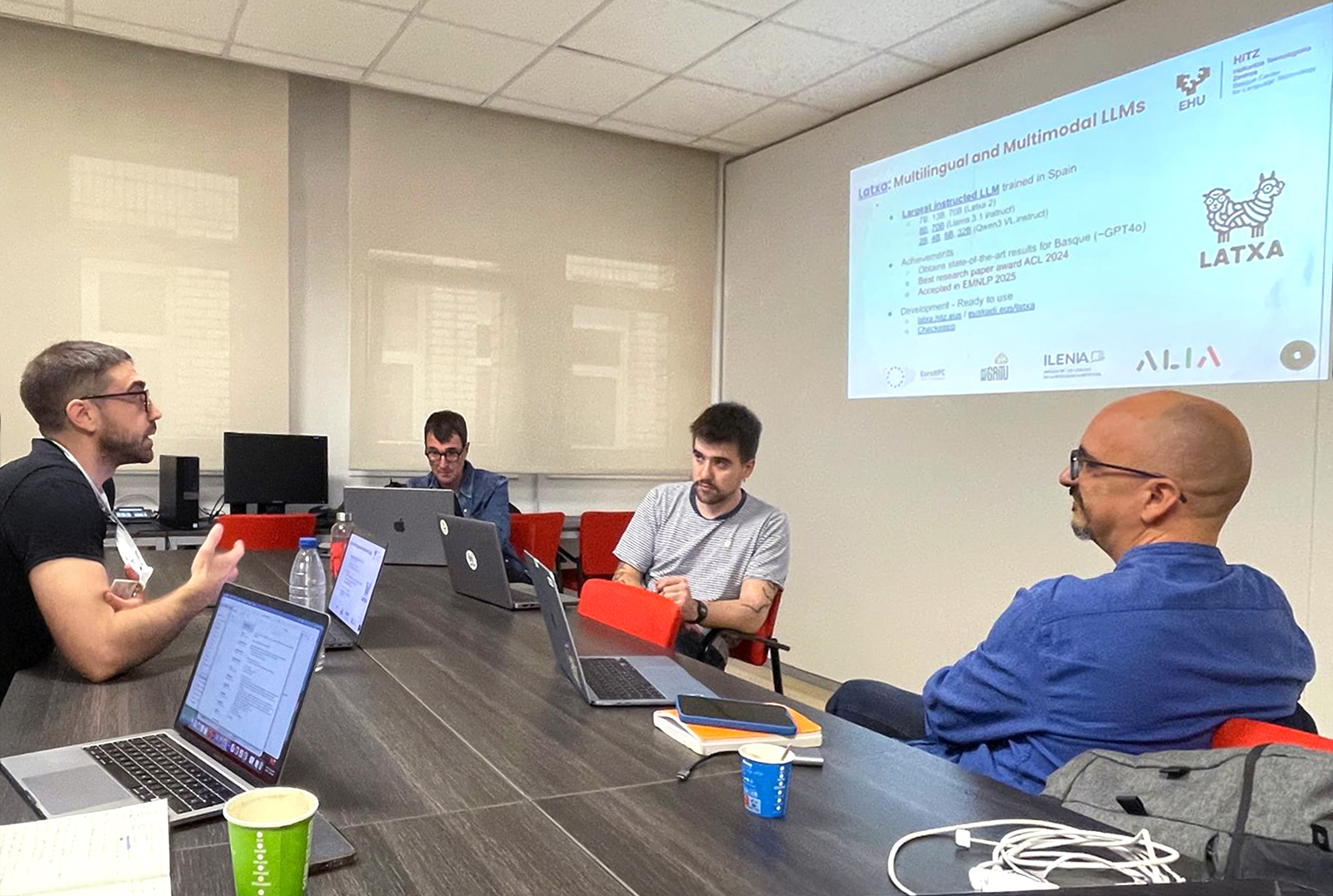
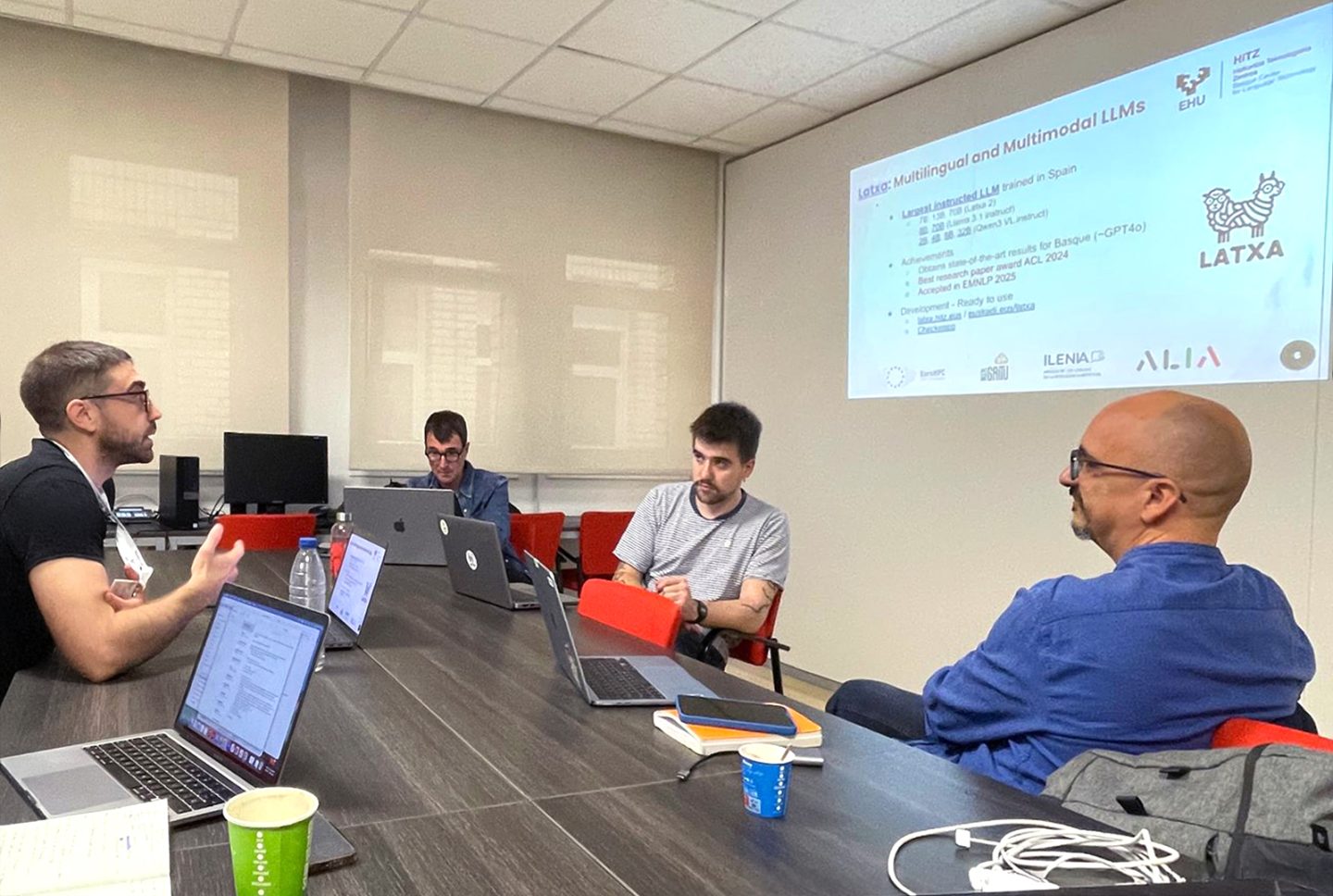
Collaborating with the HiTZ Center
At the meeting in Donostia, the possibilities offered by natural language processing (NLP) and artificial intelligence were discussed with researchers from HiTZ. Among other things, the CPT shared the work it is conducting with the Urdaibai conversations to analyze different phases of the listening process using NLP and linguistic models. In addition, during the social simulations, participants discussed linguistic and cultural diversity, LLM biases, and the potential of probabilistic or stochastic approaches.
This visit opens up new avenues for better structuring the relationships among K-Tool data, analyzing ecosystems in greater depth, and linking network analysis with the future potential for evaluation and simulation.