Science and Technology Policies as Drivers for Inclusive Innovation
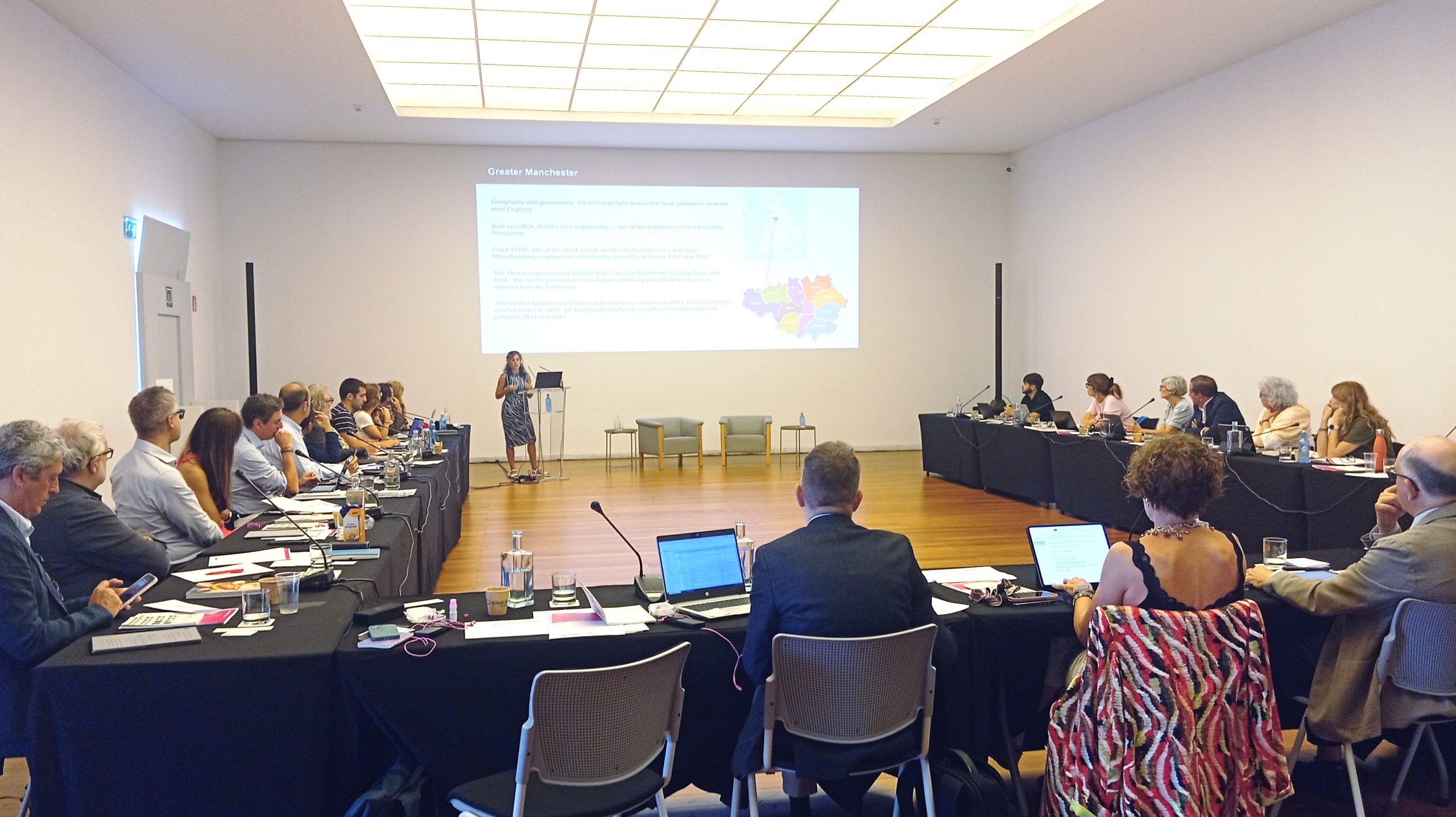
The Bizkaia Aretoa at the University of the Basque Country (EHU) hosted the international seminar “Science, Technology, and Innovation Policies in the Basque Country as Levers for Socio-Ecological Transition,” a gathering at which the Deputy Minister of Science and Innovation, Adolfo Morais, advocated drawing on the experience of the past 50 years to chart the Basque STI strategy toward the year 2080.
The event is part of a research initiative launched by the Basque Government and coordinated by the Agirre Lehendakaria Center in collaboration with the University of the Basque Country (EHU), which has already conducted more than 150 interviews with key stakeholders in the scientific, public, and business sectors. During the opening session, priority challenges were highlighted, such as attracting talent in STEM fields, reducing bureaucracy, promoting scientific entrepreneurship, and investing in key technologies such as artificial intelligence, biotechnology, and quantum technology.
To enrich the analysis of the Basque case, the seminar examined comparative experiences from the Manchester region, Catalonia, and Wales through presentations by Elvira Uyarra, Joan Gómez Pallarès, and Rick Delbridge. The event concluded with a debate among institutional and scientific leaders from the Basque Country to outline innovation policies as a driver of well-being and socio-ecological transformation.
Key takeaways from the morning session
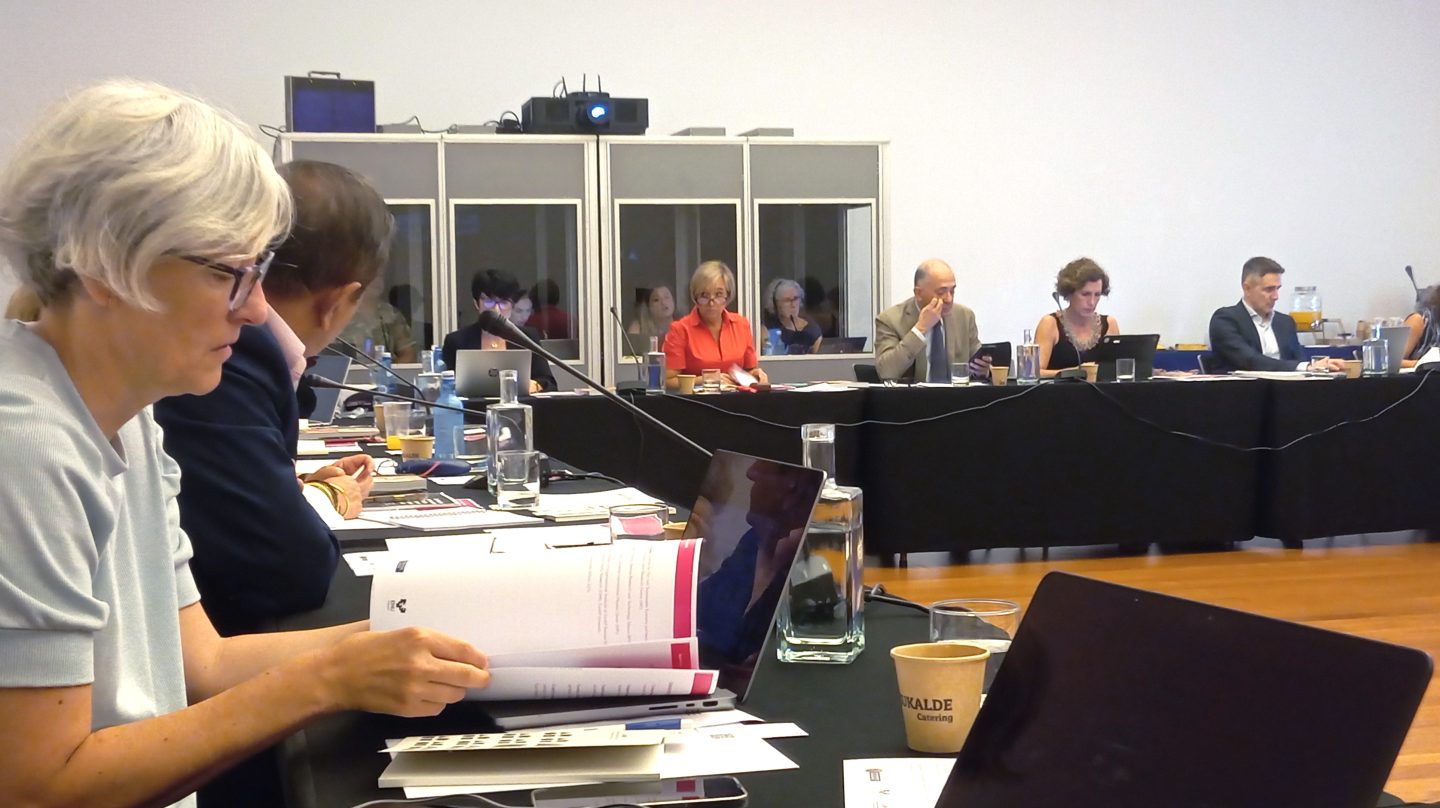
The morning session helped identify several challenges and key lessons for the Basque ecosystem:
- Inclusive innovation: Inclusion must be explicitly designed into regulatory and institutional frameworks, rather than being assumed as an automatic benefit resulting from development. The implementation of “micro-missions” tailored to local realities could help directly capitalize on the ecosystem’s strengths.
- The Need for Concentration and Critical Mass: In taking on the challenge of being a small country with “big small businesses,” it is essential to overcome the fragmentation of the system by promoting clustering, concentration, and speed of action to maintain relevance on a global scale.
Bridging the gap between science and industry: We must narrow the gap between universities, technology centers, and the business community. To do so, we must enhance companies’ “absorption capacity” for new scientific advancements and create public-private funds to support deep-tech and knowledge-based startups.
Rethinking excellence and impact indicators: It is urgent to move beyond purely quantitative metrics on spending (how much is invested) toward highly qualitative impact indicators that measure the effective resolution of real and complex problems.
Commit to advanced experimentation (Sandbox): Positioning the Basque Country as a dynamic space for experimentation in science, technology, and innovation (STI) involves learning to manage risk, separating experimentation from traditional policy design, and anticipating future challenges through simulations, rather than relying solely on existing work plans.
New AI-powered active listening tool
During the event, a pilot test of a new active listening tool was also presented: a conversational chatbot powered by artificial intelligence that operates via WhatsApp. The goal is to complement in-person interviews, enabling the scaling of the CTI ecosystem process.
Unlike a traditional survey, the bot engages in dynamic conversation in three languages (via text or voice) and adapts its questions based on the responses received. All information will be integrated into the K-tool platform to ensure traceability.
Among its main advantages are:
- Greater honesty: People tend to respond with greater transparency and fewer social constraints when interacting with an automated environment.
- Policy testing: It will allow for interaction with simulated profiles to validate opinions or hypotheses before launching new public policies.
This initial phase will serve to identify errors, fine-tune the bot in collaboration with participants, and assess its true reach before rolling it out on a larger scale.
Collaborative Workshop in the Afternoon
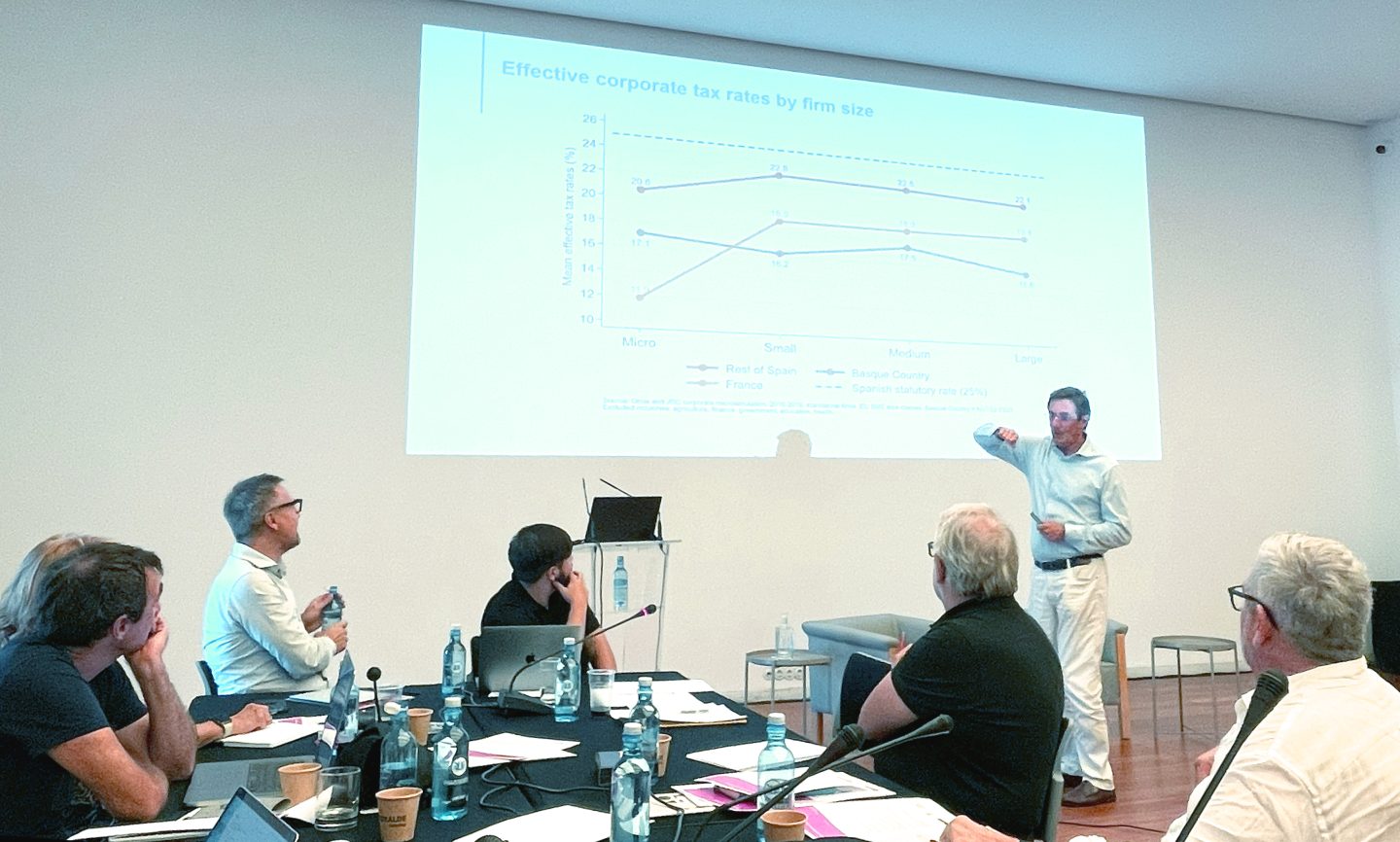
Following on from the morning’s discussion, the session continued in the afternoon in the Chillida Room at Bizkaia Aretoa with a participatory workshop focused on exploring in greater depth the key elements and questions identified during the first phase of the research.
The workshop was divided into two main discussion blocks:
- The Basque Country as a STI Sandbox: Introduced by presentations from Mikel Landabaso and Fermín Cerezo, the discussion centered on the possibility of adapting a “sandbox” model to the Basque Country, focused on experimenting with STI policies and socio-ecological transitions. The discussion took as its starting point Mikel Landabaso’s proposal (“The Basque Country as Europe’s Greenhouse”) and the experience of the Valencia Urban Sandbox presented by Fermín Cerezo, addressing aspects such as the transformative portfolio approach, collaborative governance, and the role of narratives.
Design and Evaluation of Inclusive STI Policies: Introduced by Michal Miedzinski, this session explored how to ensure inclusive innovation in policy design and evaluation. The discussion combined the morning presentations by Rick Delbridge and Elvira Uyarra (based on the Inclusive Innovation report) with the POLIFRAME conceptual framework developed by Miedzinski, delving into topics such as development-oriented evaluation, systemic financing, and new digital infrastructures.