Understanding science, technology, and innovation policies in the Basque Country from the perspective of an experimentation portfolio
Home Nuestro trabajo Investigación Understanding science, technology, and innovation policies in the Basque Country from the perspective of an experimentation portfolio
This collaboration combines ALC's portfolio-driven approach with the “Relational Infrastructure” approach developed by Kateryna Pereverza to examine how shared narratives and interrelationships are key to understanding how the science, technology, and innovation ecosystem in the Basque Country has evolved over the past 50 years.
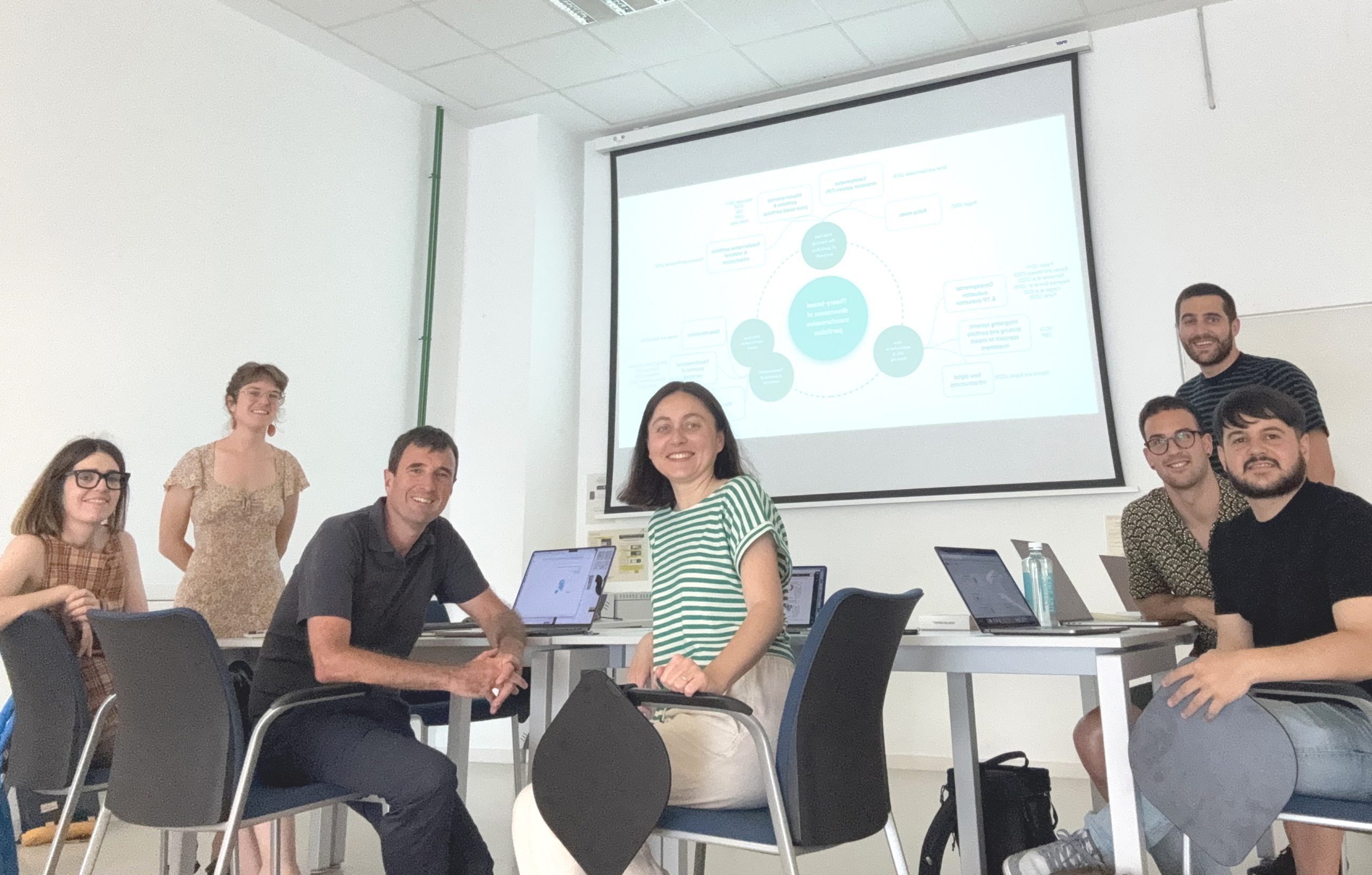
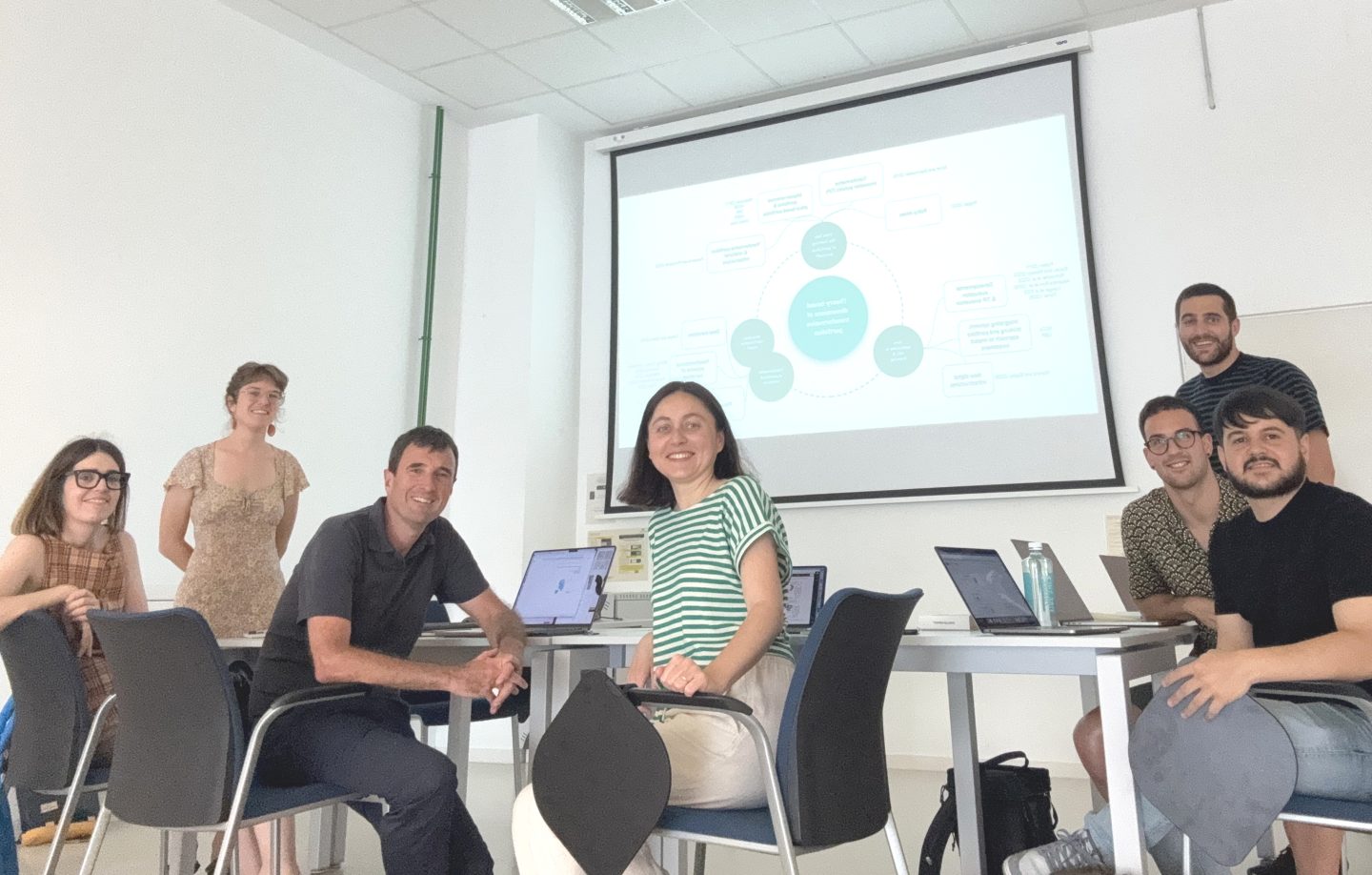
ALC continues its research on public policies for science, technology, and innovation in the Basque Country, covering the period from 1980 to 2030, while exploring new methodologies to address systemic transformations. To this end, the team has been working in Bilbao alongside Kateryna Pereverza, a researcher at the KTH Royal Institute of Technology (Stockholm), to delve deeper into how to apply the portfolio approach to the analysis of public policies.
The central goal of this joint effort is to move beyond the traditional view that sees science, technology, and innovation (STI) policies as a collection of isolated initiatives. Instead, the collaboration proposes understanding the “STI ecosystem” as a dynamic and much broader system that integrates interventions at multiple levels, mapping of stakeholders, and, crucially, social narratives.
Relational infrastructure and emerging portfolios
To structure this work, the research incorporates the “Relational Infrastructure” methodological framework developed by Pereverza. Through a longitudinal analysis of the qualitative data collected by ALC, aided by artificial intelligence tools, the study examines the historical evolution of the Basque STI ecosystem from the 1980s to the present.
One of the study’s most innovative findings is the existence of an “emerging portfolio.” Unlike approaches where collaboration and learning are designed in a top-down, corporate manner, the Basque case suggests that mechanisms for transformation emerged organically through informal structures, networks of trust and learning among stakeholders, and a strong culture of cooperation.
From Project to Portfolio: The Evolution of Science, Technology, and Innovation (STI) Public Policies in the Basque Country (1980–2030)
Research shows that the evolution of science, technology, and innovation (STI) in the Basque Country cannot be understood solely through specific programs or policies. Over the course of five decades, the development of the ecosystem has been guided by shared narratives that gave meaning, direction, and legitimacy to collective action.
This perspective offers a complementary view of international debates on mission-oriented policies. While these approaches typically examine how missions are defined and driven by public institutions, the Basque case suggests that strategic direction can also emerge from society, based on a shared vision of the future and a strong capacity for collective action.
The main innovation of this research is that it analyzes the evolution of the Basque Country as a portfolio of interconnected policies, organizations, and initiatives, rather than studying isolated interventions. It also analyzes these elements in relation to the narratives and social dynamics of each historical period. This allows us to understand how collaboration, learning, and co-evolution among the various elements (actors, initiatives, policies, and narratives) have contributed to building a unique innovation ecosystem.
Presentation at EuSPRI 2026: International Conference on Transformative Innovation Policies
ALC and Kateryna Pereverza will present the findings of this study at the EuSPRI 2026 international conference, to be held on June 10, 11, and 12 in Valencia. There, they will share with the scientific community on transformative innovation policies (TIP) how the use of social narratives can transform the evaluation of innovation policies. In addition, they will demonstrate the potential of the K Tool, the digital platform developed by ALC to analyze and visualize portfolios based on community listening; a key tool in this research for managing innovation policies more dynamically and projecting them into the future.
The European Initiative: The New Center of Excellence in Social Innovation
This commitment to working with portfolios rather than isolated projects coincides with the launch of the New Center of Competence in Social Innovation (NCCS), a European initiative in which ALC participates alongside six ministries of the Spanish government, the CDTI, and the CSIC.
The best practical example of this approach is the VIDAS Portfolio. With an investment of 156 million euros, this ecosystem—in whose design and evaluation ALC is involved—connects 95 innovations from 143 organizations in real time to transform the community care system. It proves that coordinating and integrating initiatives generates far greater impact than launching projects separately.
A Consolidated and Scalable Approach
This collaboration with researcher Kateryna Pereverza reinforces a methodological approach that ALC already applies on a large scale in various national and international projects. The portfolio approach currently underpins large-scale initiatives such as those developed in partnership with Acción Contra el Hambre (ACH) to create four experimentation portfolios on child malnutrition in different regions of Spain, the Work for Progress ecosystem promoted by the “la Caixa” Foundation, and the European COPOLAD program, which launched five laboratories for the design of public policies more closely aligned with social dynamics. Likewise, at the local level, this model forms the basis of the care experimentation portfolio in the Basque Country, which features active social innovation processes in municipalities such as Galdakao (Galdako Zeugaz), Getxo (Getxo Zurekin), and Gasteiz (Lakua Arriaga).