On Saturday, April 20, in the capital of Colombia, Casa B became the scene of a unique meeting. Bringing together different people from the community to explore the intersection between food and social innovation, the event was much more than just a meal; it was an exercise in sharing, learning and connecting.
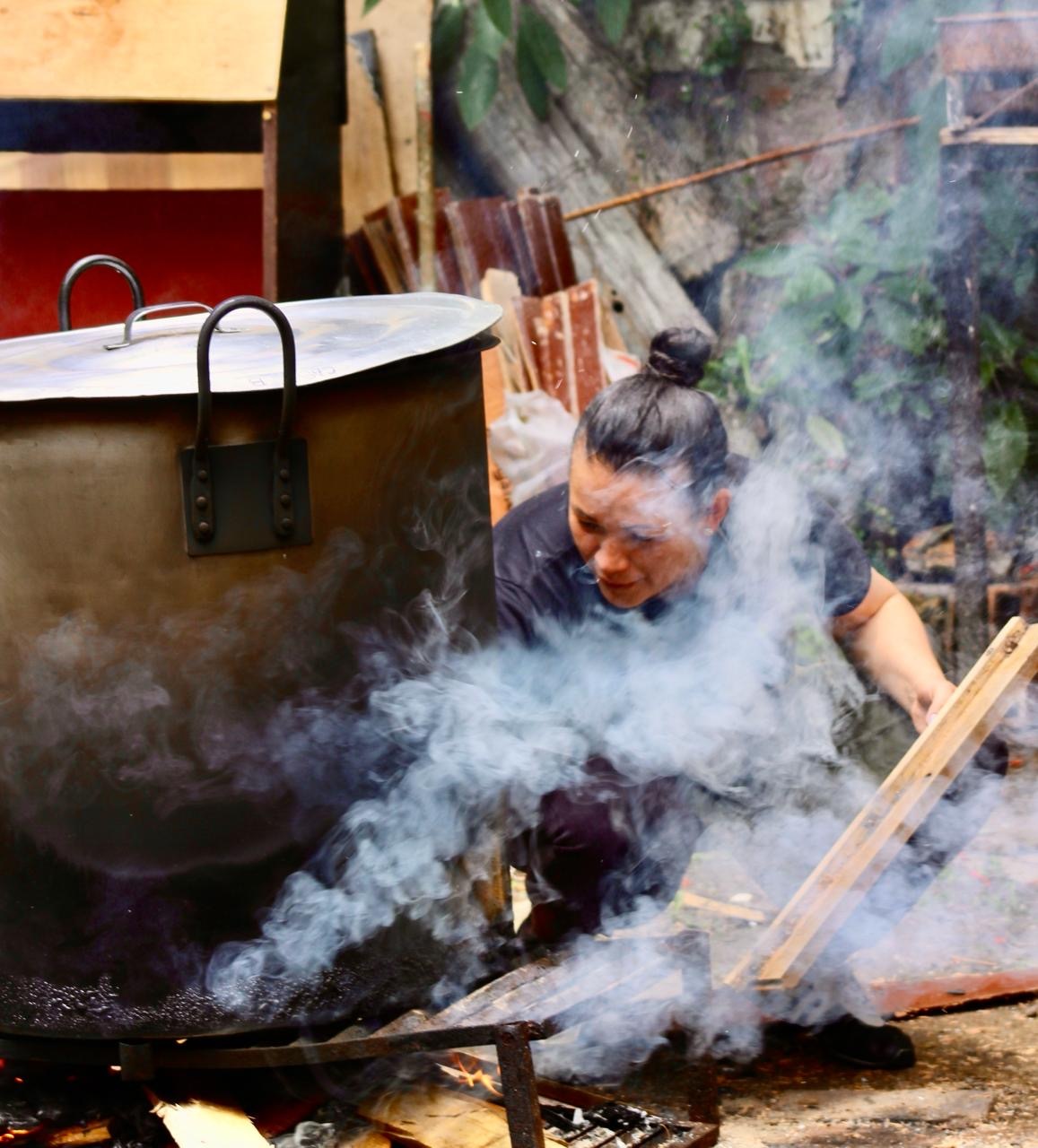
The scent of firewood, the sizzle of the large communal pot and the murmur of voices in Casa B's kitchen created the perfect space for what was to come. In collaboration with the collective, ALC and the community, a special menu was prepared for 70 people. While the participants immersed themselves in culinary chores, they also immersed themselves in a conversation about the potential of developing a soup kitchen for the Belén neighborhood.
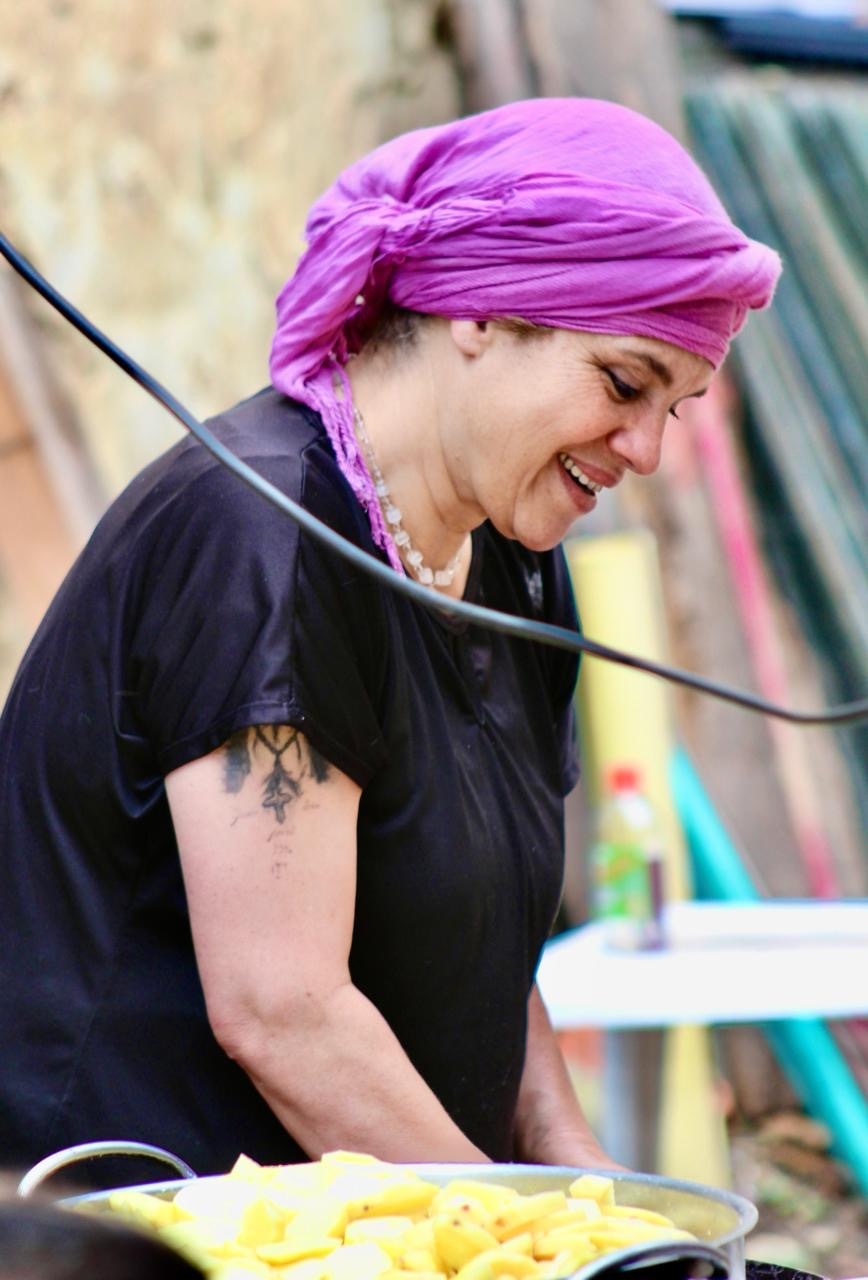
The main course, ajiaco, one of the traditional delicacies of the territory, served as a bridge to get to know each other and set the stage together. Between peeling and cutting the ingredients; the creole potato, pastusa and sabanera, and a little arracacha as a secret of Chata, the chef at Casa B, along with the preparation of shredded chicken and rice. On the other hand, the participants experimented with new preparations, such as avocado pickles, corn tentacles and fried capers, to foster conversation about gastronomy and social innovation.
This practice not only allows the recognition of the value of food preparation, but also generates an intimate connection between the participants, breaking down barriers and predefined roles and placing them on an equal footing. The simple act of peeling potatoes becomes an opportunity for deeper reflection, while focusing on the conversation fosters authentic and meaningful engagement. It is an exchange of ideas that goes beyond the surface, rooted in the very essence of culture and community.
What is fascinating about this exercise as a listening channel is its universality. It can be adapted to and be founded in any corner of the world. In Latin American countries, for example, it is common to meet around the corn mill, where women and men gather to grind and process the grain, creating a variety of delicacies such as arepas, empanadas, tortillas, tamales and buñuelos. In the Eastern countries, the act of kneading, dividing and rolling out dough to create flatbreads is a valuable meeting point.
In conclusion, the event at Casa B was not only a community and culinary experience, but a living testimony to the transformative power of food and gastronomy as a catalyst for connections and exchange. This meeting not only left full stomachs, but also a willingness to continue building a more inclusive and equitable future around food.
Multidisciplinary work in collaboration with the Manigua Corporation and the Institute of Intercultural Studies (IEI) - Universidad Pontifica Javeriana de Cali, and Agirre Lehendakaria Center.
This project is articulated within the framework of peace agreements in Colombia, where the Basque Government undertook to support a Territorial Development project whose objective was the implementation of an Open Innovation Platform in the Department of Caquetá that would stimulate development territory of the area, and support the connection of initiatives in addition to generating new initiatives of entrepreneurship and social transformation that promote the process of reincorporation of the ex-combatant community.
Profiles and Narratives
César
See more
Jenny
See more
Juan Pablo
See more
Nidia
See more
Nixon Armando
See more
Robin
See more
Wendy
See more
Wilfredo
See more
Impact Levels
Community actions2
Small and mid scale initiatives16
Large scale initiatives5
New public services0
New regulation mechanisms0
NameCésar
Age44
JobExcombatiente / Líder de Vereda
Key narrative
A pesar de las dificultades, Aguabonita sigue adelante
NameJenny
Age35
JobCampesina
Key narrative
Las mujeres trabajamos el doble: asumimos el cuidado de la casa y otras tareas que se conocen
NameJuan Pablo
Age38
JobAsesor técnico del programa
Key narrative
Tenemos que pensar en el conjunto. En conjunto los proyectos aportan desarrollo orgánico al territorio y a la comunidad
NameNidia
Age45
JobExcombatiente / Campesina
Key narrative
El desarrollo comunitario e institucional pasa porque las mujeres hagan parte de los procesos
NameNixon Armando
Age52
JobObrero
Key narrative
Si seguimos viviendo al día siempre seremos pobres
NameRobin
Age38
JobExcombatiente / Campesino
Key narrative
El proceso colectivo es el único camino pero cada miembro de la comunidad debe tener un rol
NameWendy
Age45
JobEmpresaria
Key narrative
Si combinamos la sabiduría popular con la formación y ayudas, podremos salir adelante
NameWilfredo
Age42
JobExcombatiente
Key narrative
No conviene que estemos bien conectados para ser competitivos
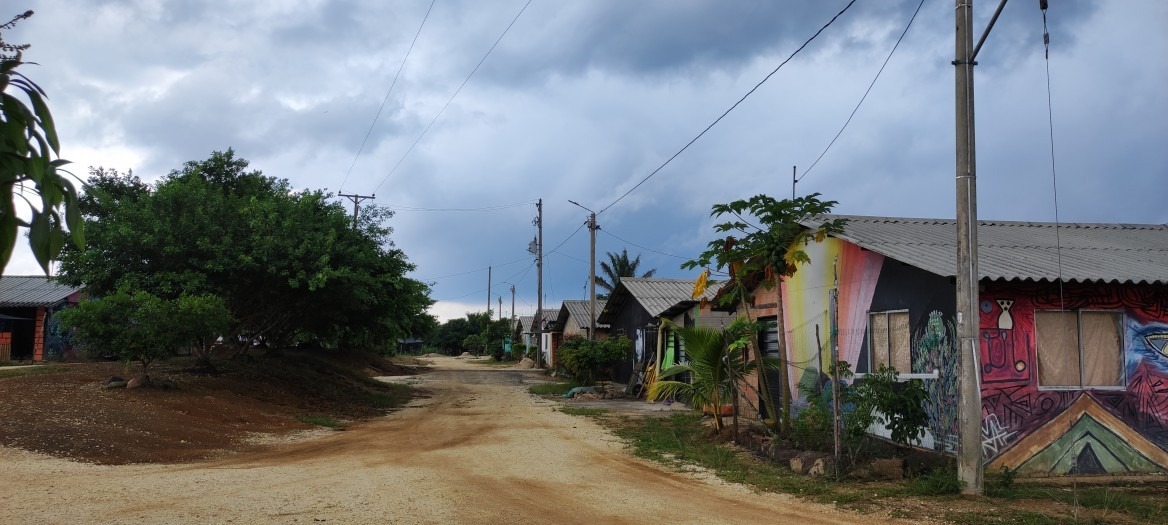
This project, whose main beneficiary community is mostly concentrated, an ex-combatant community in the process of reincorporation and a peasant community, began its implementation in the village of Aguabonita, also known as the Population Center of Aguabonita II or EX-AETCR Héctor Ramírez, and its five neighboring villages (villages Cedro, Cedrito, Morros, Juntas and Aguabonita I) in January 2021, thanks to the coordinated work of a multidisciplinary work team made up of the Manigua Corporation and the Institute of Intercultural Studies (IEI) - Pontifical Javeriana University of Cali.
The portfolio consists of a total of 23 initiatives in the implementation phase that respond directly to the deep needs and perceptions of the communities, identified through a process of community listening and collaborative contrast spaces, in which a diverse ecosystem of actors has participated, including institutions, ex-combatants, victims, communities, women and youth groups.
The initiatives have a triple objective: 1. Economic development 2. Community development 3. Peacebuilding
The portfolio of initiatives operates mainly in the following areas of intervention:
Reinforcement of the cooperative activity of the reincorporated community, which is mainly concentrated in the Aguabonita II area and in close collaboration with the COOMBUVIPAC cooperative (Cooperativa para el buen vivir y la paz del Caquetá) in relation to 6 main productive lines and direct work with the rest of the areas (Aguabonita I, Juntas, Morros, El Cedro and Cedritos).
This work approach has allowed the project to build relationships of trust with the community and, consequently, a greater degree of feedback and adaptation in the implementation phase. The activities carried out in recent months show how the collective is capable of jointly analyzing challenges and weaknesses and identifying strengths and alternatives to overcome them.
The Agua Bonita Open Platform for Social Innovation is a multidisciplinary project with the Manigua Corporation and the Institute of Intercultural Studies (IEI) - Universidad Pontificia Javeriana de Cali, and Agirre Lehendakaria Center, in the villages that surround the municipality of La Montañita, in the Caqueta, Colombia.
Since the signing of the peace agreements and with the installation of the Héctor Ramírez Territorial Training and Reincorporation Space, territorial development processes have been developed with the support of different local and international agents, NGOs, academic entities, cooperatives and companies of the place that seek to co-create, together with the communities of the rural nucleus, a territory of peace. ALCk work has focused on supporting the connection and generation of new social transformation initiatives that promote the reincorporation process of the ex-combatant community.
This documentary film presents the implementation process in the village of Aguabonita, also known as Centro Poblado de Aguabonita II or EX-AETCR Héctor Ramírez, and its five surrounding villages (Cedro, Cedrito, Morros, Juntas and Aguabonita I villages).
Learn about the stories and all voices that make up the Agua Bonita Social Innovation Platform, here: plataformaaguabonita.com