First collective sensemaking to address the use of Basque from a perspective of social diversity
Home Nuestro trabajo Investigación First collective sensemaking to address the use of Basque from a perspective of social diversity
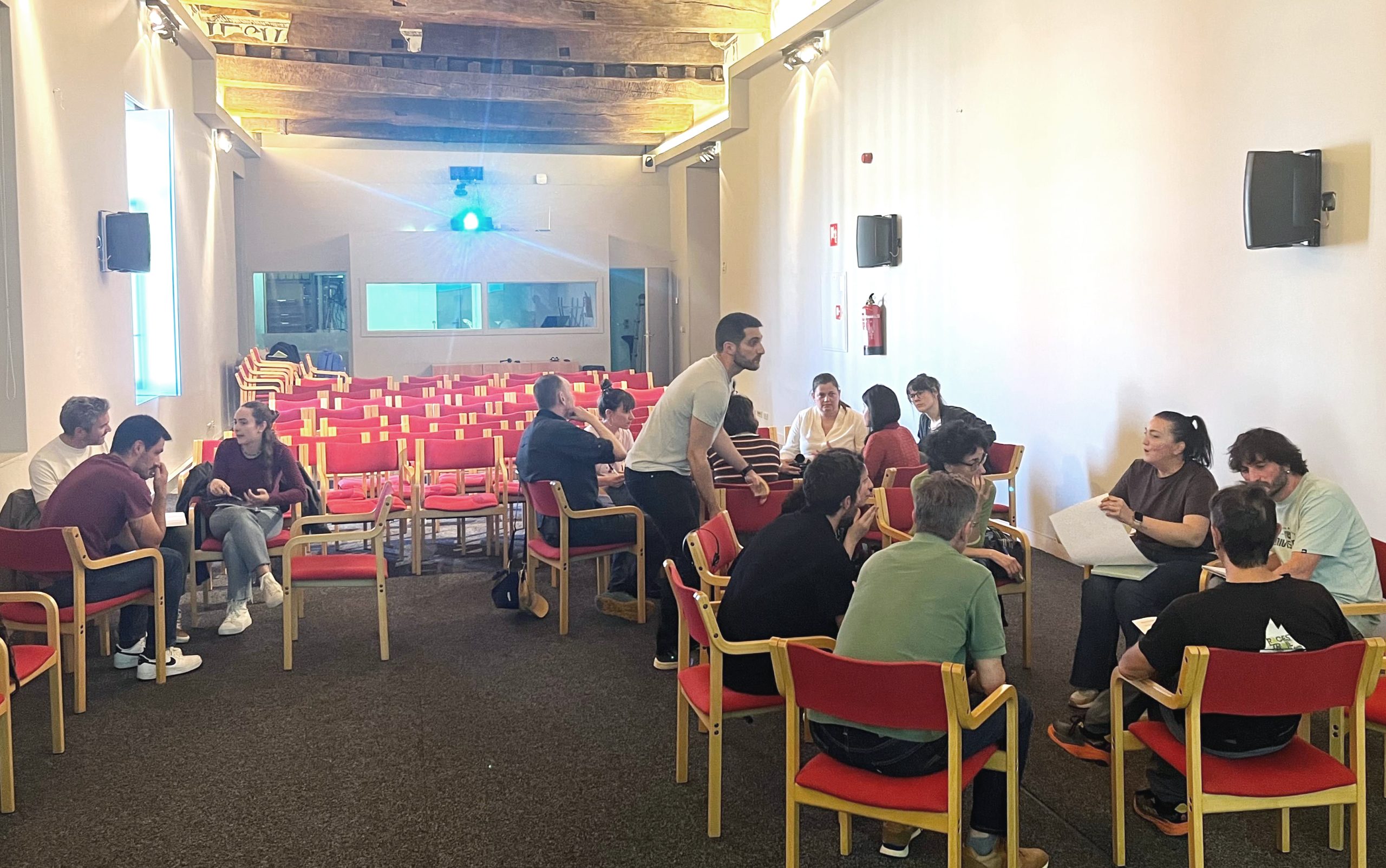
The “Gasteizko zoru komuna” (Common ground) project, launched by the City Council of Vitoria-Gasteiz and the Agirre Lehendakaria Center, held its first collective sensemaking following the finalization of a listening phase consisting of 34 in-depth interviews. The meeting stood out for bringing together a diverse range of participants—including shop owners, parent-teacher associations, and migrant groups—with the aim of discussing and designing the city’s future language policies based on real-world experiences.
To guide the discussion and co-create concrete solutions, the event was organized into three specific working groups. The migration working group proposed designing free, communicative-focused A1-level courses conceived as tools for building community. For its part, the leisure working group discussed how to create networks of youth groups in neighborhoods that address the interests of young people without excluding migrants, proposing partnerships with street educators and parent-teacher associations. Finally, the commerce working group analyzed the limited impact of previous campaigns and advocated redirecting efforts toward creating certified dialogue communities that normalize the use of the language in stores.
Gap between knowledge and actual use
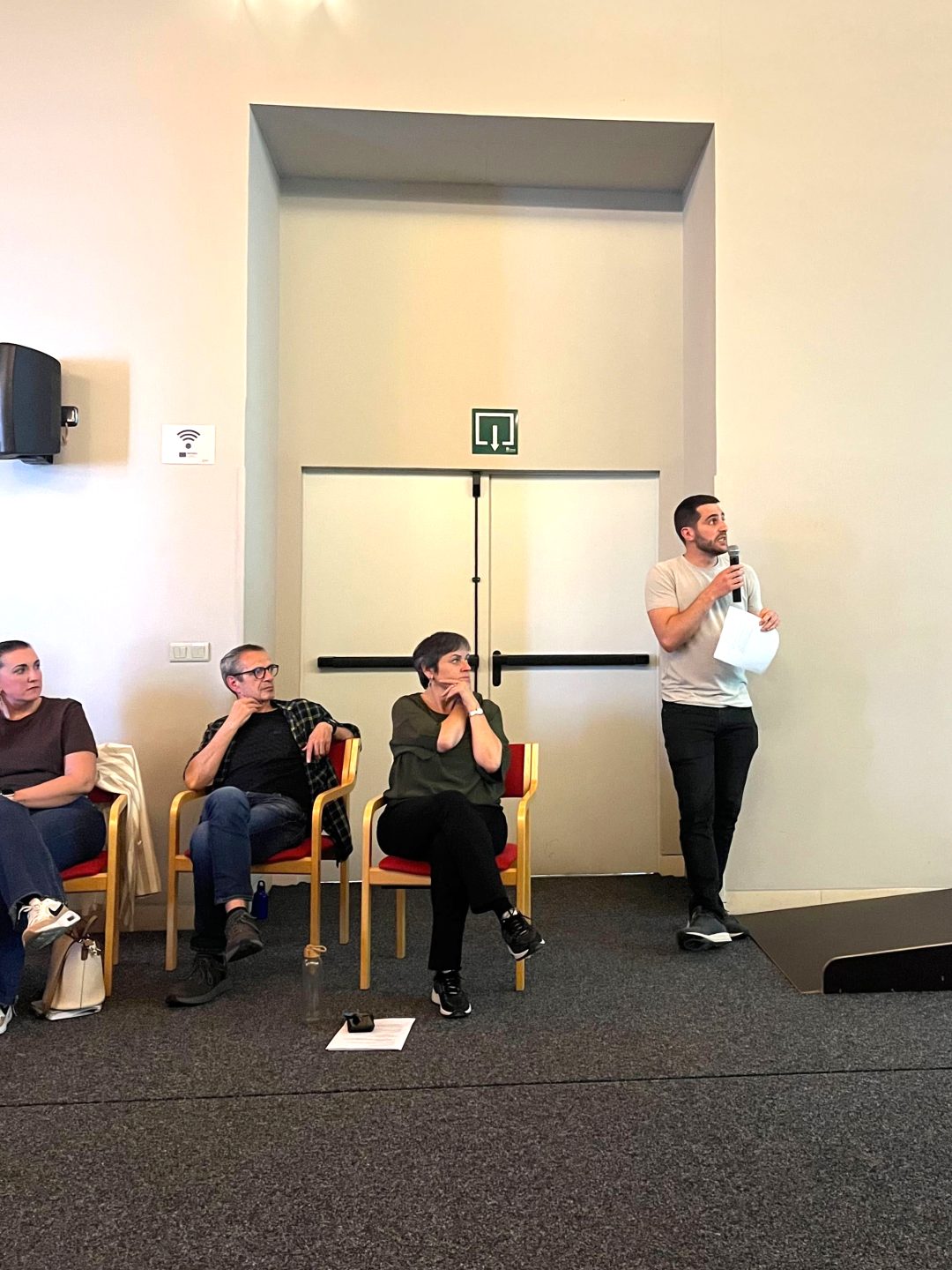
During the group discussions, participants agreed that there is a gap between knowledge of the language and its everyday use. In school and family settings, it was noted that many children use Basque exclusively in the classroom but switch to Spanish in their leisure time. It was also pointed out that for certain groups, the language is perceived as requiring too much effort if it does not translate into practical use in their daily lives.
For their part, education professionals and migrant groups highlighted the interest of the newly arrived population in learning Basque as a way to put down roots and connect with the region. However, they warned that access to courses is not always easy for them due to a lack of information, the cost, or the need to pay fees in advance, which often leads them to perceive the courses as not designed for their reality. For this reason, they called for more innovative and accessible methodologies, free from the pressure of official certifications, and criticized the tendency among native Basque speakers to switch to Spanish as soon as they detect difficulties in their conversation partner.
Unresolved challenges in business and education
On the one hand, representatives from the business and sports sectors noted a certain “passivity” when it comes to using Basque in everyday life. In addition, these groups called for greater coordination from the City Council so that available grants and resources are not so scattered and are easier to find.
On the other hand, those in charge of Basque language schools and the Basque language community felt that the voices of young people were missing from the debate. They also emphasized that the success of the language depends not so much on making it mandatory, but on getting citizens to connect with it and grow fond of it.