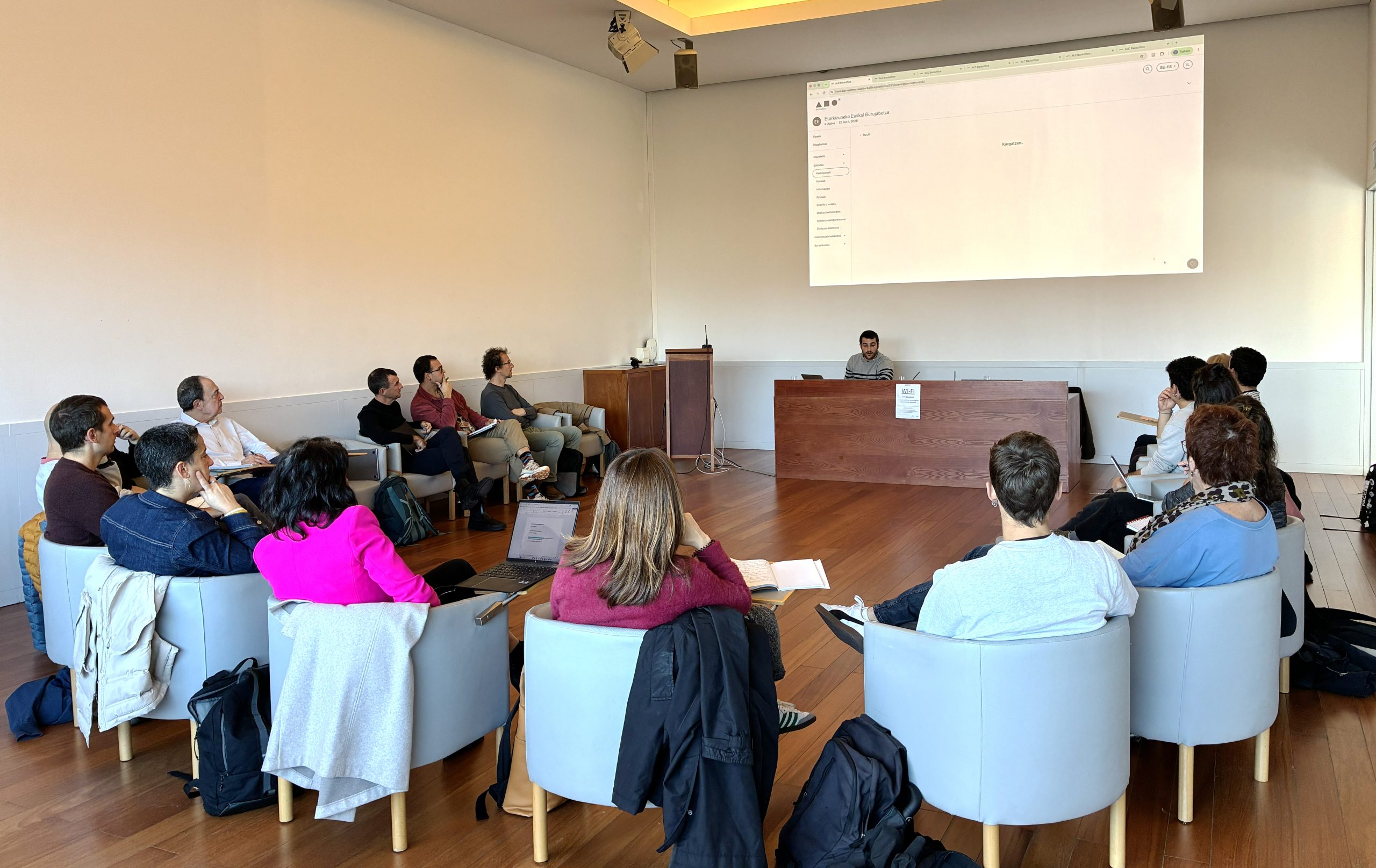
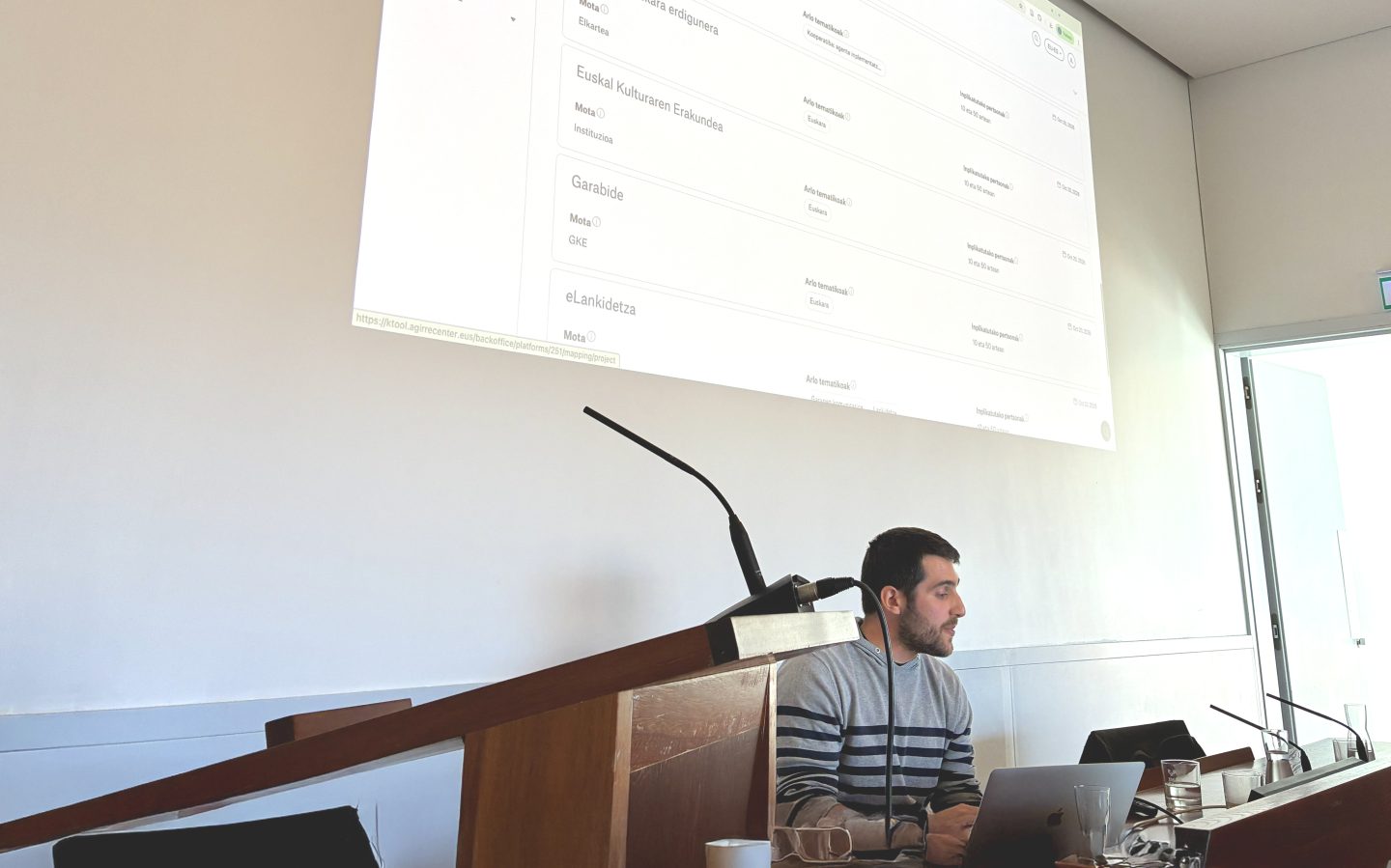
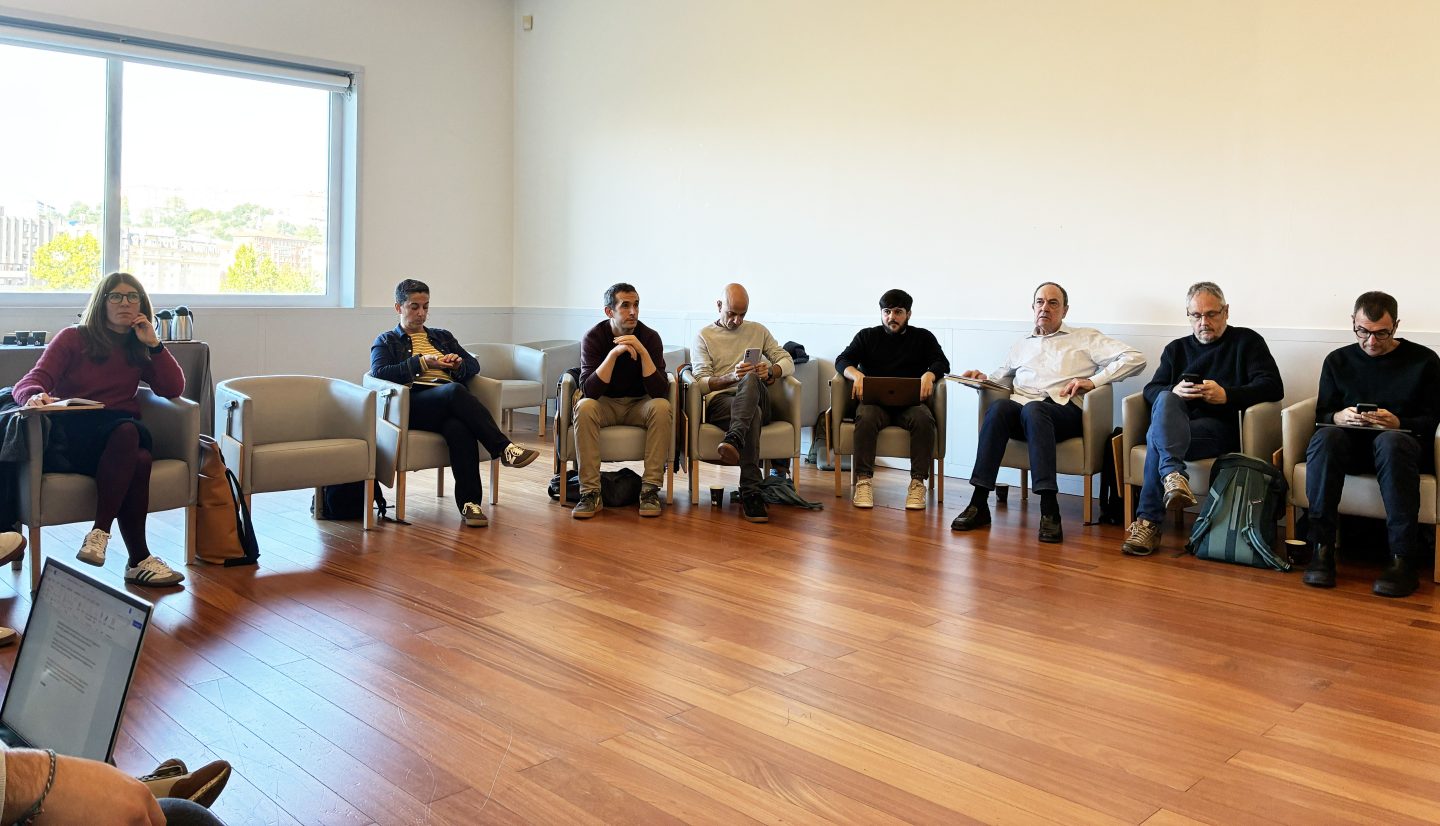
In this context, ALC and TMeLab held a workshop in Bilbao on October 23 with the aim of taking the project forward. Building on the discussions that began in March and July, the workshop combined a presentation of the K-Tool digital tool, a collective analysis of the mapping work carried out to date, and a discussion on how to move from challenges to opportunities for collaboration.
Among other issues, the meeting analyzed the potential of K-Tool as a tool for dynamically connecting stakeholders, initiatives, and challenges. The discussion addressed several key points: prioritizing challenges based on the jurisdictions of the different levels of government, avoiding information asymmetries, and ensuring coordination among stakeholders.
For the next phase of the process, it has been proposed to move from general discussions to experimentation using a specific prototype. The development of a pilot project at the municipal or regional level was proposed, focusing on two or three areas (including housing, health, education, or sports, with the Basque language as a cross-cutting theme). The goal is not only to analyze the situation but also to connect existing capabilities, identify gaps, and test new collaborations in practice; thus, efforts will focus on both short-term learning and strategic experimentation over the next two or three years, avoiding duplication and fragmentation among stakeholders.